

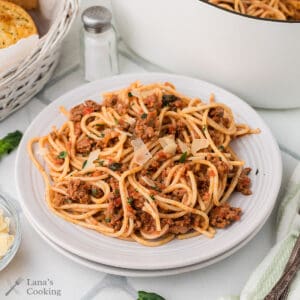
This Traditional Bolognese Sauce brings a deep, savory flavor to your table with a slow-simmered mixture of beef, tomatoes, and herbs that clings beautifully to all types of pasta. The aroma alone will have everyone anticipating their first satisfying bite.
A proper Bolognese is more than just another tomato sauce. It’s the kind of recipe that rewards a cook’s patience with layers of rich, savory flavor and enticing aromas that fill every corner of your house.
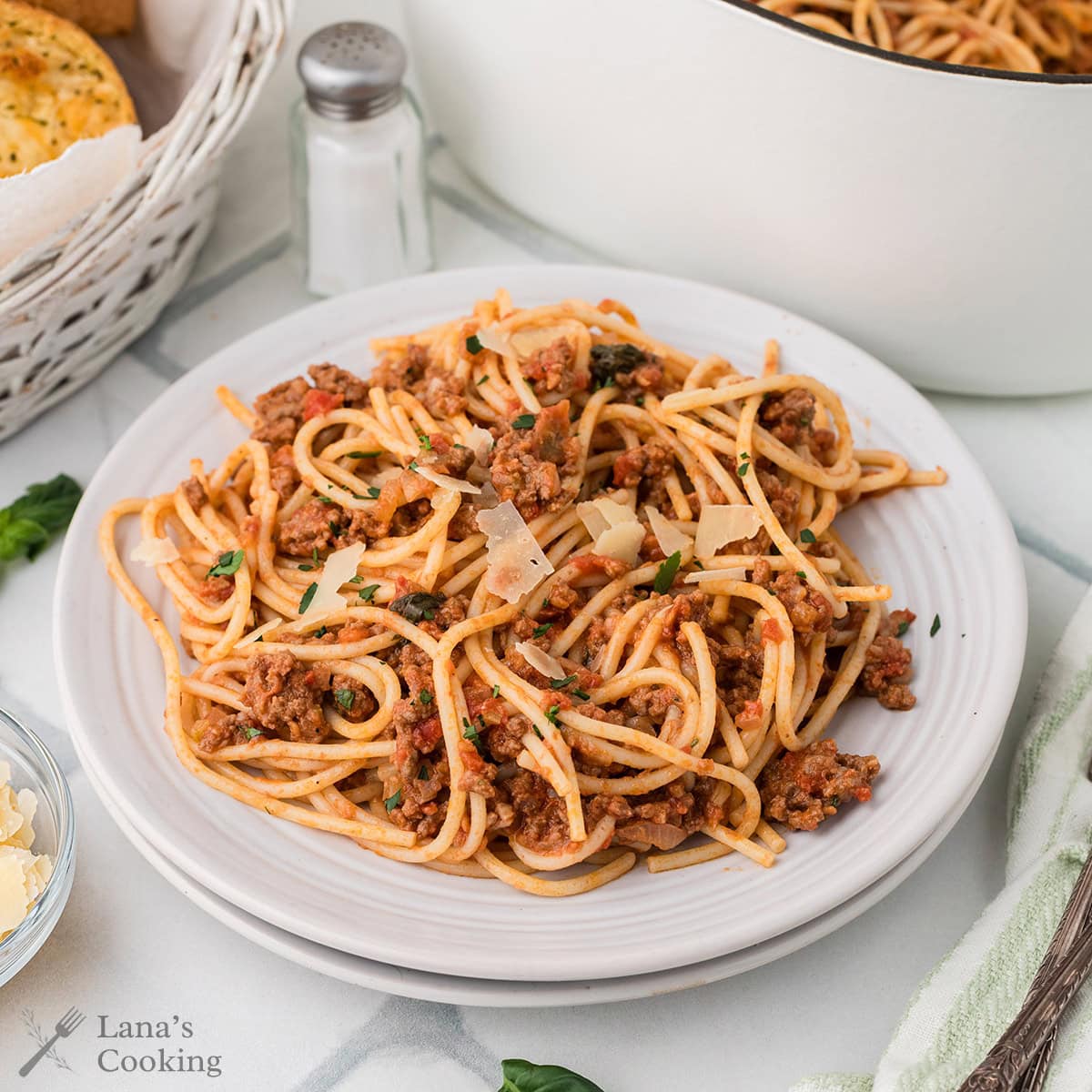
Over the years, I’ve made many quick versions, but nothing compares to the results of this classic spaghetti sauce recipe. Starting with a base of onion and celery gives the sauce a subtle sweetness, while the long cooking time coaxes every bit of flavor from the beef and tomatoes. A touch of dairy brings everything together into a silky, hearty sauce that literally clings to pasta like a glove.
You can combine this with long, thin ribbon pasta like spaghetti or linguini, or you can serve it with short tube pastas like ziti or penne. Since it has that traditional, rich tomato taste that is loved by all ages, it would definitely work with my Baked Ziti or Baked Spaghetti recipes.
All you need for a complete dinner is this Bolognese Sauce with spaghetti, a good tossed salad, and some freshly baked garlic bread. Enjoy!
Recipe Snapshot: Traditional Bolognese Sauce
Prep Time: 10 minutes
Cook Time: 3 hours
Total Time: 3 hours, 10 minutes
Servings: 6
Cuisine: Mediterranean
Cooking Method: Stovetop
Primary Ingredients: Ground beef, wine, tomatoes, basil, half-and-half
Skill Level: Easy
DO MORE WITH CHATGPT
What You’ll Like About This Recipe
- Deep, well-developed flavor. The slow cooking process allows the beef, tomatoes, and herbs to create a rich, savory sauce that tastes heavenly.
- Versatile pairing options. Works well with both long pastas like spaghetti and tagliatelle, and shorter shapes such as rigatoni and penne.
- Make-ahead friendly. The flavor improves as it sits, making it perfect for preparing in advance.
- Freezer-friendly. Keeps well in the freezer for months, so you can have a homemade spaghetti dinner ready for another day.
Ingredient Notes
This post may contain affiliate links. Lana’s Cooking is reader-supported and earns a tiny commission at no extra cost to you when you shop from our links.
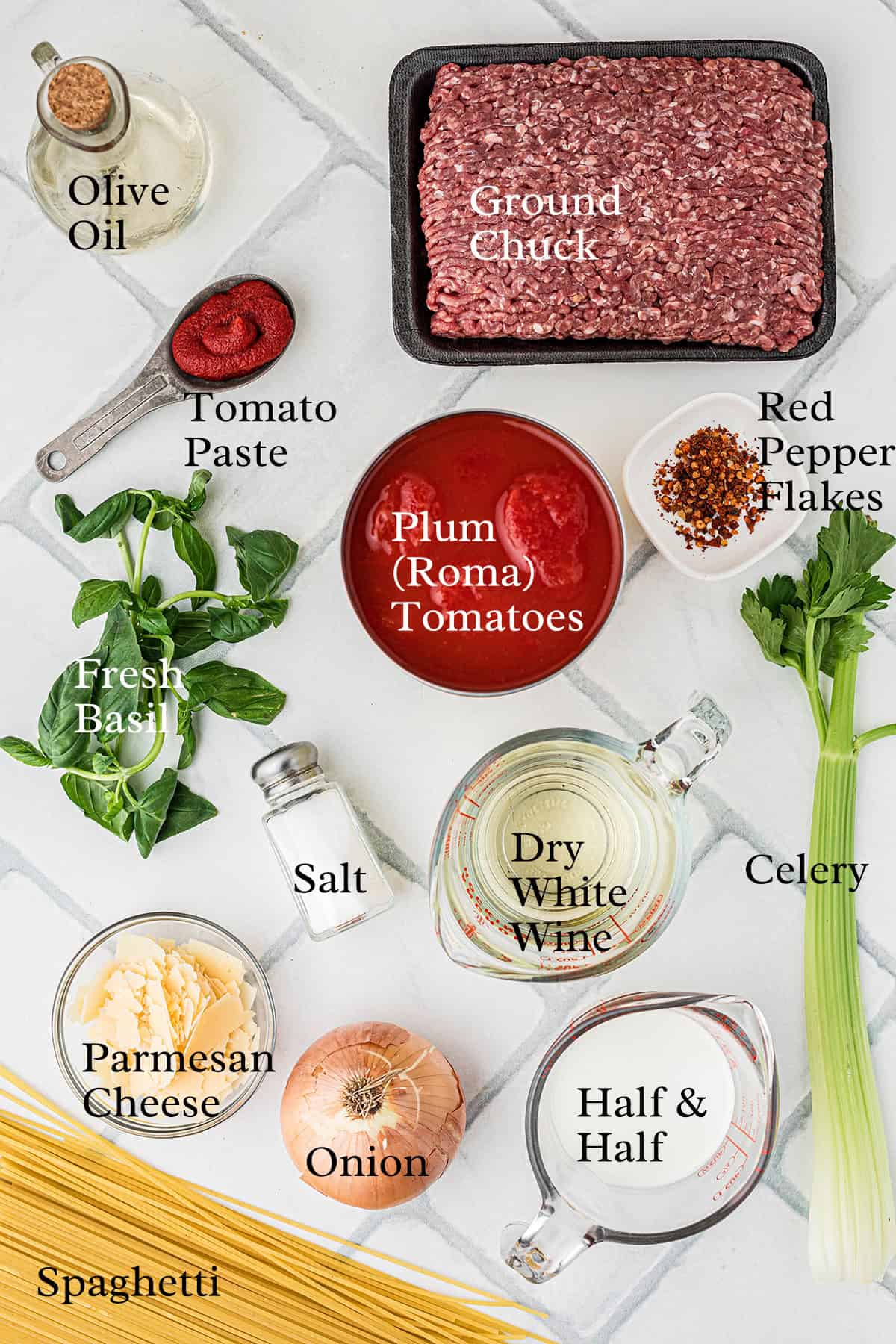
- Celery and onion – These are the typical aromatic vegetables for a bolognese. They create a subtle sweetness that balances the tomatoes in the sauce.
- Ground chuck – In my opinion, 80/20 ground beef has the best flavor because of its higher fat content. It will definitely render some fat while browning, and you’ll want to drain that before adding the other ingredients.
- Dry white wine – Wine adds depth and complexity. Many cooks use red wine in bolognese sauce, but I prefer white. Red wine will give your sauce a richer, more full-bodied flavor. White will give it a subtle fruitiness. Choose whichever you like, but make sure it’s a dry wine.
- Canned plum (Roma) tomatoes (or passata) – Canned tomatoes give a slightly chunky sauce, while passata makes a smoother texture. Both work equally well.
- Fresh basil leaves – It’s traditional to tear the leaves rather than chop them to release the oils without bruising the leaves.
- Red pepper flakes – The red pepper flakes are optional, but a small pinch does give a nice warmth to the sauce.
- Half and half – Creates a rich silkiness. You can also use heavy cream or whole milk.
- Spaghetti – Traditional with Bolognese, but you can also use tagliatelle, fettuccine, rigatoni, or any one of hundreds of styles of pasta.
The complete ingredient list with detailed measurements is included in the printable recipe card at the bottom of this post.
Variations to Try
If you want to put your own spin on this sauce, feel free to try one of these ideas. They’re all great, but they may steer the recipe away from being traditional Bolognese.
- Pork or veal blend – Traditional Italian versions do sometimes use a combination of beef, pork, and sometimes veal for added depth.
- Pancetta or bacon – A small amount of diced pancetta or bacon sautéed with the vegetables adds a subtle smoky flavor.
- Mushrooms – Finely chopped mushrooms blend into the sauce and add an earthy richness.
- Herb swap – Try fresh oregano or thyme in place of (or together with) basil for a slightly different flavor profile.
- Wine choice – A dry red wine can be used instead of white for a bolder, richer taste.
- Vegetable boost – Add finely diced carrots along with the onion and celery for a touch of natural sweetness.
How to Make Traditional Bolognese Sauce
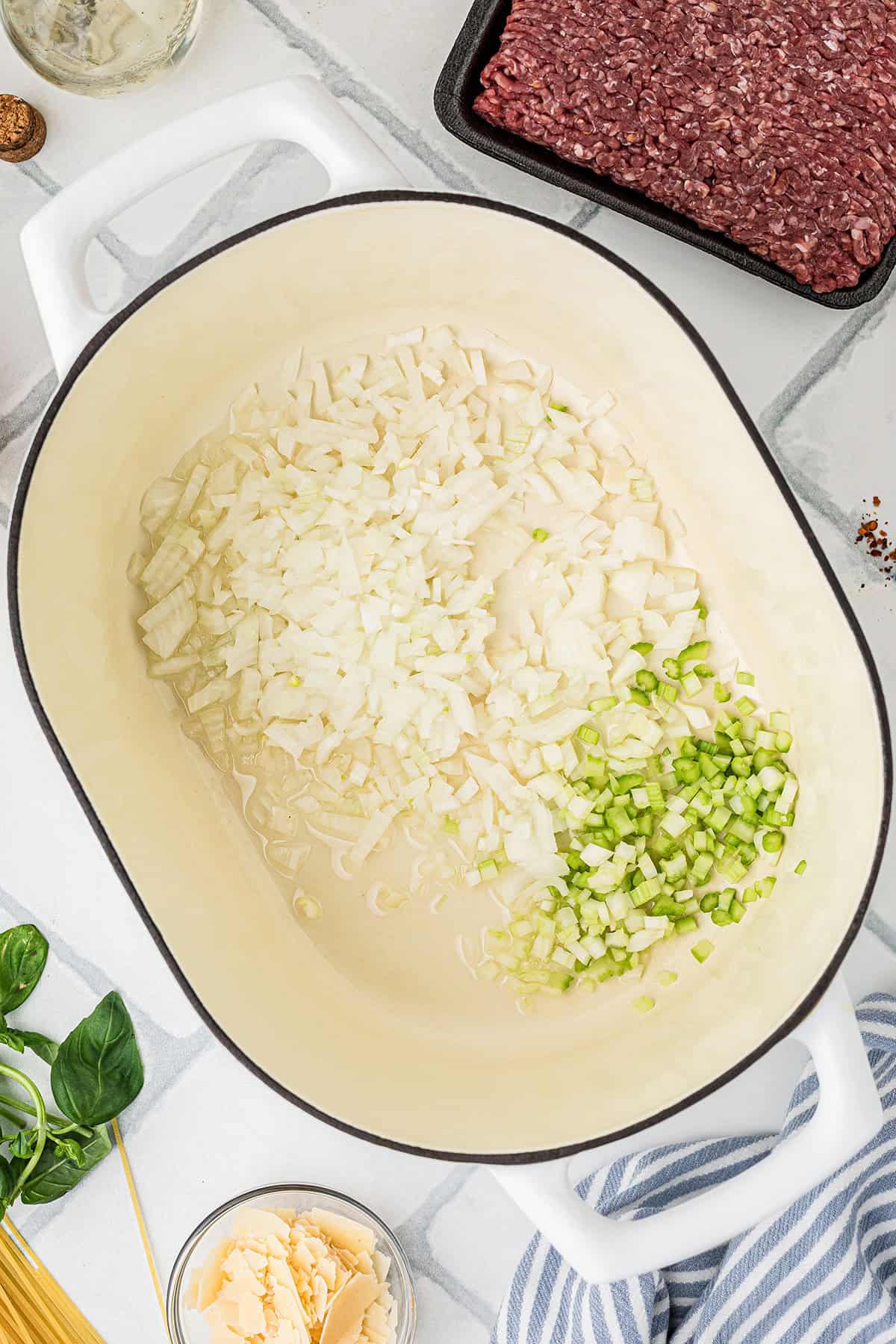
STEP 1. In a large, deep pot, warm the olive oil over medium-high heat. Add the diced celery and onion. Cook, stirring now and then, until the onion is translucent and the celery is tender.
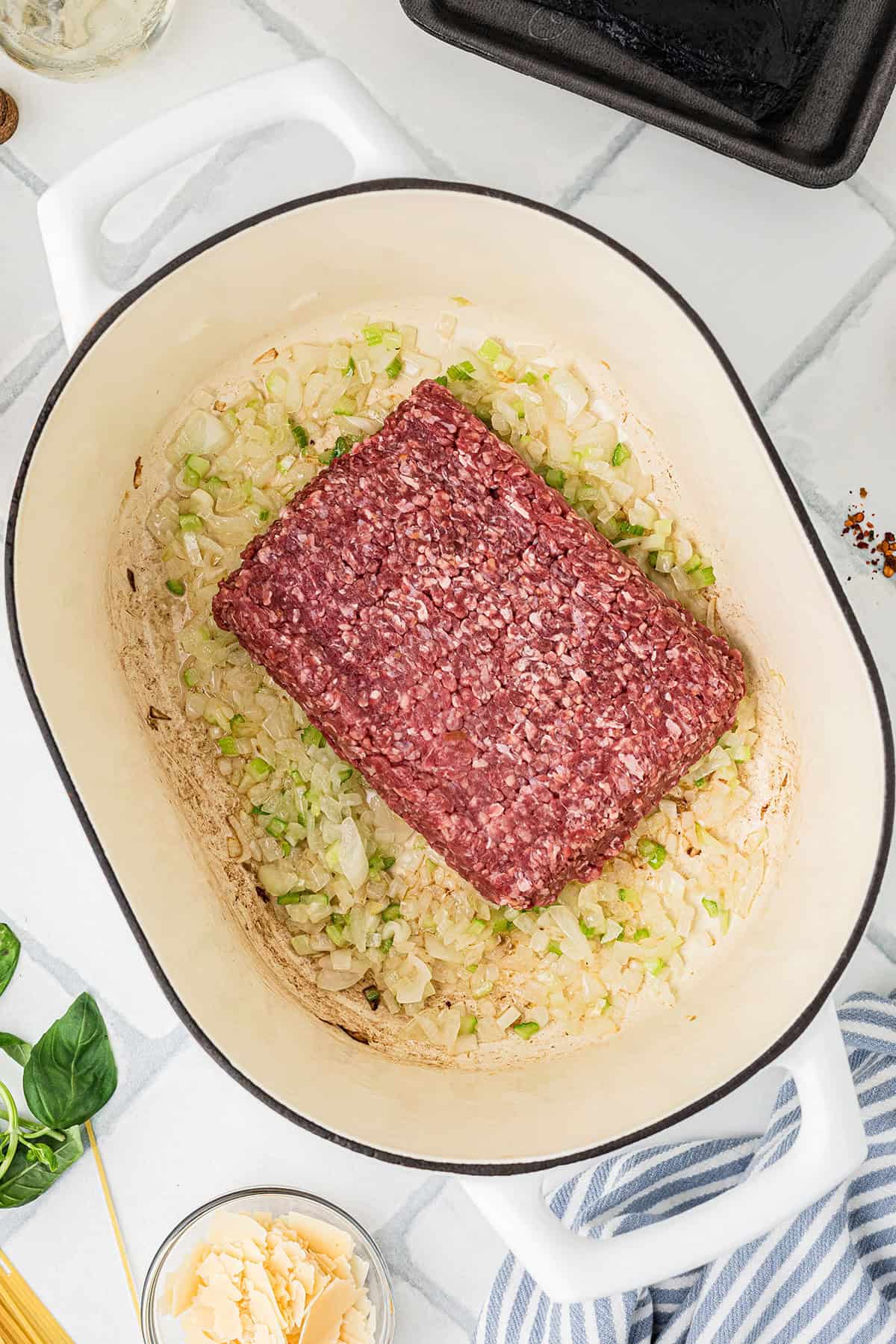
STEP 2. Add the ground chuck to the pot and cook until there is no pink remaining. Drain off the excess fat so the finished sauce will have a rich flavor without being greasy.
Want to save this?
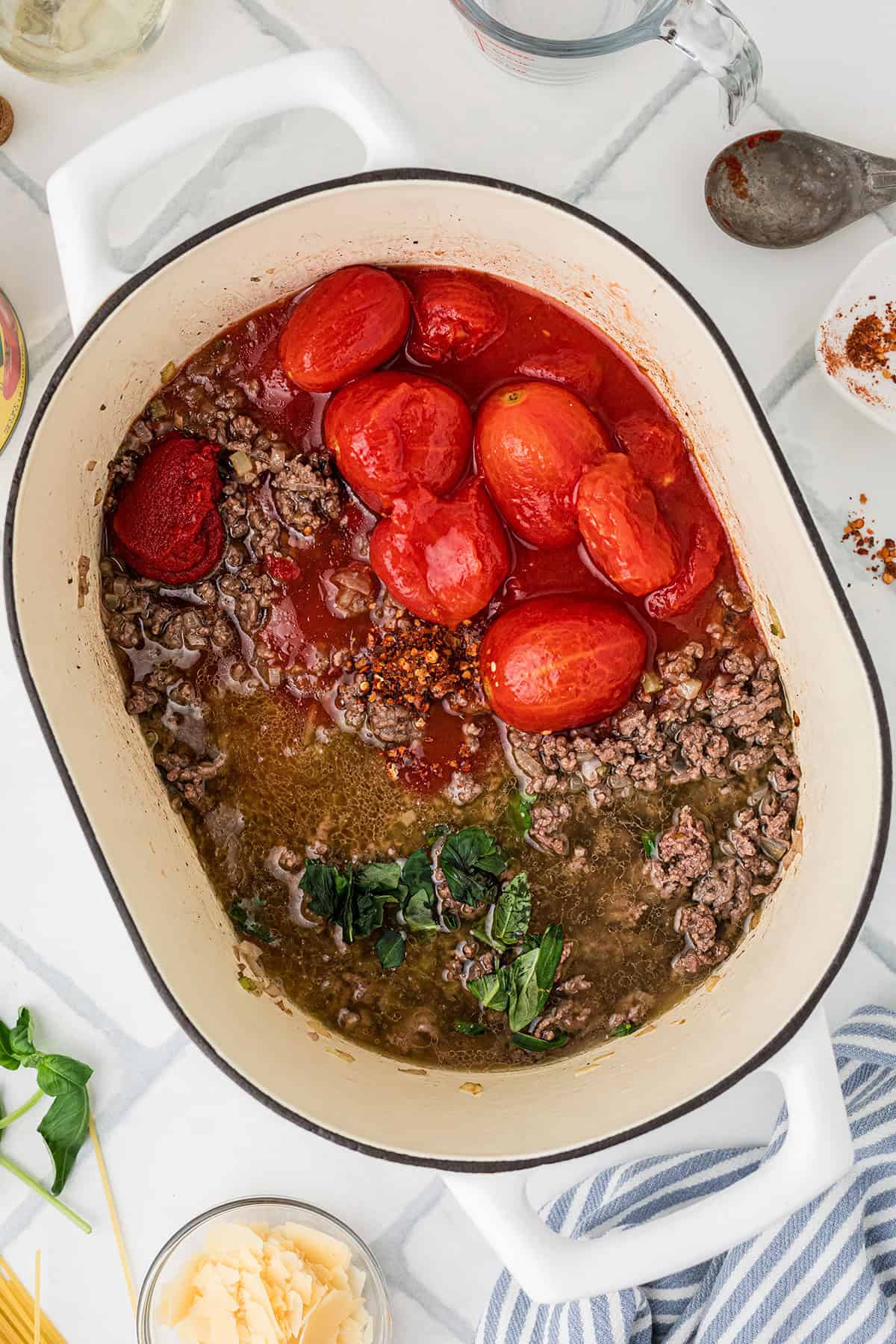
STEP 3. Stir in the white wine, the passata or canned tomatoes, basil, tomato paste, red pepper flakes, and salt. Stir well so everything is evenly combined.
STEP 4. Bring the sauce to a gentle boil, then reduce the heat to a slow simmer. Partially cover the pot and cook for one hour, stirring occasionally.
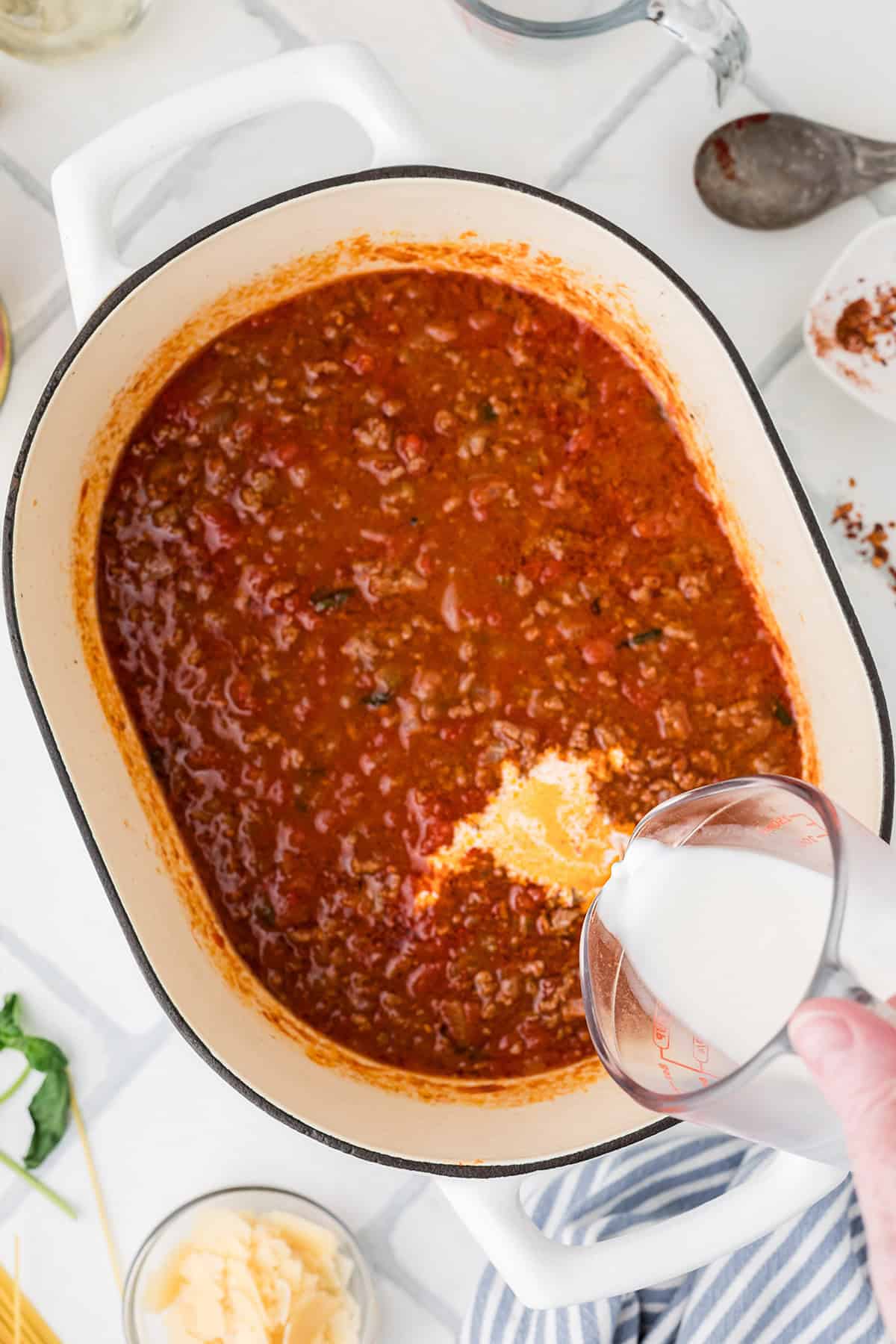
STEP 5. Stir in the half and half, then continue cooking, partially covered, for another two hours. Give it a stir every so often and add a splash of water if the sauce seems too thick.
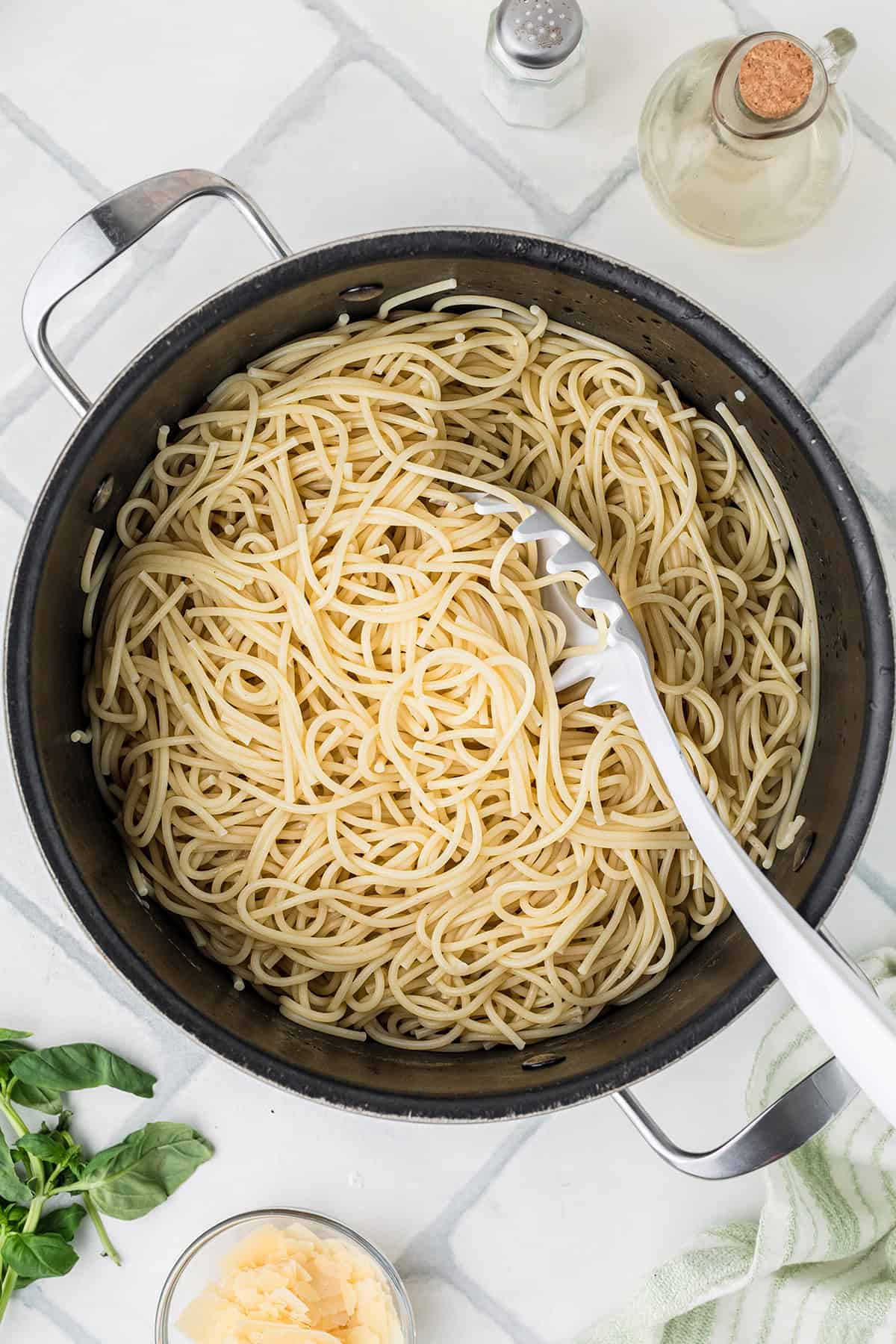
STEP 6. When you are close to serving time, cook the spaghetti in well-salted water according to the package directions.
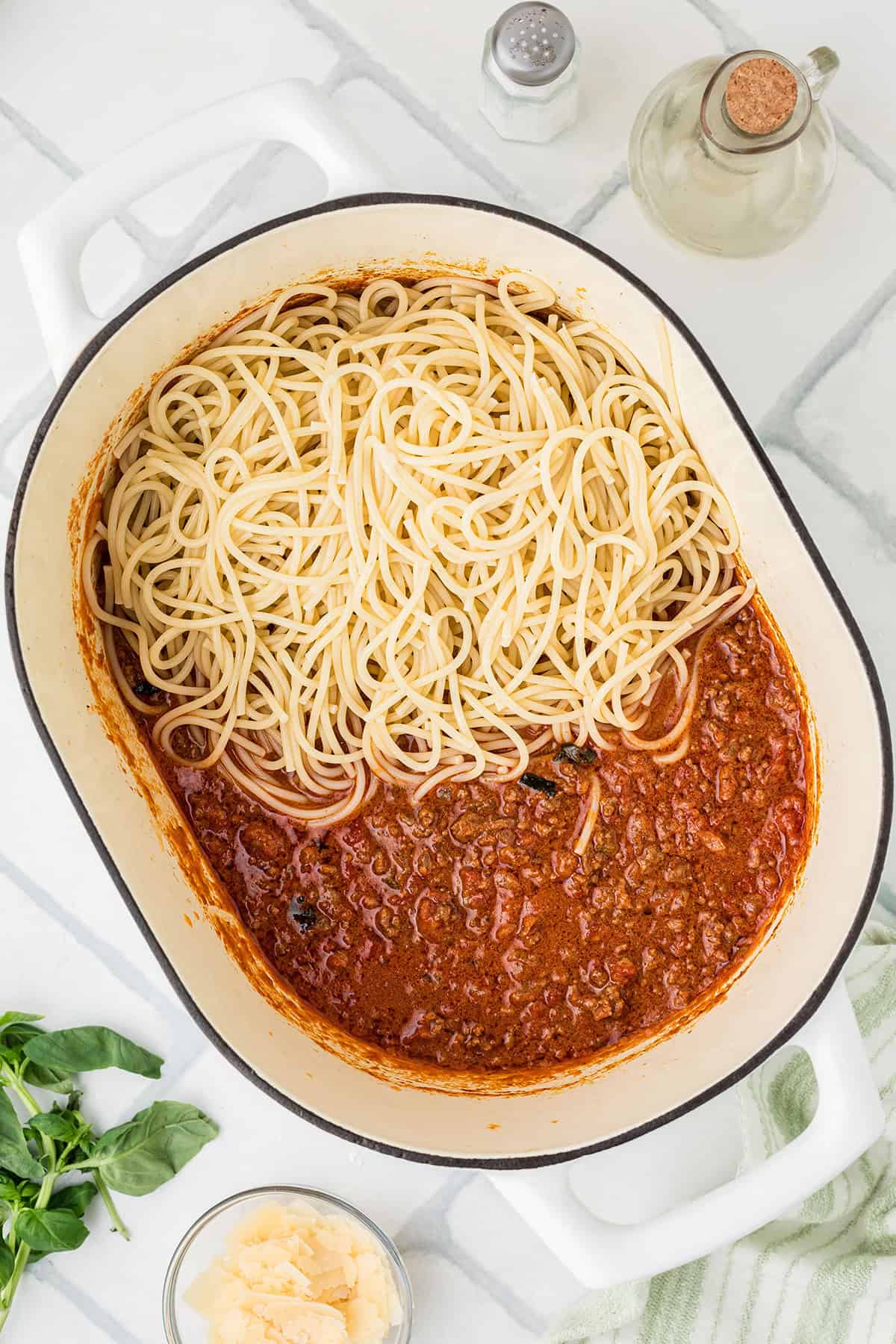
STEP 6 (cont’d.) Drain the pasta, then add it directly to the sauce. Toss until every strand is coated.
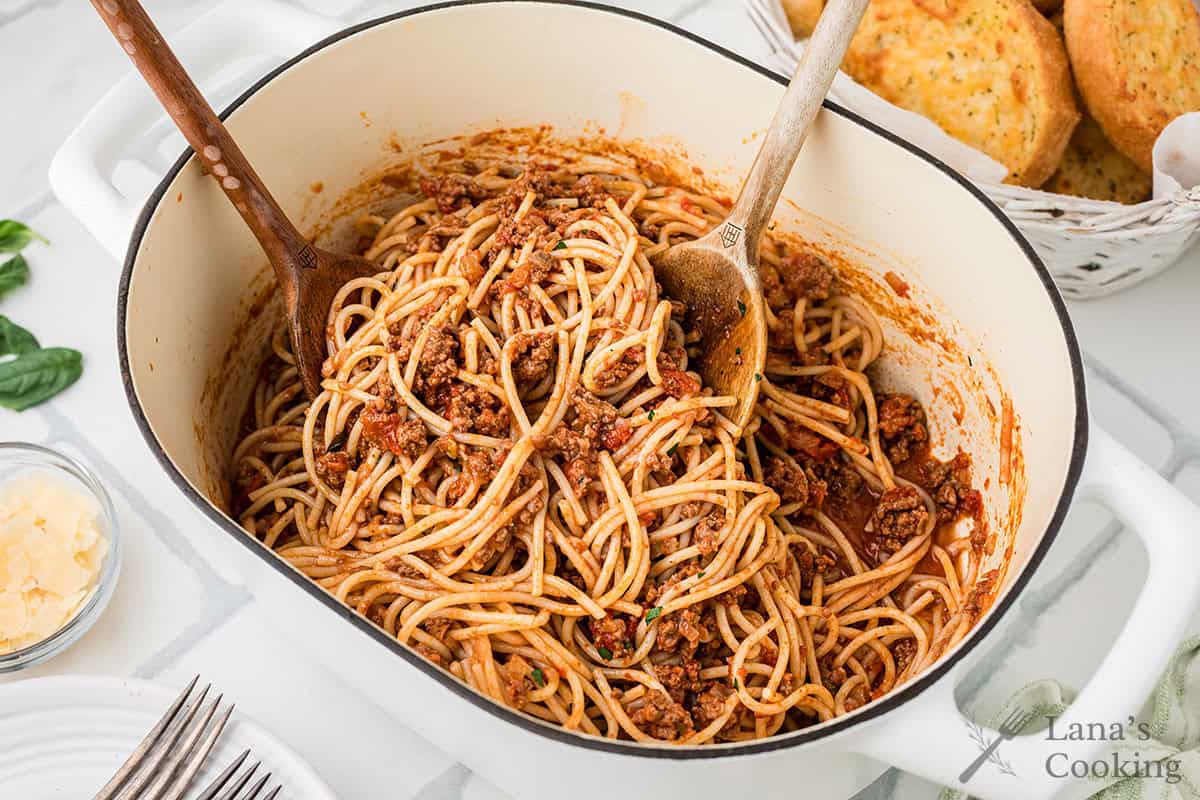
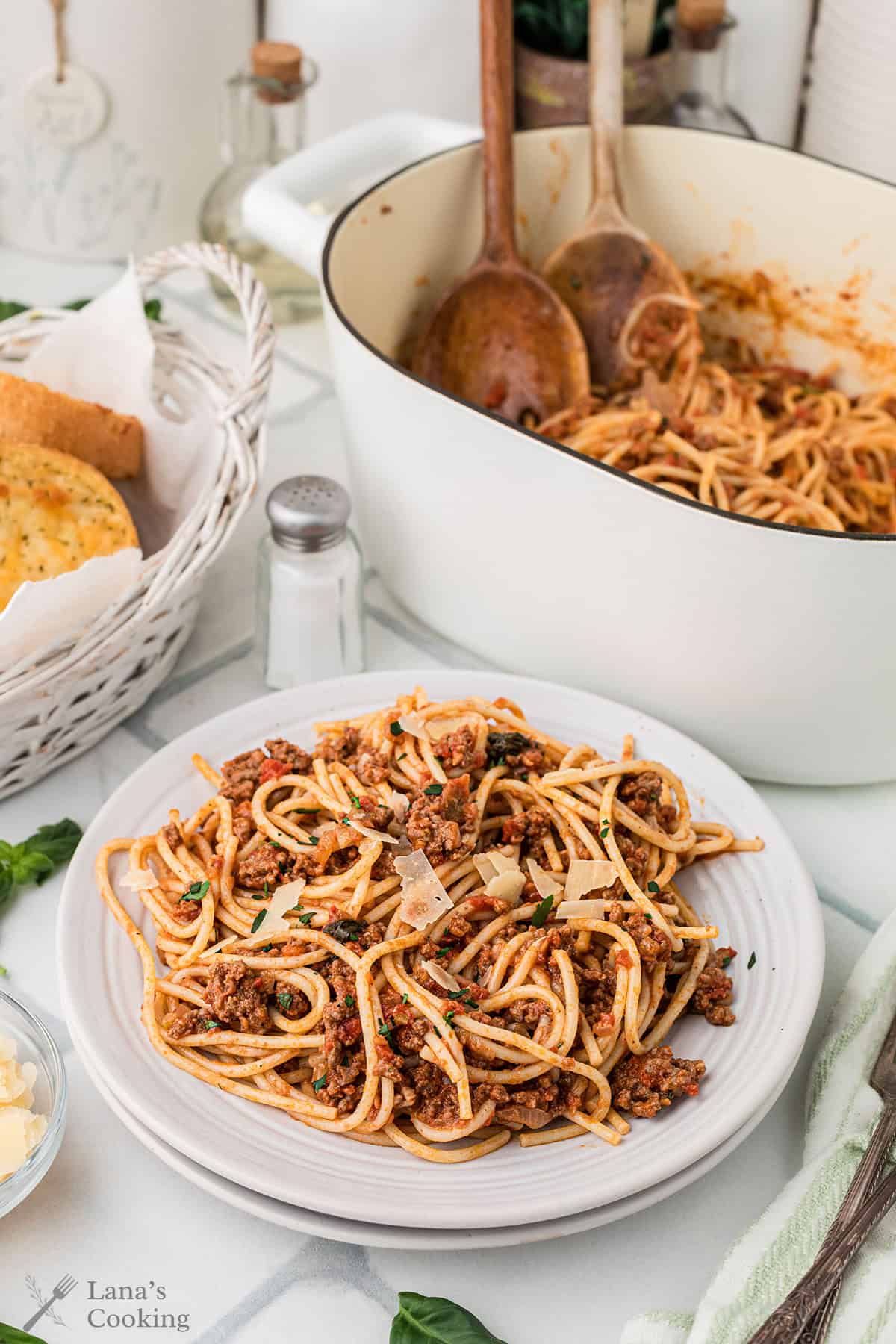
STEP 7. Top generous portions with shaved Parmesan. Serve with a salad and garlic bread for a complete meal.
Recipe Tips
- Be patient. The long, slow simmer is what develops that deep, layered flavor. Resist the urge to rush it.
- Choose the right pot. A heavy-bottomed pot, such as enameled cast iron, will help maintain steady heat and prevent scorching.
- Taste for seasoning. The flavors will change as the sauce simmers. Taste and adjust the seasoning near the end.
- Save some pasta water. If your sauce thickens more than you’d like, a splash of pasta cooking water will loosen it without diluting the flavor.
- Make extra. This sauce freezes really well, so it’s worth doubling the recipe to have a stash ready for another meal.
How to Make or Prep Ahead
This sauce is ideal for preparing ahead of time because the flavor only improves as it rests. You can make it up to three days in advance and store it in the refrigerator in a covered container. Reheat it gently on the stovetop, adding a splash of water or broth if it thickens too much.
If you only want to get a head start, you can prepare the base through the first hour of simmering, then cool, cover, and refrigerate. Finish cooking by adding the half and half and doing the final two hours of simmering the next day.
How to Store and Reheat
Let the sauce cool to room temperature before storing. Transfer it to airtight containers and refrigerate for up to three days. For longer storage, freeze for up to three months.
To reheat, warm the sauce gently in a saucepan over low to medium heat, stirring occasionally. If it has thickened during storage, add a small splash of water or broth to bring it back to the right consistency. If frozen, thaw overnight in the refrigerator before reheating.
Questions and Answers: Traditional Bolognese Sauce
- Can I make Bolognese sauce without wine?
Yes, of course. You can replace the wine with beef or chicken broth. The wine does add complexity, but broth will still provide good flavor and keep the sauce rich. - What pasta shape works best with Bolognese sauce?
Almost any pasta shape works well with Bolognese sauce. In Italy, you’d typically find Bolognese served with tagliatelle, whereas in the U.S., we’d usually use spaghetti. - Can I cook Bolognese sauce in a slow cooker?
You can! After browning the meat and sautéing the vegetables, transfer them along with the remaining ingredients to a slow cooker and cook on low for 6 to 8 hours. This allows the flavors to blend just like stovetop simmering.
More Recipes You’ll Like


Have a question or thought to share?
If you have a question about the recipe or if you’ve made it and want to share how it turned out, I would truly enjoy hearing from you. Just scroll down to leave a comment or add your star rating.
Thank you for stopping by. It means a lot to have you here.
Recipe
Traditional Bolognese Sauce
Ingredients
- 2 tablespoons olive oil
- 1 rib celery diced
- 1 small onion diced
- 1 pound 80/20 ground chuck
- ¾ cup dry white wine
- 28 ounces canned plum (Roma) tomatoes or passata
- 5-6 large basil leaves torn
- 1 tablespoon tomato paste
- ⅛ teaspoon red pepper flakes
- 1 teaspoon salt
- ½ cup half and half
- 1 pound spaghetti
- shaved Parmesan cheese
Instructions
- In a large, deep pot, heat the olive oil over medium high heat. Add the celery and onion and cook, stirring occasionally, until the onion is translucent and the celery is tender.2 tablespoons olive oil, 1 rib celery, 1 small onion
- Add the ground beef and cook until no pink color remains. Drain any excess fat from the beef. Return the drained beef and vegetables to the pan.1 pound 80/20 ground chuck
- Add the white wine, passata or canned tomatoes, basil, tomato paste, red pepper flakes, and salt.¾ cup dry white wine, 28 ounces canned plum (Roma) tomatoes, 5-6 large basil leaves, 1 tablespoon tomato paste, ⅛ teaspoon red pepper flakes, 1 teaspoon salt
- Bring to a boil and reduce the heat to a gentle low simmer. Partially cover and cook for one hour.
- Stir in the half and half and continue cooking, partially covered, for an additional two hours. Stir occasionally and add a small amount of water if the sauce seems to be too thick.½ cup half and half
- When ready to serve, cook the pasta in salted water according to the package directions. Add the drained pasta to the sauce and stir until thoroughly mixed and coated.1 pound spaghetti
- Serve with shaved Parmesan cheese.shaved Parmesan cheese
Notes
- Use an 80/20 ground chuck for the best flavor, but drain well after browning to avoid a greasy sauce.
- Let the sauce simmer low and slow for the full cooking time to develop its rich, layered flavor.
- Save a splash of pasta cooking water to adjust the sauce consistency before serving.
Nutrition Information
Nutrition information is calculated by software based on the ingredients in each recipe. It is an estimate only and is provided for informational purposes. You should consult your healthcare provider or a registered dietitian if precise nutrition calculations are needed for health reasons.
Hi Lana, this sounds delicious. Do you not drain the grease from the meat?
Thanks. Mary
Hi Mary. Yes, normally I do drain off the excess fat.
What is half and half please . Thanks pete
Hi Peter – here’s a good explanation: https://www.spendwithpennies.com/what-is-half-and-half-and-how-to-make-it/
This looks delicious and want to try this but I’ve never cooked with wine. What do you recommend?
Any dry red wine is good in Bolognese. I usually use a Cabernet Sauvignon, Merlot, or Pinot Noir.
Just checked again and the recipe calls for white wine. Red or white?
Well, yes it does. You can use whichever you like, though. A red wine will give your sauce a richer, more full-bodied flavor. White will give it a fruitiness. Whichever you choose, it should be dry.
Thank you for clarifying!
Or you can just leave out the wine if you prefer.
That looks so inviting. I have never tried the addition of half and half. Next time!
Miss P
There’s nothing better than a good bolognese sauce! This looks yummy :)
Thanks Sues! It’s a good, classic recipe that everybody needs to have in their repertoire.