

Just imagine a cold, snowy winter day with a pot of homemade vegetable soup rich with tomatoes cooking on the stove. That soup will be even more delicious when you use Home Canned Tomatoes in it! So grab a canner and some jars and use the abundant summer produce to make your own. You’ll love having them when cold weather comes around.
What do you do when your carefully tended and nurtured garden rewards you with the gift of beautifully ripe summer tomatoes? Why, you get out your canner and jars and go to work.
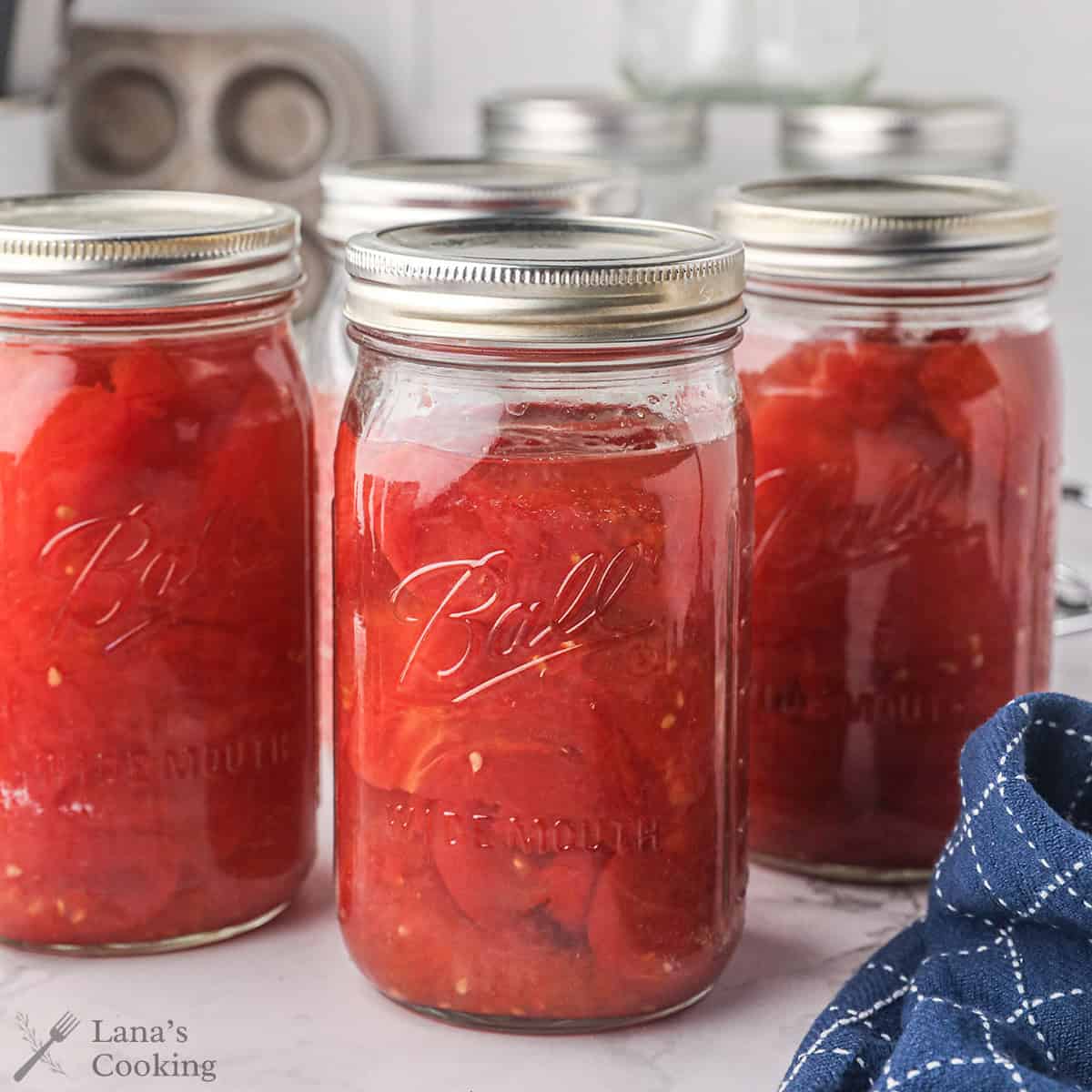
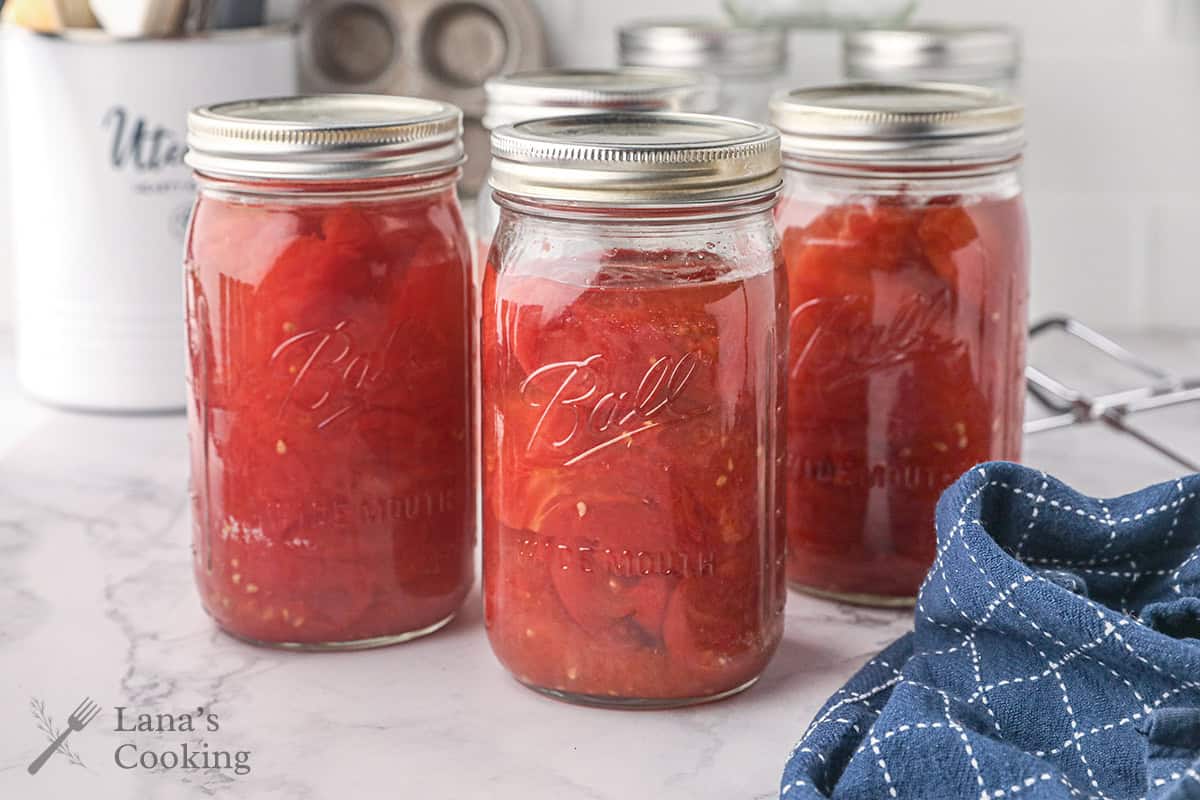
Canning is a simple but exacting process that is easily mastered. And opening a jar of Home Canned Tomatoes in the middle of winter is like opening a ray of summer sunshine.
I’m sure it’s strange, but excessive amounts of gorgeous summer produce get me so excited. I immediately start making plans about how to preserve it and what to do with it later on.
If I have peaches, they usually wind up as preserves, with some frozen for use in cobblers later in the year. Same with berries and other fruits. Peas and butterbeans are always blanched, packaged, and frozen.
But when I have an abundance of tomatoes, I almost always can them. I just think canning tomatoes is the best way to capture that fresh summer taste. Plus, they look so nice on my pantry shelves. And I love using them in stewed okra and tomatoes, tilapia veracruz, tomato gravy, and beef stew!
If you’ve never tried canning tomatoes, here’s my guide to help you through the process. This recipe follows all tested, safe guidelines from the USDA and the National Center for Food Preservation.
Recipe Snapshot: Home Canned Tomatoes
Prep Time: 1 hour
Cook Time: 1 hour, 25 minutes
Total Time: 2 hours, 25 minutes
Servings: 28
Cuisine: American
Cooking Method: Stovetop Waterbath Canning
Primary Ingredients: Fresh whole tomatoes, bottled lemon juice, pickling salt
Skill Level: Intermediate
DO MORE WITH CHATGPT
WHAT PEOPLE ARE SAYING …
⭐⭐⭐⭐⭐
“Love love love this recipe. Made so simple and easy. This is my 3rd year using it! Great job!!“
— Crystal
Ingredient and Equipment Notes
This post may contain affiliate links. Lana’s Cooking is reader-supported and earns a tiny commission at no extra cost to you when you shop from our links.
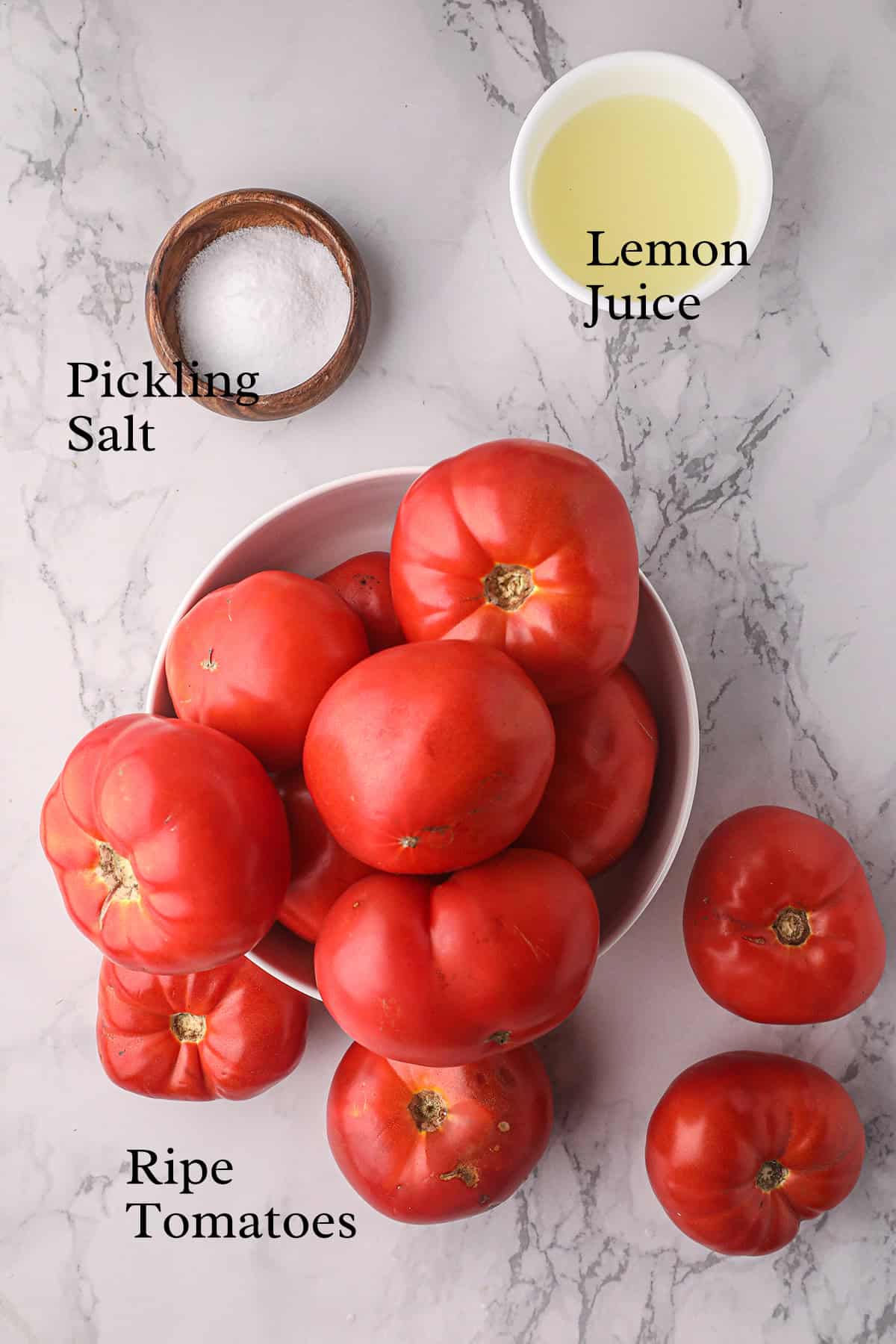
- Fresh tomatoes – you can use any variety of tomatoes for canning.
- Pickling salt – this is pure salt with no additives.
- Bottled lemon juice – bottled juice is used because it has a specific pH. Do not use fresh squeezed lemon juice for canning.
You’ll find more information about the ingredients throughout the instructions below.
- Canning jars, lids, and rings.
- A canning pot or kettle.
The complete ingredient list with detailed measurements is included in the printable recipe card at the bottom of this post.
Review Proper Canning Procedure
If you have never canned before, or if it has been a while since your last time canning, please review the current guidelines. You always want to make sure that you handle canned goods correctly. Improperly canned foods can really be disastrous. I’ve written a post with lots of information about correct canning techniques that you might find helpful.
Prepare the Canning Jars, Lids, and Rings
The first step in any canning session is to prepare the jars, lids, and rings and to start heating the canner full of water. It can take some time for that much water to come to a boil, so plan accordingly.
Wash the jars, lids, and rings in hot soapy water. It’s not necessary, but I like to keep the lids in a pan with barely warm water until needed. Put the clean jars in the canner rack and let them come up to the boil along with the water in the canner.

Pro Tip
The initial investment in jars, rings, and lids may seem costly, but remember that the jars and rings can be reused for years. The lids do have to be discarded after one use, but they’re fairly inexpensive.
How to Make Home Canned Tomatoes
Prepare the Tomatoes

Now you can get on with preparing the tomatoes. Wash the tomatoes well, then peel and core them. You can leave the tomatoes whole or cut them into halves or quarters. I did quarters this time.
Pro Tip
The easiest way to peel tomatoes is by scalding them in boiling water. Start by adding some ice and water to a large bowl. Bring a large pot of water to the boil. Add a few tomatoes to the boiling water and leave them for about 15 seconds. Immediately remove the tomatoes and plunge them directly into the ice water. After about 30 seconds, the skins should slip right off.
Want to save this?
Fill the Prepared Jars One at a Time
When all the tomatoes are prepped and ready to go, start filling the jars. The method I use for canning tomatoes is the “raw packed in their own juice” method.
The way I proceed is this. Lift the canner rack with the jars in it and hook it over the sides of the water bath canner so that it remains elevated. Remove one hot jar at a time from the rack and drain the water from the jar back into the canner. Place the hot jar on a folded dishtowel.
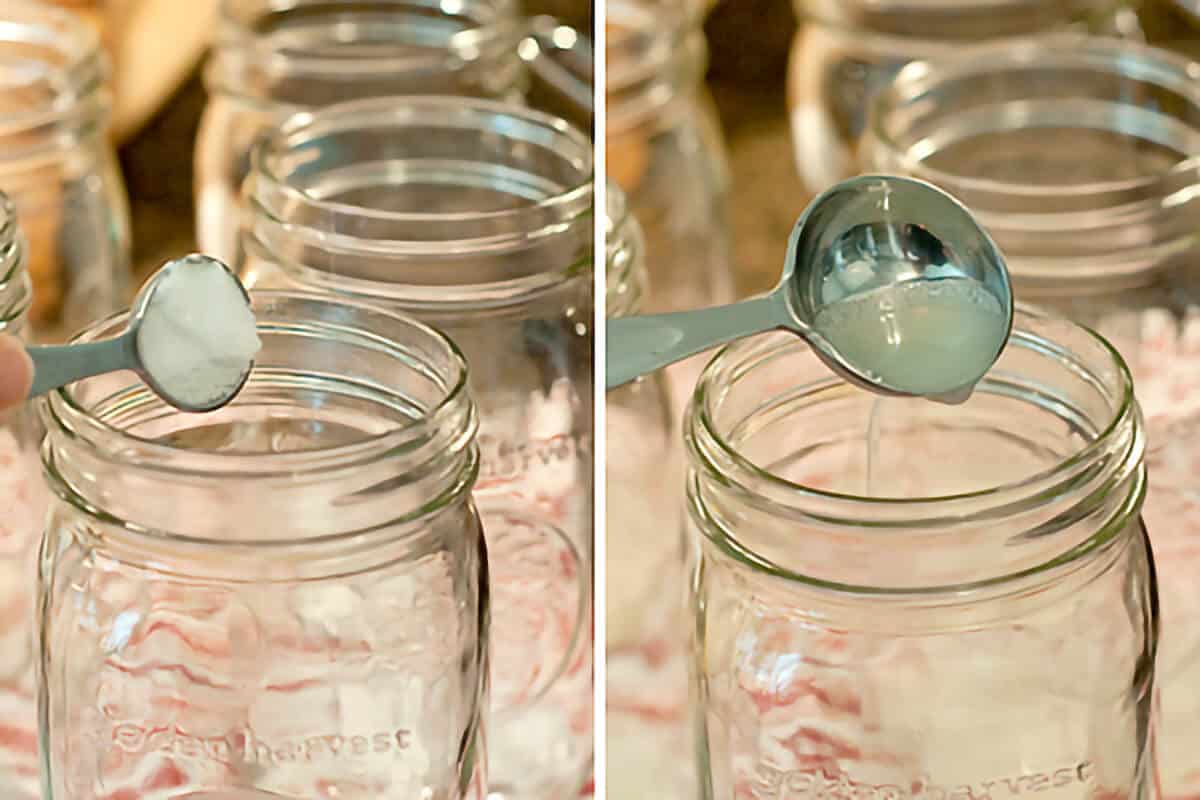
Add 1 teaspoon of salt and two tablespoons of lemon juice to each jar.
Pro Tip
Just a note about this step, in case you’re interested. Most modern varieties of tomatoes are not acidic enough to be safely canned using the water bath method without added acid. You can use either bottled lemon juice or citric acid (2 tablespoons of lemon juice per quart, or 1/2 teaspoon of citric acid per quart). You can faintly taste the added acid in the finished product, but adding a scant tablespoon of sugar to the recipe in which you use the tomatoes will offset that taste.
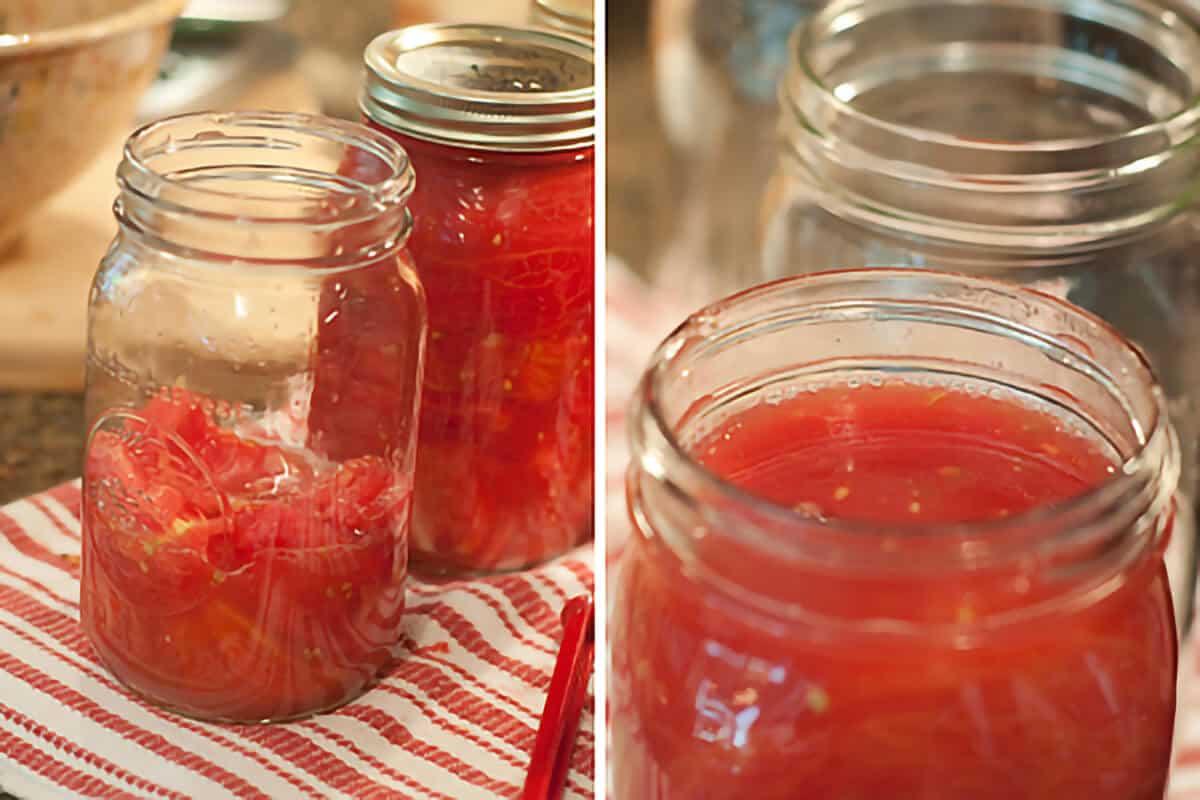
Fill the jar half to three-fourths full with tomatoes, and then gently press on the tomatoes to release the juice and fill all the space between the tomatoes. Continue filling and gently pressing until the contents of the jar are within 1/2 inch of the top rim.
Keep the pH at the Correct Level
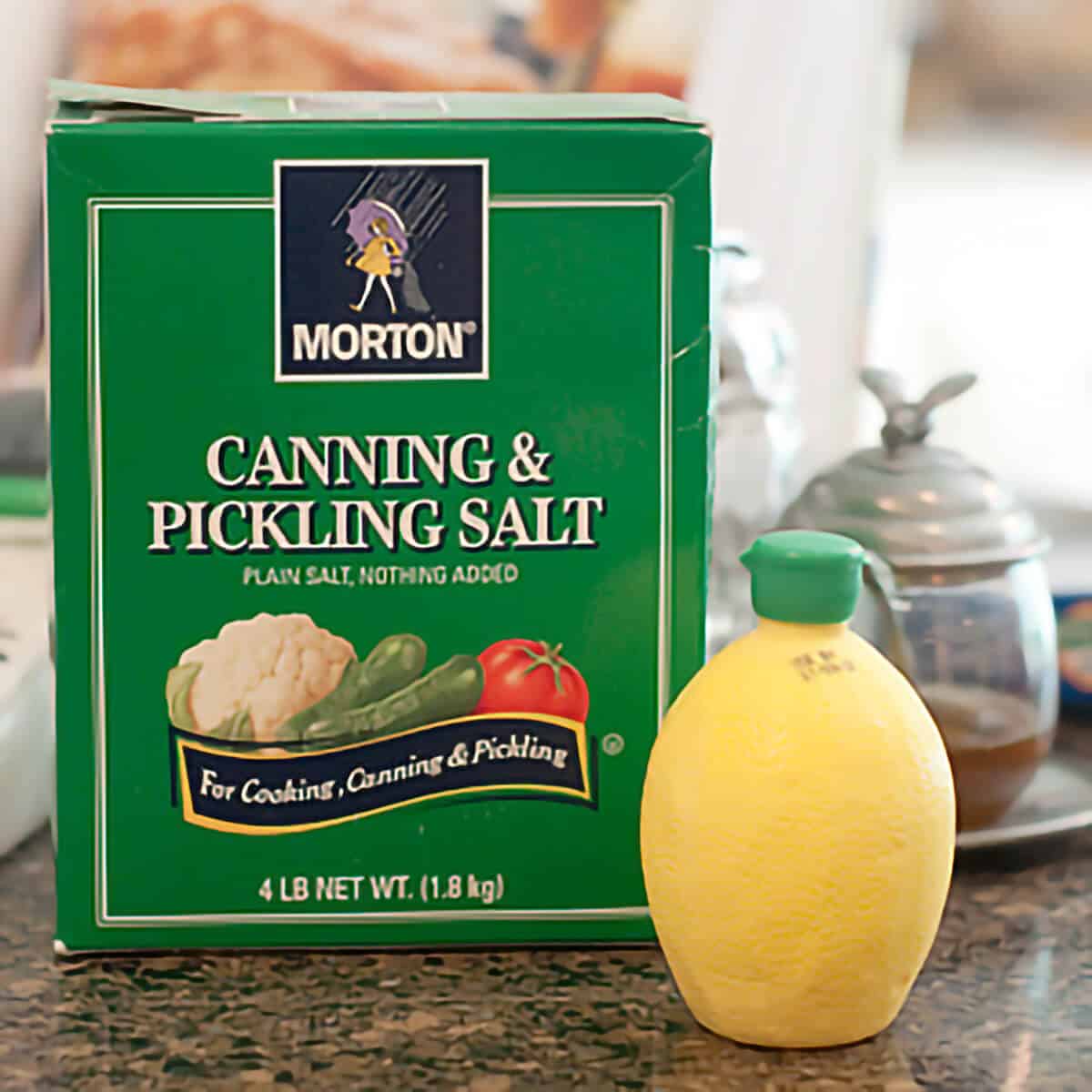
All reliable home food preservation sources require the use of bottled lemon juice, such as the ReaLemon brand, instead of freshly squeezed lemon juice. Bottled juice is used because its pH is controlled at a specific level, whereas fresh lemon juice may or may not have the necessary pH to maintain the safety of the canned tomatoes. Salt is actually optional for this recipe and is added for taste only. If adding salt, you should use pickling salt, because it’s pure salt without any additives that could cloud the liquid in the jars.
Clean Jar Rims and Apply the Lids
Wipe the top rim of the jar with a wet paper towel. Apply the lid and ring and set the jar back on the elevated rack in the canner. Repeat the process until all jars are filled.
Pro Tip
Remember when applying the ring to only tighten it “finger tight.” In other words, just tighten the ring until you meet resistance. Why? Because air has to be able to escape during the canning process in order to create a seal. Now you know.
Lower the Filled Jars into the Canner
Now carefully lower the rack with all the filled jars into the boiling water in the canner. There must be enough water in the canner to completely cover the tops of the jars by one inch.
Process in Boiling Water
Begin timing when the water in the canner returns to the boil. Process 85 minutes in boiling water for altitudes up to 1,000 ft. See the recipe card below for additional processing times for higher altitudes. Remember, the water in the canner must remain at the boil for the entire processing time.
Pro Tip
I find it helpful to keep a kettle or pot of boiling water going on the stove to top up the water in the canner if needed.
If you live at a higher altitude, you’ll need to adjust your processing time according to the following:
- 1,001 – 3,000 ft, 90 minutes
- 3,001 – 6,000 ft, 95 minutes
- above 6,000 ft, 100 minutes
Pro Tip
You can also can tomatoes in pint jars if you’d like. For pints, use half the amount of ingredients per jar. Processing time is the same.
Don’t Take Shortcuts!
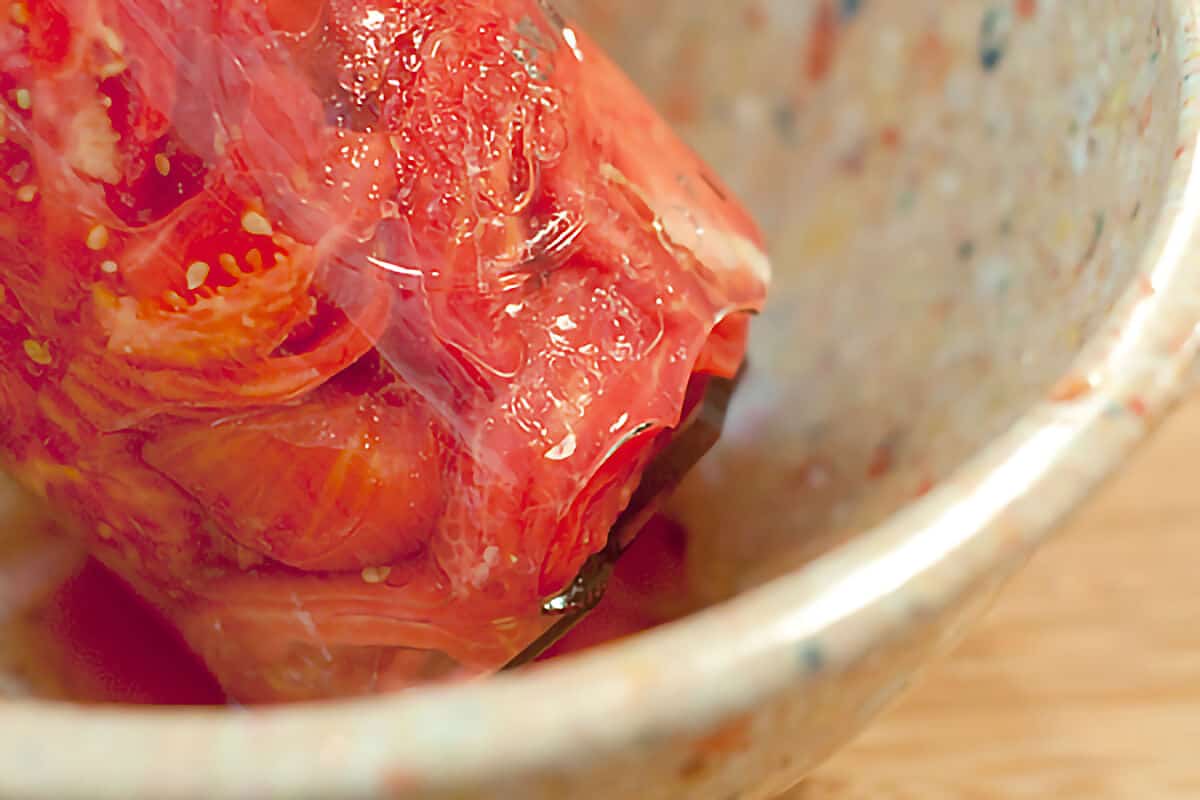
I just have to share this photo with you. I know all you seasoned canners will be able to sympathize with me. In all my years of canning, I had never had a jar break. Until now. I got in a hurry and took a shortcut (I’m not telling what I did) that let my jars cool down too much.
When I put this one in the canner, I heard that distinctive “pop” and immediately knew that it had broken. If this happens to you, don’t even think about trying to save the contents. There are likely to be teensy-tiny shards of glass in there that you’d never find. Just let it go and learn your lesson like I did!
Final Steps and Storage
At the end of the processing time, turn off the heat under the canner and allow the jars to sit in the water for 10 minutes.
Carefully remove the jars from the canner and set them on a folded kitchen towel. Allow the jars to cool completely before moving them (at least overnight). Check to make sure the seals are complete. Store in a dark, cool area.
How to Check For a Complete Seal After Canning
Wait until the jars are completely cool. Remove the ring from the jar. Gently press down on the center of the lid. There should be no movement up or down. Then, very gently pull upward on the outside edges of the flat lid. If the jar is not sealed completely, the lid will come off. Any unsealed jars can be stored in the refrigerator and used within one week.
Questions and Answers: Home Canned Tomatoes
- Why do I have to do the boiling water bath? My grandmother just turned the jars over, and they sealed.
Yes, she probably did. So did mine. What your grandmother did is called the “inversion method” of canning, and it was commonly used by home canners up until about the 1950s. The inversion method often creates a false or incomplete seal that can allow contaminants to enter the jar. Modern boiling water and pressure canning methods create a complete seal that better protects the food from contamination and ourselves from botulism. When we know better, we do better. - How long do home canned tomatoes last?
Home canned tomatoes are at their best quality when used within 18 months, but can be stored for up to two years. - I canned some tomatoes last year. How do I know if they’re still safe to eat?
As with any home canned product, you should inspect the jar before use. Check carefully to make sure the jar is still sealed. When the jar is opened, make sure there’s no off odor or color, no mold, and no bubbling of the contents. - What kind of tomatoes should I use?
You can use any variety of tomatoes! Anything from beefsteak to Roma to heirloom varieties (even cherry tomatoes, but I wouldn’t bother peeling them). Just make sure to follow the procedures as outlined above. - I’m on a restricted diet. Do I have to add salt?
You do not have to add salt. It’s for taste only. - How do I store canned tomatoes?
Store your tomatoes on a sturdy shelf at room temperature. They should not be subjected to large changes in temperature (i.e., don’t store them in an outdoor storage space). - Question from a comment — When I opened the jar, there were some kind of black spots on the lid. Any ideas?
According to food science specialists, “natural compounds in some foods cause a black or brown deposit on the underside of the lid. As long as the jar is still sealed, this deposit does not mean the food is unsafe to eat. However, if a sealed jar does lose the seal and comes open, spoilage is likely, and the product should be discarded.” You can read more on the Ball Fresh Preserving web site. - Another question from a comment — When removing jars of tomatoes from the bath, some jars had air space on top of the jar with tomatoes in the middle of the jar and yellow liquid on the bottom of each jar. Some had no air space. Did I do something wrong?
It sounds like the commenter didn’t pack the jars quite as tightly with tomatoes as they should have. During the canning process, the tomatoes themselves cook, shrink, and release their juice. Plus, some tomatoes are juicier than others. That yellow liquid is just fresh tomato juice 😊. As long as the jars are completely sealed, they’ll be fine.

Great Internet Resources for Safe Canning Techniques and Recipes
- National Center for Home Food Preservation (University of Georgia)
- Home Food Preservation Site (Pennsylvania State University)
- Clemson University Home and Garden Information Center (https://hgic.clemson.edu/)
More Canning Recipes You’ll Like

Have a question or thought to share?
If you have a question about the recipe or if you’ve made it and want to share how it turned out, I would truly enjoy hearing from you. Just scroll down to leave a comment or add your star rating.
Thank you for stopping by. It means a lot to have you here.
Recipe

Home Canned Tomatoes
Ingredients
Ingredients for a standard canner load (7 quarts):
- 21 pounds Fresh, whole tomatoes any variety
- 14 tablespoons Bottled lemon juice
- 7 teaspoons Pickling salt
Instructions
- Prepare standard canning jars and lids according to manufacturer’s directions.
- Peel and core tomatoes. Leave whole or cut into halves or quarters.21 pounds Fresh, whole tomatoes
- When all tomatoes are prepared, fill one jar at a time, keeping the other jars hot while you work.
- Add 2 tablespoons lemon juice and 1 teaspoon salt to each quart jar14 tablespoons Bottled lemon juice, 7 teaspoons Pickling salt
- Pack tomatoes into jars, pressing gently on tomatoes until the juice fills the spaces between tomatoes. Leave 1/2 inch headspace.
- Remove air bubbles.
- Wipe rims of jars and apply two-piece canning caps.
- Process in a boiling water bath 85 minutes for both quarts and pints.
Notes
- Processing Times for both pints and quarts — 85 minutes up to 1,000 ft altitude. Adjusted processing times for higher altitudes: 1,001 – 3,000 ft, 90 minutes; 3,001 – 6,000 ft, 95 minutes; above 6,000 ft, 100 minutes.
- Jars and rings may be reused multiple times; lids must be discarded after one use.
- Keep a kettle or pot of boiling water on the stove to top up the water in the canner when needed.
- Tomatoes may be canned in pint jars if desired. For pints, use half the amount of ingredients per jar. Processing time is the same.
- To check for a complete seal: Remove the ring from the jar. Gently press down on the center of the lid. There should be no movement up or down. Then very gently pull upward on the outside edges of the lid. If the jar is not sealed completely, the lid will come off. Any unsealed jars can be stored in the refrigerator and used within one week.
Nutrition Information
Nutrition information is calculated by software based on the ingredients in each recipe. It is an estimate only and is provided for informational purposes. You should consult your healthcare provider or a registered dietitian if precise nutrition calculations are needed for health reasons.
Seems to me, your water will overfill your canner if you empty water from your jars , back into the canner, then add tomatoes to the jars & submerge them again. If you do that with 6 quarts, you’re basically adding another 6 quarts to your canner. I dump the water from the jars & it is replaced by the tomatoes I add. Now when I lower the rack, the water level in the canner returns to where it was when I was boiling my jars. If your dump 6 quarts of water back into the canner, once you add your tomatoes & submerge the jars, your canner has an additional 6 quarts of substance in it.
My tomatoes last year came out came out mushy like they were cooked either too high or too long. Can you give any suggestions.
It’s hard to say what went wrong in another person’s kitchen and/or process without being there in person. The only things I can think of are that either you used a variety of tomatoes that weren’t great for canning, the tomatoes were too far over ripe, or you let them cook too long if you did the boiling water skin removal process.
I want 2 thank you for being the recipe I understand & feel wonderful about. Bless your pea picking ❤. Love 2 you & your family.
Hello – using 21 pounds of tomatoes – how many quart jars does this make? It says 28 servings = 28 quart jars?
Typically, 21 pounds of tomatoes makes about 7 quarts (3 pounds of tomatoes to yield one quart jar). The recipe card says there are 28 servings in the whole recipe. That is calculated using 1-cup servings. The entire recipe is 7 quarts. Each quart contains 4 cups, so 4 cups x 7 equals 28 servings total for the entire recipe.
The recipe is easy to follow and I enjoy the comments along the way.
Thanks!
Must you peel the tomatoes?
It’s my preference to peel the tomatoes, definitely. If not, the skins will typically separate from the tomatoes during the canning process so you wind up with lots of floating skins in the jars. However, if you don’t mind all those loose skins, by all means skip the peeling process.
I canned with Roma tomatoes and all went well but when I took the lid off the canner, the water didn’t reach the bands on the jar. Is this normal?
There was 1.25 inches of water over the jars when I began the processing for 1 hour and 25 min. There was a lot of steam coming from the canner which is what I observe when canning other vegetables. All the lids appear to have sealed although it’s only been about an hour.
Thank you for all the recipes, great site! Very happy I found you.
The jars have to be submerged for the entire canning time. I always keep a kettle or saucepan of hot water going so that I can add more to the canning pot if it’s needed during the canning process. The goal is not only to seal the jars but to ensure that any bacteria in the contents has been killed.
Love love love this recipe. Made so simple and easy. This is my 3rd year using it! Great job!!
Glad you like it, Crystal! I think it’s one of the simplest ways to preserve tomatoes. I use it every year.
I have a question about canning jars that isn’t related to this article. When I try to put my bone broth or other items I freeze in the freezer they crack and I have to discard them. I have left anywhere to 2 inches to filling the jar 2/3 full and they still crack. It doesn’t seem to matter if I put my broth in the frig overnight so I can skim the fat off or if it’s just leftover vegetables. I don’t like to use plastic containers, but broke so many jars, I gave in and use the plastic, but prefer glass. any advice?
You can freeze in glass jars, but you do have to take some precautions. Here’ a really good article on how to do that — https://www.gardenbetty.com/how-to-safely-freeze-liquids-in-mason-jars/
thanks, Lana. guess when I filled them 2/3 full, it was still over the shoulder of the quart wide mouth jar. tried to save the article to my flash drive, but it just would not complete loading. think I got it figured out now, tho.
thank you so much.
You’re welcome. Just to make sure — the jars should be filled to within 1-inch of the very top and the boiling water should cover the tops of the jars by one inch.
Hi Lana, I have a question. I just finished canning my 24th quart of tomatoes. Before processing I had filled jars right to the neck of the canning jar before putting dome on jar. After screwing lid on the jars hand tight and lowering into water bath. I allowed to boil for designated time. When removing jars of tomatoes from bath, some jars had air space on top of jar with tomatoes in middle of jar and yellow liquid on the bottom of each jar. Some had no air space. Did I do something wrong?
Sounds like those jars weren’t packed quite as tightly with tomatoes as they should have been. As long as they sealed, they’ll be fine. That liquid is just fresh tomato juice :-)
Hey Lana, I love the recipe you posted and I am gonna try it in a day or two but needed to ask a question about the salt and lemon juice.. I read you put that in first and then adding tomatoes but fo you stir the salt and juice in the tomatoes at all or just leave at the bottom? My grandma always put the salt at the top of her canned tomatoes but I don’t remember if she stirred it in or what. I was a child when I watched. Lol
Also, I use quart jars when I can tomatoes cause I use them for soup in the winter, so exactly how much salt and lemon juice would I use? Could you please let me know asap as I will be canning my tomatoes in the next couple days.
Thanks, Melanie
Hi Melanie. You don’t have to stir the lemon juice and salt. Just add it to the jars. And it doesn’t really matter whether you put it in first or on top of the tomatoes. It all gets dissolved and mixed up during the filling and canning process. The recipe as written is intended for using quart jars, so you just place 2 tablespoons lemon juice and 1 teaspoon salt in each jar.
I’ve not yet tried tomatoes – but every recipe I find talks about lemon juice and this confuses me. In my grocery, they stock lemon juice CONCENTRATE. Is that what the recipes refer to? If I don’t use real lemons, and can’t find anything else, should I water it down or reduce the amount or just close my eyes and throw in the concentrated juice per the recipe? ???? Thanks
You will need to use an exact measurement of real lemon juice. You can’t guess at the amount in a canning recipe. That can affect both the pH and taste of the finished product. Fresh lemons are available in every grocery store’s produce section. There’s also a product called RealLemon that is not a concentrate – just straight lemon juice.
I do a lot of canning but have given up on tomatoes because when I open the jar there is some kind of black spots on the lid.Any ideas? Tomatoes are the only thing I have trouble with
According to food science specialists, “natural compounds in some foods cause a black or brown deposit on the underside of the lid. This deposit does not mean the food is unsafe to eat. However, whenever a sealed jar comes open, spoilage is likely and the product should be discarded.” You can read the entire article here: http://www.extension.iastate.edu/publications/pm638.pdf
I never canned before but this year I made pear jam, strawberry jam and peach/apricot jam. I even have a garden but so far I only have green tomatoes – I started late. I also planted a lot of herbs and yesterday I chopped up some parsley and some basil, put them in some ice cube trays with oil and froze them. I am retired now and enjoying this time more than I can say. I am going to can tomatoes but it will be for sauce. Thanks for the instructions.
I’m so glad I could help you with instructions. Sounds like you’re really doing great with the canning and gardening.
We had a class on home canning, and the teacher(home economist) said that the savest way to can tomatoes is to use a pressure canner at 13# pressure for our elevation. Don’t know what your opinion is of this. Just throwing it out for comments.
Hi Doris. Both pressure canning and water bath canning with added acid from lemon juice are USDA approved methods. Neither is really any safer than other as long as correct procedure is followed.