

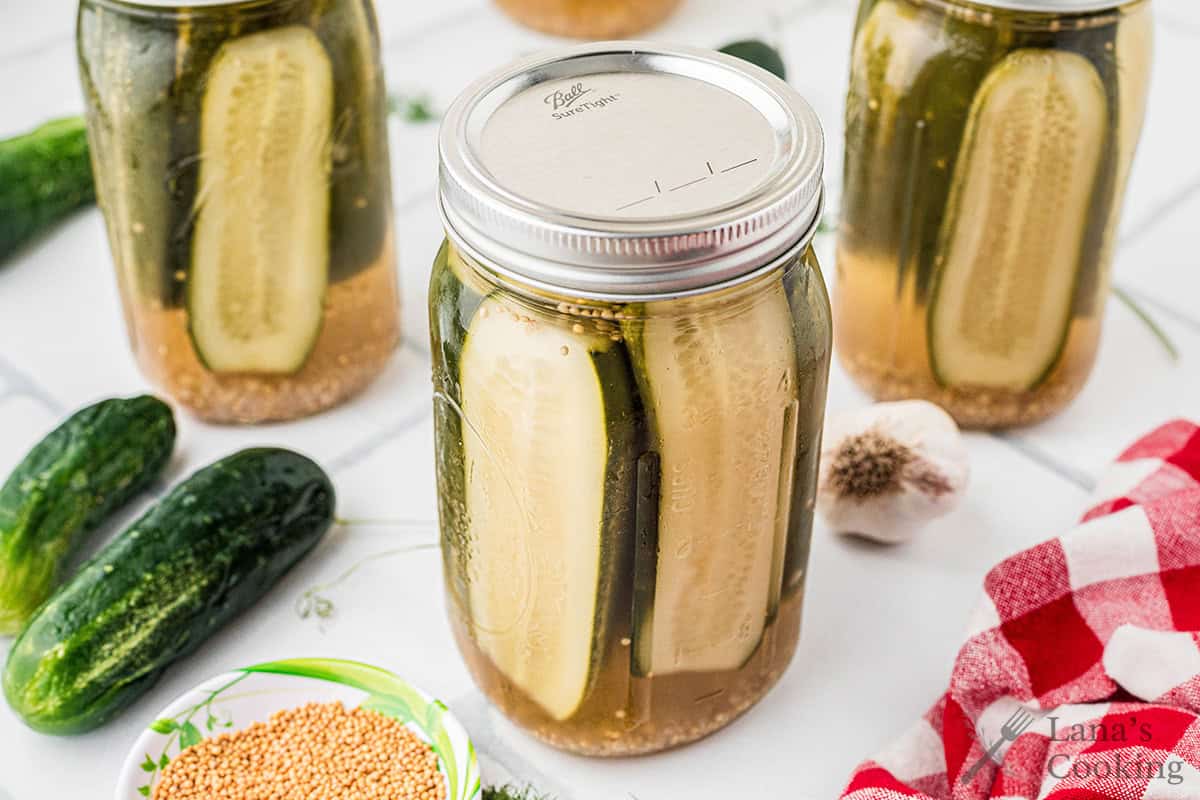
Delicious, crispy Refrigerator Kosher Dill Pickles without the canning process! If you’re a dill pickle fan but not enthusiastic about canning, you’ll love my copycat recipe of the famous Claussen brand of dill pickles found in your grocery store’s refrigerator case.
For lots of us, canning season is at its height about now. Everyone’s putting up luscious fruits and tasty veggies to enjoy throughout the year.
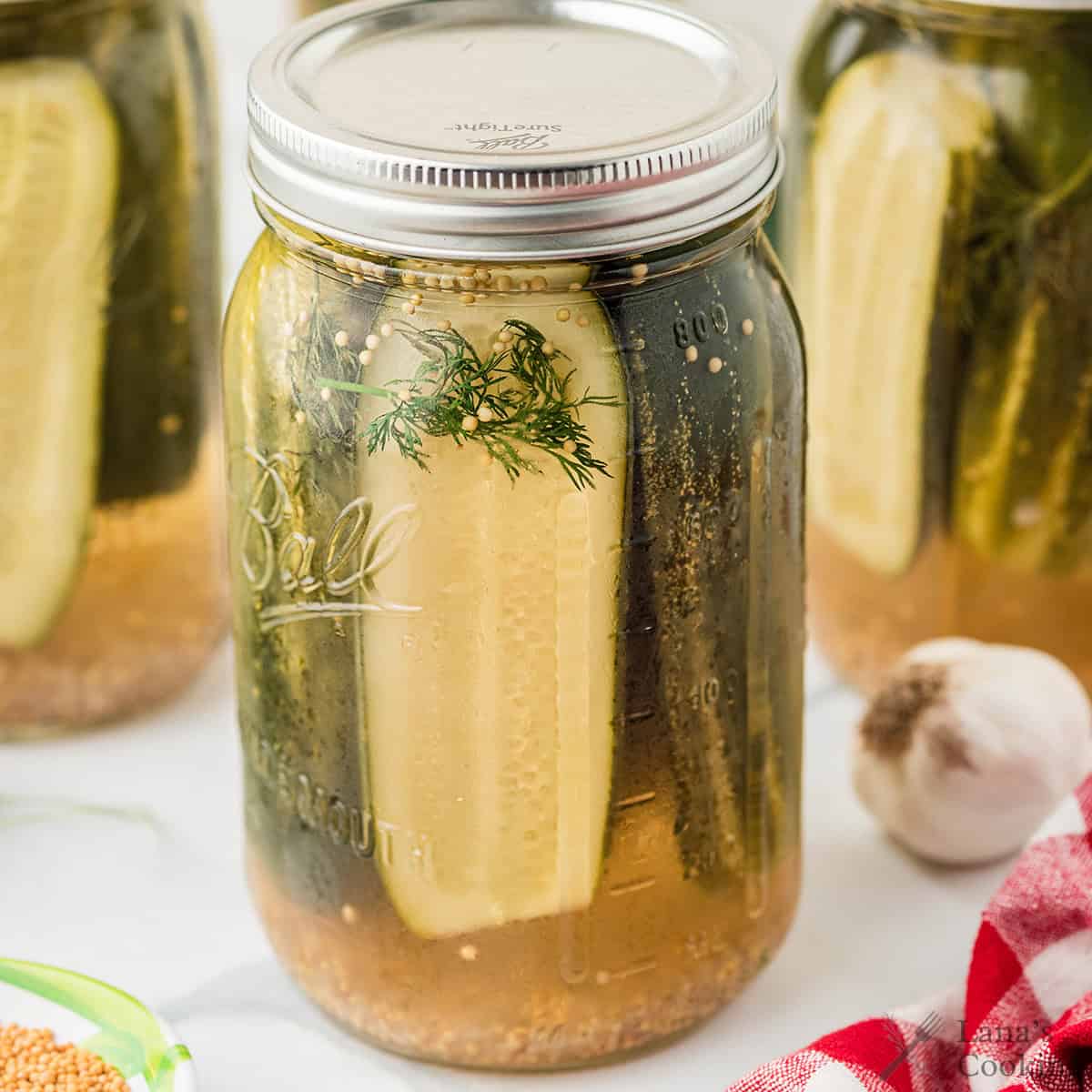
One of our family’s favorites and the recipe I do without fail every year is kosher dill pickles. I’ve only done a few quarts so far this year and really should get busy doing some more.
I’ve done a few Quick Pickled Jalapenos and some bread and butter pickles but no jams or preserves yet. Need to get those done while peaches are still at their peak. And maybe make some Okra Chips as well. Can you tell that preserving and canning is something I really enjoy?
But what if you don’t have all the canning equipment or just don’t enjoy doing that kind of work? Well then, maybe refrigerator pickles would be more your style.
These refrigerator kosher dill pickles are a copycat of the Claussen brand you find in the refrigerator section at your grocery store. They’re really, really easy to do and have a great crunch and flavor. I’d love for you to give these a try and let me know how you like them!
Recipe Snapshot: Refrigerator Kosher Dill Pickles – Claussen Copycat Recipe
Prep Time: 30 minutes
Cook Time: 10 minutes
Inactive Time: 1 hour
Total Time: 1 hour, 40 minutes
Servings: 36
Cuisine: American
Cooking Method: Stovetop
Primary Ingredients: Pickling cucumbers, apple cider vinegar, dill, garlic, minced onion
Skill Level: Easy
DO MORE WITH CHATGPT
WHAT PEOPLE ARE SAYING …
⭐⭐⭐⭐⭐
“These are absolutely the very best pickles I’ve ever had!! My family loved them so much, I’m making another batch tomorrow!“
— Lori
What You’ll Like About This Recipe
- No boiling water bath is required.
- No special canning equipment is needed.
- Very easy! You don’t need to be a “canning person” to make these.
- They’re crunchier than canned pickles and taste very much like the name brand.
Want to save this?
Ingredient Notes
This post may contain affiliate links. Lana’s Cooking is reader-supported and earns a tiny commission at no extra cost to you when you shop from our links.
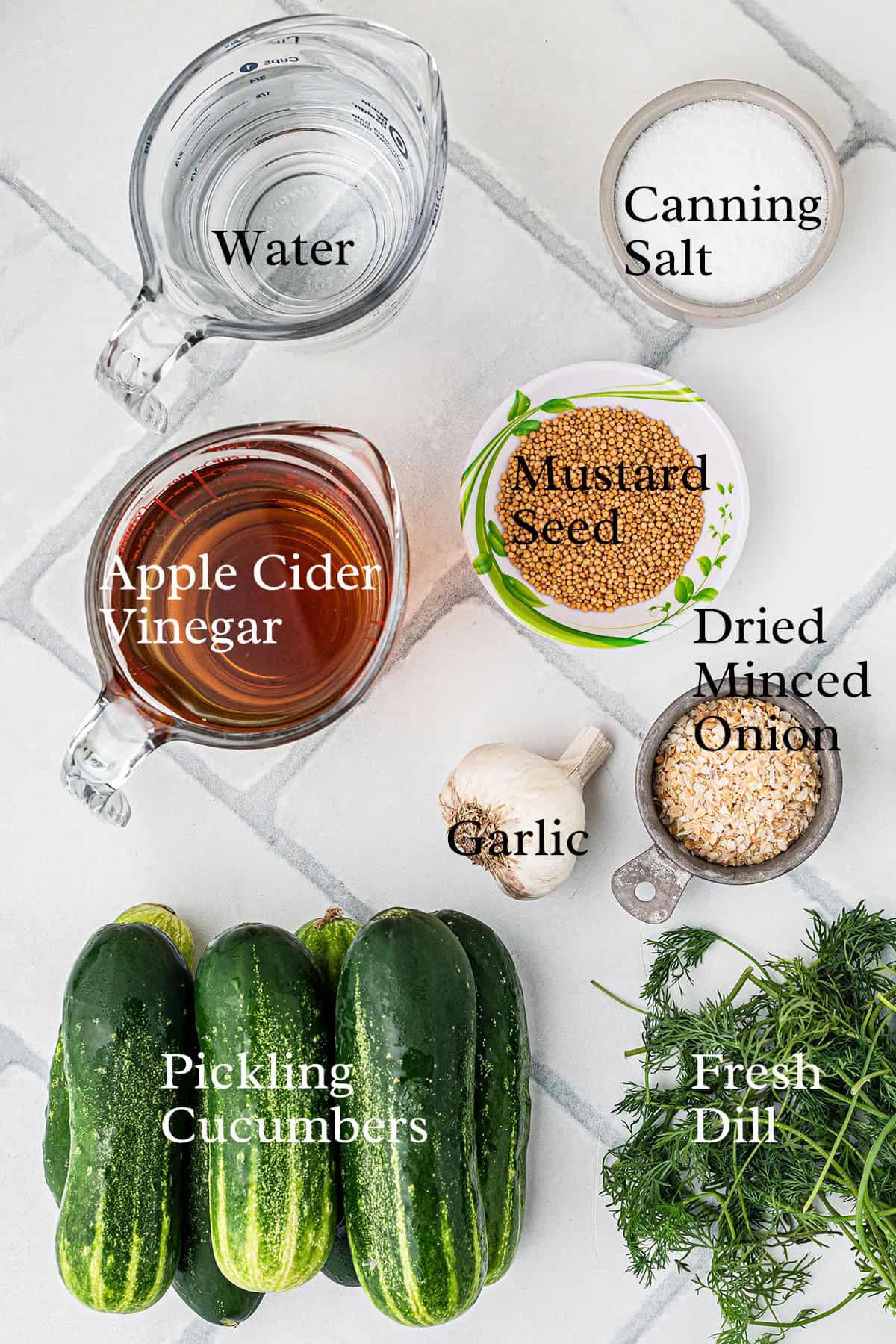
- Pickling cucumbers – also known as “Kirby” cucumbers or sometimes “salad” cucumbers; be sure not to purchase the regular waxed cucumbers for this.
- Apple cider vinegar
- Dried minced onion – you’ll find this in the spice aisle at your grocery store.
- Fresh garlic
- Yellow mustard seed – also in your grocery store’s spice section.
- Canning salt – we use canning salt because it’s completely pure salt and will keep the pickle brine nice and clear.
- Fresh dill heads or dried dill seed – find fresh dill in your grocery store’s produce section or dried dill seed with the spices.
The complete ingredient list with detailed measurements is included in the printable recipe card at the bottom of this post.
How to Make Refrigerator Kosher Dill Pickles
One word of warning about this recipe – if possible, open the windows before you start boiling the solution. It gives off a really strong onion odor. And don’t make this the day before you’re having company over, because your house will still smell like it the day after!

Pro Tip
If you happen to have fresh dill in your garden or from your grocery store, you can use the heads in this recipe. Otherwise, dried dill seed works just as well. If you use the fresh dill, pack it in the jars with the cucumbers. If using dill seed, put it in with the vinegar solution.
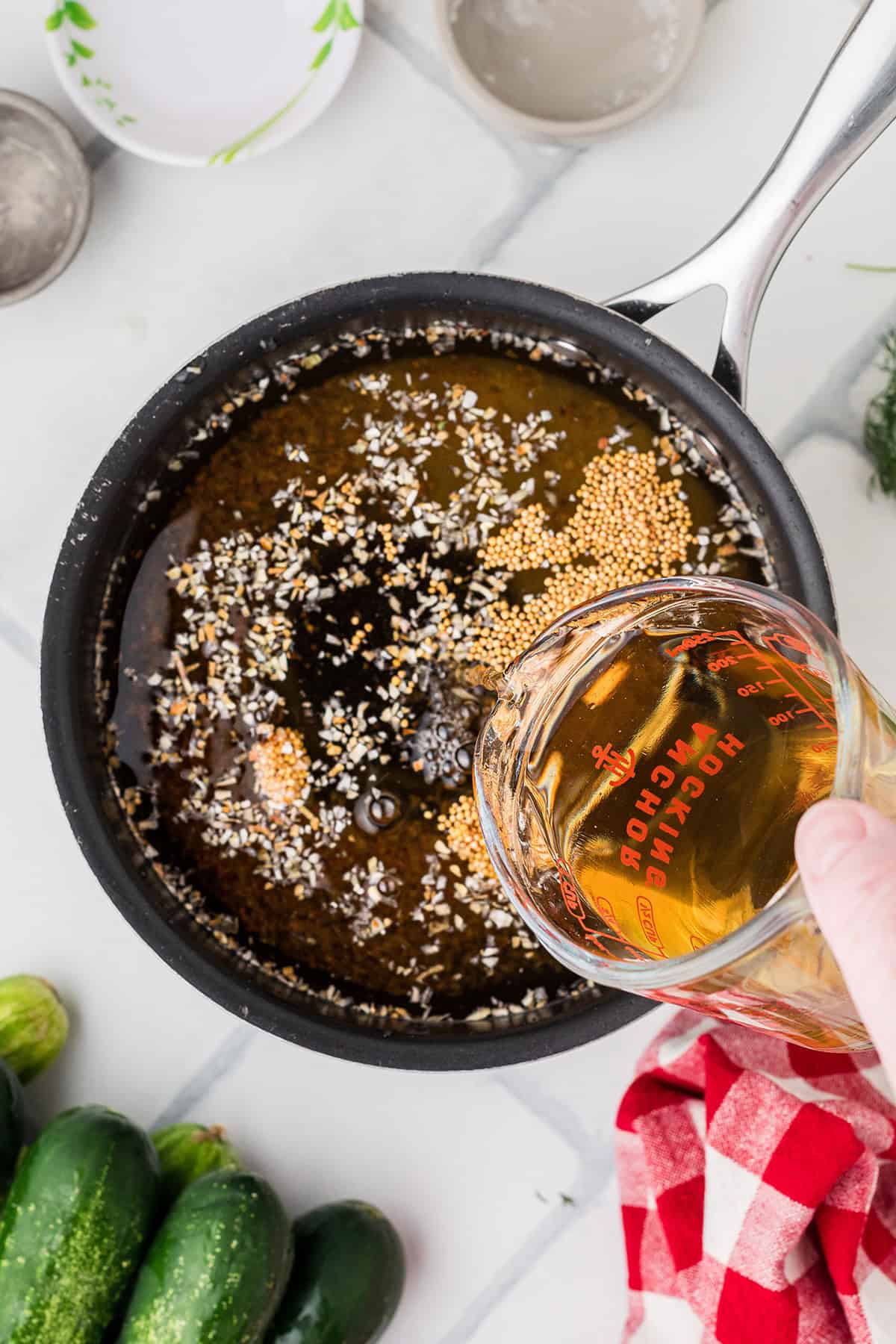
Make the Brine
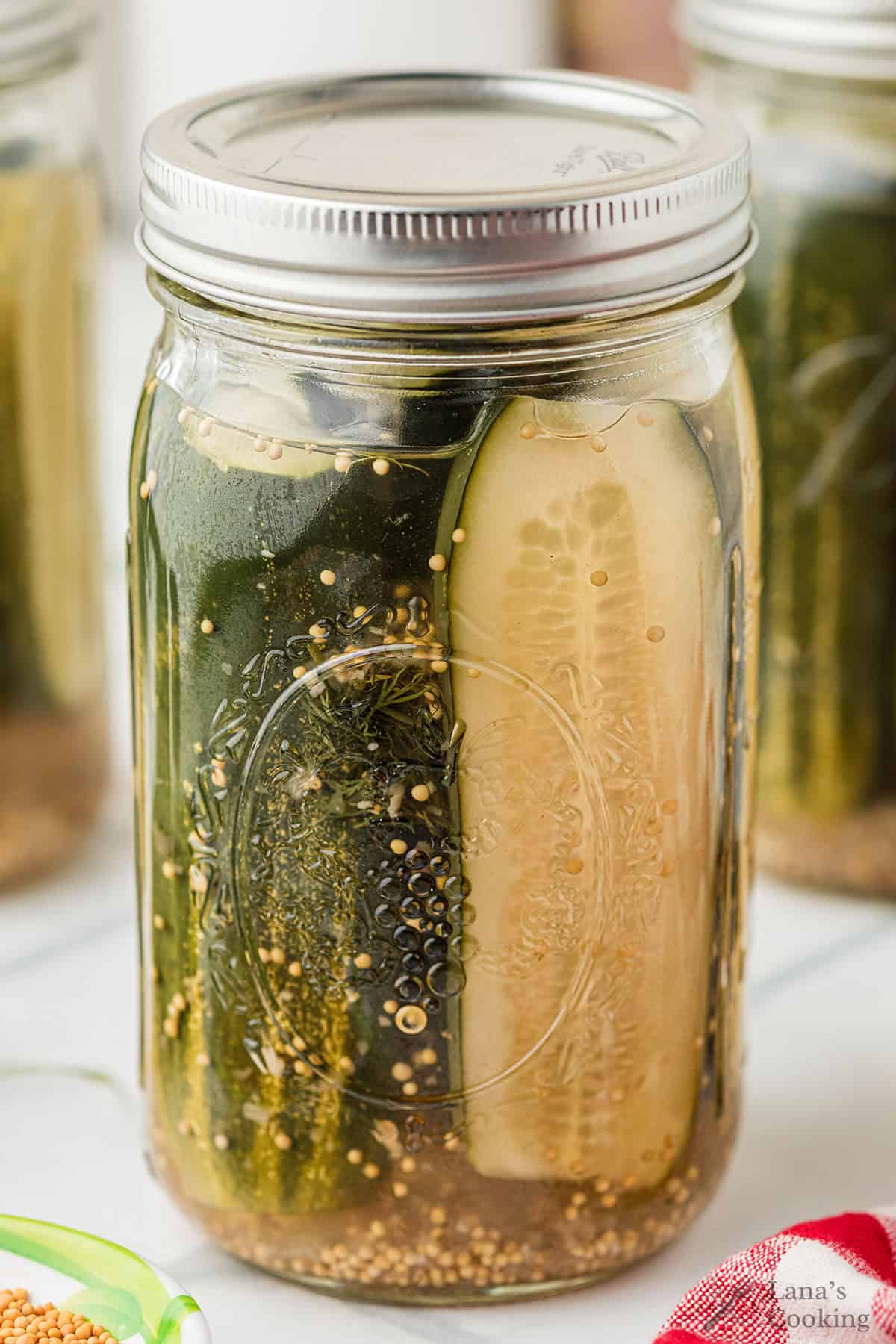
STEP 1. In a large saucepan, bring the water, vinegar, onion, garlic, mustard seed, canning salt, and dill seed (if using) to a rapid boil. Cook until the salt has completely dissolved. Set the mixture aside and allow it to cool to room temperature.
Prepare the Jars
STEP 2. Prepare six wide-mouth quart canning jars and lids. Wash the jars, lids, and rings thoroughly in hot, soapy water. Rinse well. Set the lids and bands aside. To sterilize the jars, place them in a large pot filled with enough water to cover. Bring to a boil. Boil 10 minutes. Remove the jars from the water using a canning jar lifter and place them upside down on a kitchen towel to cool until needed.
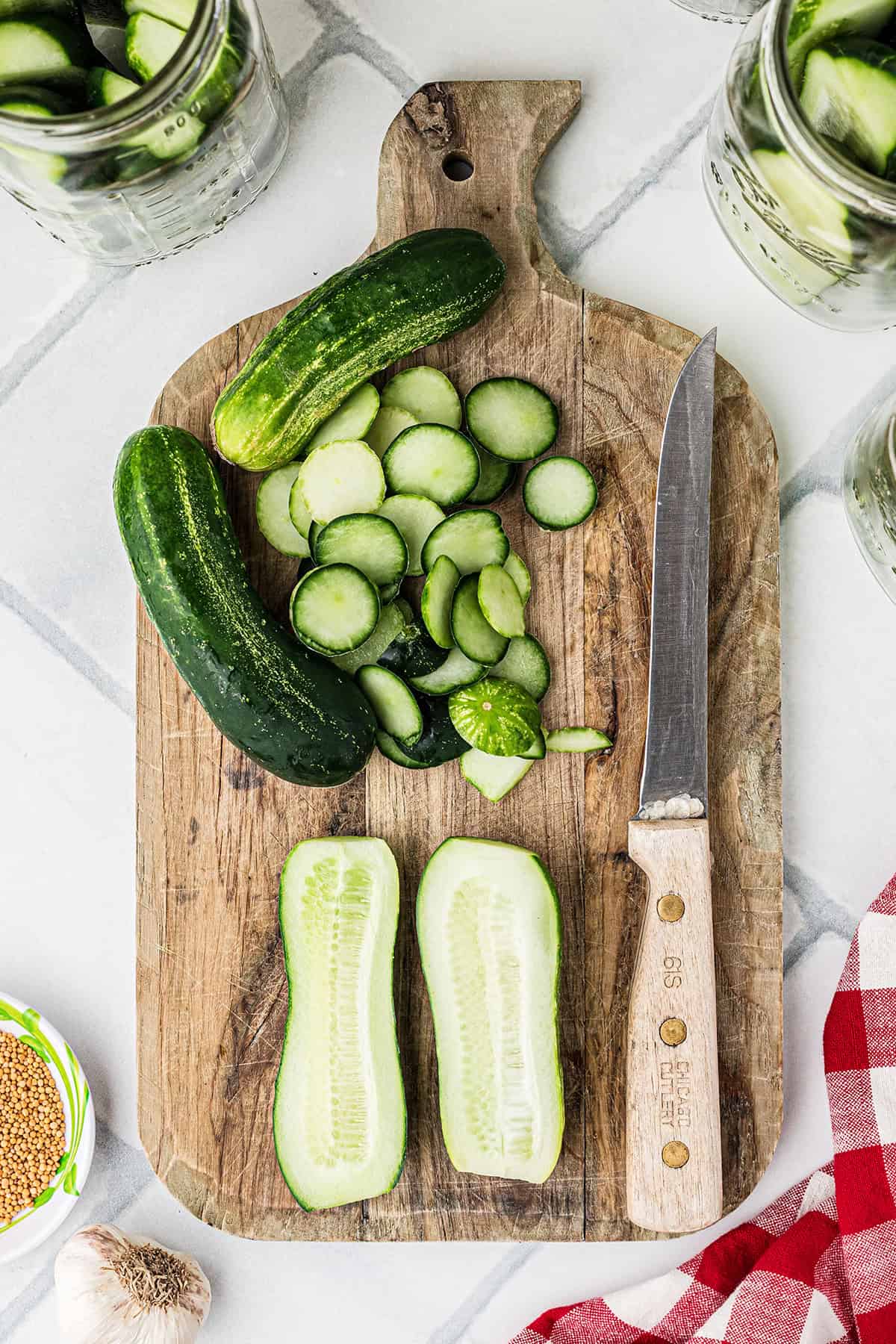
Prep the Cucumbers
STEP 3. Prepare the cucumbers by washing them in cool water, being careful to remove any dirt that may cling to the skin. Remove a 1/16” slice from the blossom end of each cucumber. Slice the cucumbers lengthwise into halves or quarters.
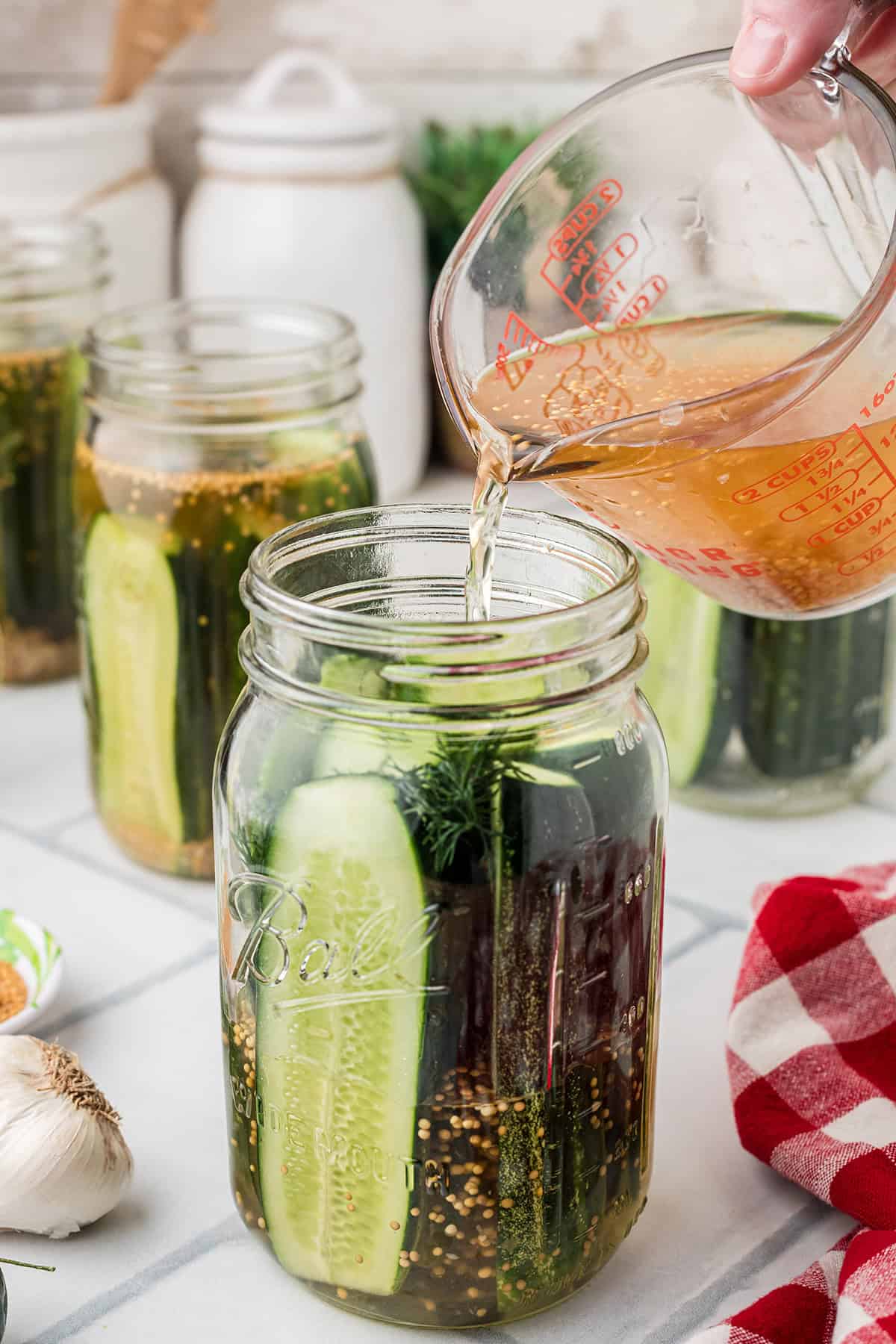
Fill the Jars
STEP 4. To each sterilized jar, add one head of fresh dill (if using) and pack with the cucumber halves or quarters. Pour the cooled mixture over the cucumbers in the jars.
STEP 5. Wipe the rims with a dampened paper towel. Add a canning lid and ring to each jar. Turn the ring just until you meet resistance. Don’t over tighten the rings.
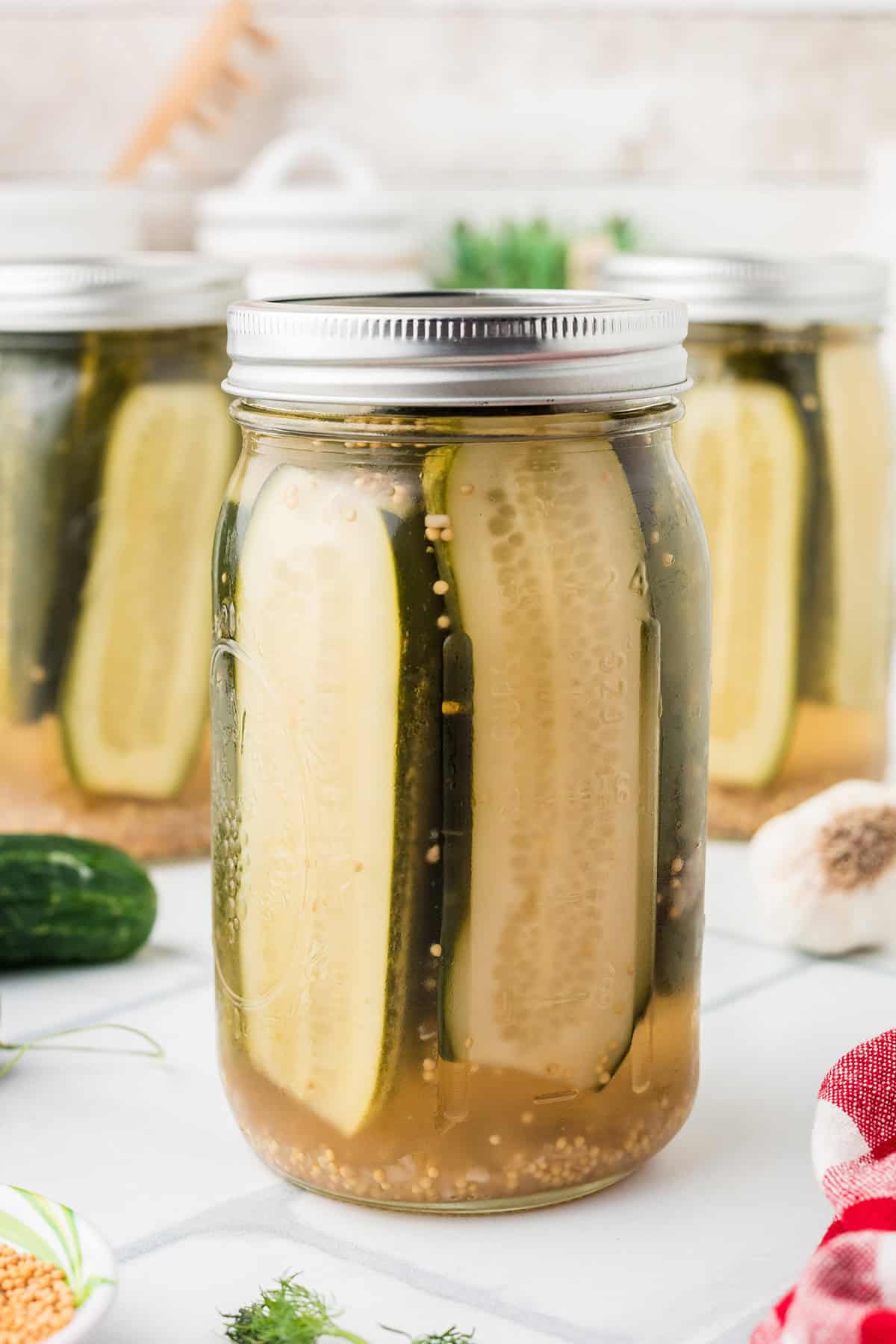
Store the Pickles
STEP 6. Allow the jars to sit at room temperature for three days. Shake or turn the jars occasionally to distribute the seasonings. This short standing time allows for a very light fermentation process to take place. Do not skip it. After three days, transfer the jars to the refrigerator. The pickles are ready to eat once they have chilled thoroughly. Unopened jars may be stored in the refrigerator for six months.
Recipe Tips
- Be sure to use only pickling type cucumbers for the recipe (pickling cucumbers are also called “kirby” or sometimes “salad” cucumbers). Don’t purchase the typical waxed cucumbers found in the produce section.
- Because this isn’t a canning recipe (i.e., it isn’t being prepared for pantry storage, and it’s not shelf-stable), you can vary the ingredients a bit to suit your taste —
- if you like your pickles hot, add a dried red pepper pod to each jar along with the cucumbers.
- the amount of salt may be reduced.
- additional spices may be added; suggestions include dried coriander and/or dried red pepper flakes.
- Use pickling salt (not table salt or kosher salt) in order to prevent cloudiness in the brine.
- White vinegar may be used in place of cider vinegar. There will be a subtle difference in flavor.
Questions and Answers: Copycat Claussen Kosher Dill Pickles
- How long should I wait before eating my Claussen copycat dill pickles?
The pickles are ready to eat once you transfer them to the refrigerator and they’re chilled thoroughly. I allow at least 24 hours for them to get nice and cold. - What’s the difference between regular dill pickles and kosher dill pickles?
Without getting into the technicalities of Jewish dietary requirements, kosher dills typically contain garlic and peppercorns in the brine. Regular dills generally do not include them. - Why can’t I store copycat Claussen pickles in the pantry?
Pickles produced using this recipe must be stored in the refrigerator after the three-day standing time because they haven’t been processed to create a seal between the lid and the jar. - Where can I get pickling cucumbers?
You can always grow your own. Or check your local farmers’ markets and grocery stores. My local Wal-Mart grocery has them year-round. - Can vegetables other than cucumbers be pickled?
Yes, you can pickle many different kinds of vegetables! And they’re delicious, too. Try sliced carrots, cauliflower florets, celery, and sweet bell peppers.


Have a question or thought to share?
If you have a question about the recipe or if you’ve made it and want to share how it turned out, I would truly enjoy hearing from you. Just scroll down to leave a comment or add your star rating.
Thank you for stopping by. It means a lot to have you here.
Recipe

Refrigerator Kosher Dill Pickles (Claussen Copycat)
Ingredients
- 6 cups water
- 2 cups apple cider vinegar
- ⅓ cup dried minced onion
- 6 garlic cloves finely minced
- 1 ½ teaspoons yellow mustard seed
- ⅓ cup canning salt
- 6 heads fresh dill or 4 ½ teaspoons dried dill seed
- About 18 pickling cucumbers
Instructions
- In a large saucepan, bring the water, vinegar, onion, garlic, mustard seed, canning salt and dill seed (if using) to a rapid boil. Cook until the salt has completely dissolved. Set the mixture aside and allow to cool to room temperature.6 cups water, 2 cups apple cider vinegar, ⅓ cup dried minced onion, 6 garlic cloves, 1 ½ teaspoons yellow mustard seed, ⅓ cup canning salt, 6 heads fresh dill
- Prepare six wide-mouth quart canning jars and lids. Wash the jars, lids, and rings thoroughly in hot, soapy water. Rinse well. Set the lids and bands (rings) aside until needed. To sterilize the jars, place the jars in a large pot and fill with water just to cover the jars. Bring to a boil. Boil 10 minutes. Remove the jars from the water using a canning jar lifter and place upside down on a kitchen towel to cool.
- Prepare the cucumbers by washing in cool water being careful to remove any dirt that may cling to the skin. Remove a 1/16” slice from the blossom end of each cucumber. Slice the cucumbers lengthwise into halves or quarters.About 18 pickling cucumbers
- To each sterilized jar, add one head of dill (if using) and pack with the cucumber halves or quarters. Pour the cooled brine mixture over the cucumbers in the jars.
- Wipe the rims with a dampened paper towel. Close the jars using two-piece canning lids but don't tfrocefully ighten the ring — turn it just until you meet resistance.
- Allow the jars to sit at room temperature for three days. Shake or turn the jars occasionally to distribute the seasonings. After three days, transfer the jars to the refrigerator. May be stored unopened in the refrigerator for six months.
Notes
- Be sure to purchase the right type of cucumbers for making pickles. You’ll want those labeled “kirby” or “salad” cucumbers.
- Store unopened in the refrigerator for up to six months. Once opened, use within six weeks.
Nutrition Information
Nutrition information is calculated by software based on the ingredients in each recipe. It is an estimate only and is provided for informational purposes. You should consult your healthcare provider or a registered dietitian if precise nutrition calculations are needed for health reasons.
I’m excited to eat mine! I’m in the processes of making them now. I always do a little more vinegar and a little less water in all my pickling recipes, I also add a tad more salt and an extra garlic clove. So hoping I didn’t over do it 😆 Anyways how long do they need to sit in the fridge before the flavor has taken full effect and I can try them?
You can try them after they have finished their three-day light fermentation. I’d let them get really cold in the fridge first. Full flavor may not develop for about a week.
Thank you!
have you ever made these using zucchini?
No, I haven’t.
can you use pickling spices?
Mixed pickling spices will create an entirely different flavor.
I haven’t made these yet, although I eager to try this recipe. Twice in this post you say the pickles will last 6 months in the fridge, but in the notes at the end it says they last 6 weeks. I was wondering if you could clarify how long they are good for. Thank you.
Oh yes, I see the confusion now. What that note should say is “Store unopened in the refrigerator for up to six months. Once opened, use within six weeks.” I’ve corrected it in the post and thank you for pointing that out to me.
I recently made these pickles, (actually just before we left on vacation). I took one jar with me, and it was a big hit! However when I got home about 6 days after initially make them I realized I hadn’t refrigerated the pickles. The brine was slightly cloudy. Are they still edible?
I might add I was so mad at myself! 😩
I wouldn’t trust them if they haven’t been refrigerated for 6 days. I’m so sorry.
When you make this, do you not need to use the Ball Pickle Crisp? This is used to make sure the cucumbers are crunchy and not soft or soggy.
I don’t use “pickle crisp” in any of my canning recipes.
Can I prepare the vinegar solution and store the unused solution in the fridge to use later?
I’ve never tried that, but I see no reason that it wouldn’t work!
i LOVE LOVE LOVE the Cider Vinegar flavor!
Thanks for letting me know you like the recipe!
hey Lana,
thanks so much for sharing your recipe with us :)
I just finished making 4 nice big jars of these Kosher pickles. Can’t wait to try them and see how they turned out!
love from salt lake city
You’re welcome Aida. I hope you enjoy the pickles!
I have made these twice.. I opted for white vinegar and they are DELISH!!! I added jalapeños and Vidalia onions for extra yumminess!
If I use dried dill how much do I use
The recipe says 4 1/2 teaspoons dried dill seed.
How do I use this recipe for smaller amounts of pickles and I only want to pickle from my garden I don’t wanna buy large amounts of pickles I’m thinking like one jar at a time thank you Mike Boyd
The recipe is for making six quarts. So if you’d like to make one jar at a time, simply divide the ingredients by six.
Can I add a sport pepper from the garden to the jar to make them spicy?
Yes. Since this is not a canning recipe, you can make additions without worrying about food safety.
These are my favorite! I’ve tried many refrigerator pickle recipes trying to find one that tastes like a Claussen and this is it!
Thank you!
Curious though, do you strain off the ingredients and just use the brine?
Hi Jennifer – No, I don’t strain the brine.
Why do you let the brining solution cool? I thought the brine needed to be hot when poured into the jars and sealed?
For this recipe you allow the brine to cool in order to retain the crispness of the cucumbers. This is NOT a canning recipe. The jars are not water bathed for a heat seal and that’s why they’re stored in the refrigerator.
Oh interesting. I’ve been using the Mrs wages refrigerator mix, and following those directions, which have you poor the hot liquid into the jars and put the cap on and then store in the refrigerator once it cools. I always hear the top pop when it seals while cooling. I’m going to have to try your recipe and method and see how it compares!
The reason they have you store the jars in the refrigerator is because that is not a true seal. You may hear the top ping but that does not mean the jar is actually sealed. Canned foods have to be processed in a boiling water bath (or in a pressure canner for low acid foods) to actually create a seal. Just making the lid pop or ping doesn’t make a seal and is not safe to store outside of the refrigerator.