


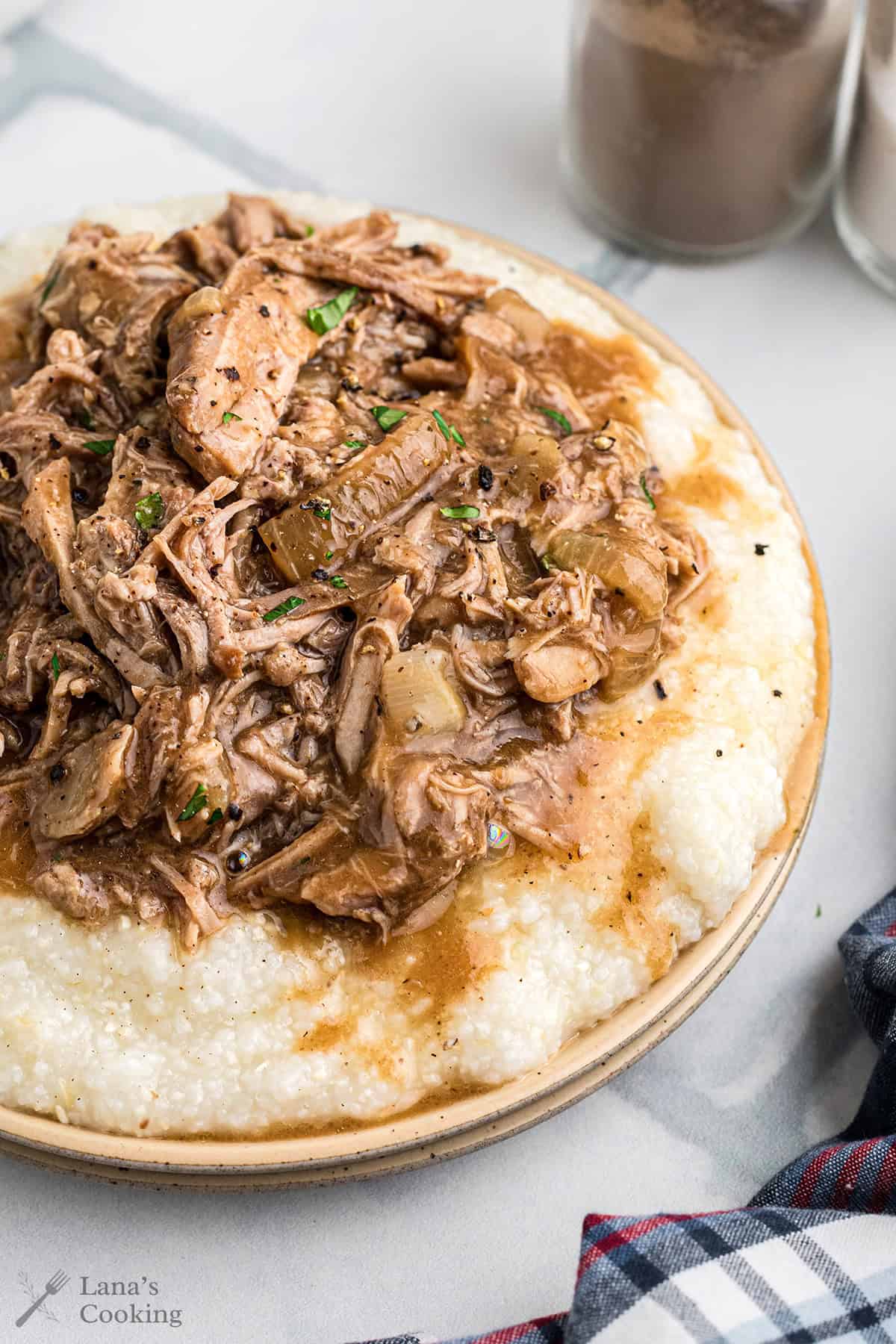
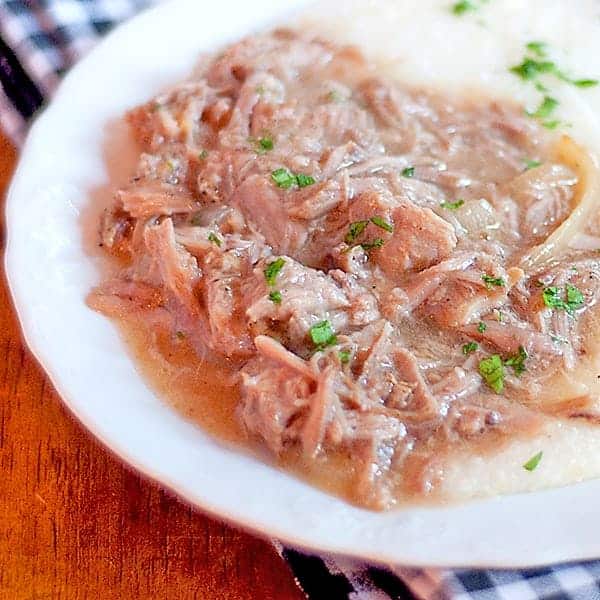
Rich and savory Slow Braised Pork Rib Ragu takes pork ribs to another level. Combine a rack of ribs with aromatic vegetables for a long, slow simmer. Then, put the meat over creamy buttered grits, and you have a Southern twist on a classic recipe.
No, pork ribs aren’t just for the grill! In this Slow Braised Pork Rib Ragu, we’ll use those meaty spareribs in a totally different way that’s inspired by classic Italian ragu recipes. And just to keep it really down home, we’ll pair the result with buttery, creamy grits.

This dish is perfect for a cozy family dinner. It’s also something interesting and different to serve guests. Plus, it’s surprisingly simple—you’ll just need a little patience to wait for the slow cooking time.
And don’t be intimated by the length of the recipe. I’ve made it very detailed for you, but I could actually write this recipe in one little paragraph if I had to. It would go something like this:
“Brown some spareribs and add aromatic vegetables to the pot. Cover with water and cook until tender. Take the meat off the bone. Thicken the cooking liquid and add the meat back to the pot. Serve over hot buttered grits.”
See? Easy!
Recipe Snapshot
Cuisine: American (Italian)
Cooking Method: Stovetop & Oven
Total Time: 4 Hours
Servings: 6
Primary Ingredient(s): Pork spareribs, leek, carrots, onion, white wine, grits, butter
Skill Level: Easy
What You’ll Like About This Recipe
- The long, slow cooking time brings out all the pork’s flavors.
- It can be made in advance. The flavors will actually improve when stored overnight.
- It feels fancy enough for company, but it’s perfectly hearty and homey for a family dinner.
Ingredient Notes
This post contains affiliate links. Lana’s Cooking is reader-supported and earns a tiny commission at no extra cost to you when you shop from our links.
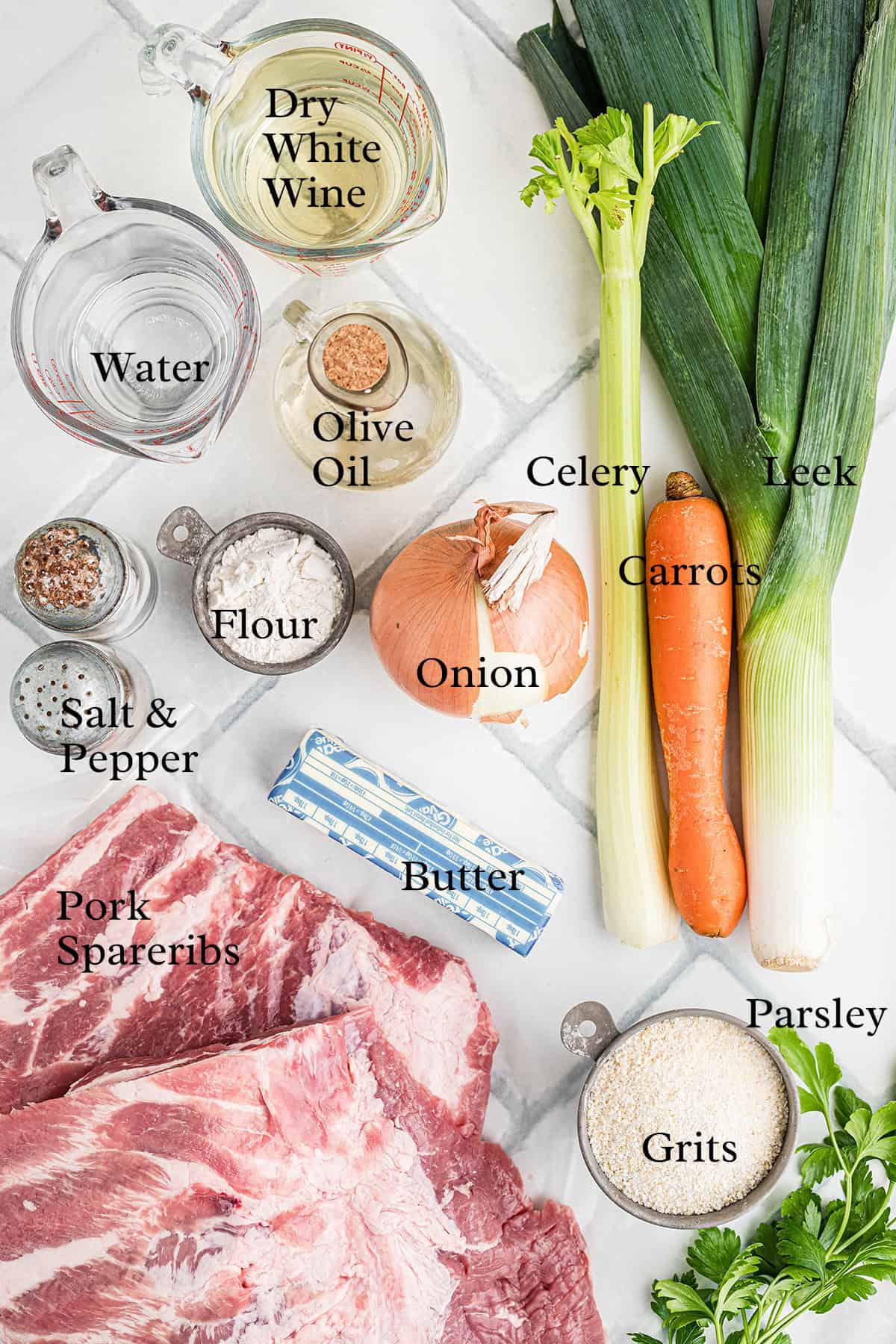
- Pork Spareribs — These are, of course, the main ingredient for the ragu. If you’ve never tried ribs any way other than barbecued, you’re going to be really surprised! They become lovely and tender when slow cooked.
- Leek, carrots, celery, and onion — These aromatic vegetables give a beautiful flavor to the sauce. Be sure to clean the leeks well since they often hide a lot of dirt between the layers.
- Dry White Wine — A little dry white wine will brighten up the sauce. Choose something you’d enjoy drinking—if it’s good in a glass, it’ll be good in a recipe!
- Quick-Cooking Grits — Many ragus are served over polenta, which, after all, is first cousin to grits, right? I always prefer a regional southern brand of grits like Jim Dandy or Dixie Lily. I know there are several big national brands that distribute grits, but they are far from desirable. And make sure they’re white corn grits, not yellow. They’re two totally different things. Really.
The complete ingredient list with detailed measurements is included in the printable recipe card at the bottom of this post.
How I Make Slow Braised Pork Rib Ragu
- Preheat the oven to 350 degrees.
Prep the Vegetables
How to Clean Leeks
Just in case you haven’t worked with leeks very much, you should know that they’re often quite dirty. They may not look like it on the outside, but there’s often a good bit of dirt and mud between the layers. Here’s how I clean them.
- Remove most of the tough, dark green top part of the leek. Cut the leek in half lengthwise, then cut crosswise into half-moon shapes about 1/4-inch thick.
- Put the cut leeks in a large bowl filled about halfway with cold water.
- Agitate the leek gently to help loosen any dirt.
- Let it sit for a few minutes. The dirt will settle to the bottom of the bowl, and the leeks will float in the water.
- Skim the floating pieces of leek from the top of the water without disturbing the dirt on the bottom. Lay them on a couple of folded paper towels to drain.
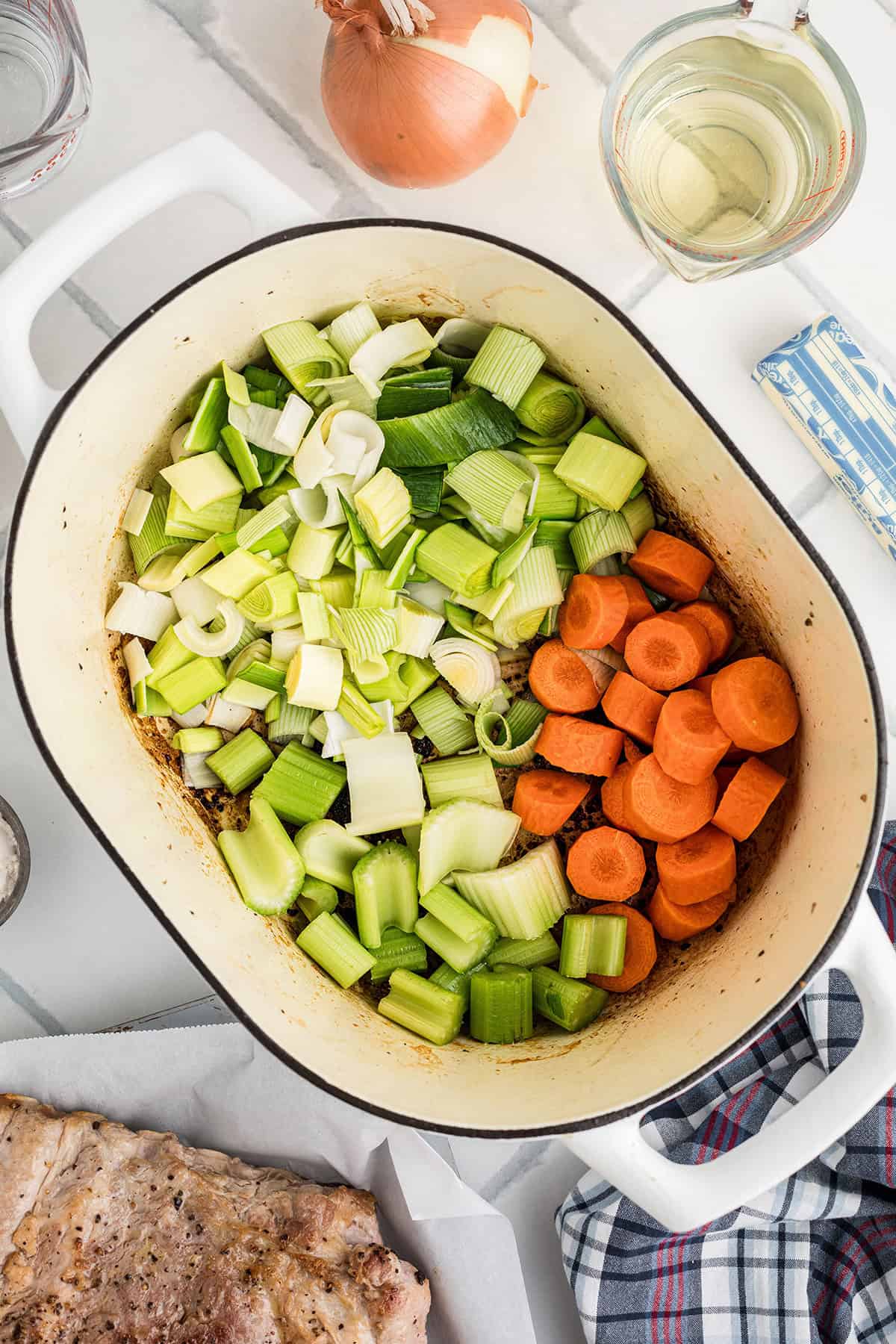
- Clean and cut the leek and peel the carrots. Coarsely chop the carrots and celery.
Prep and Brown the Ribs
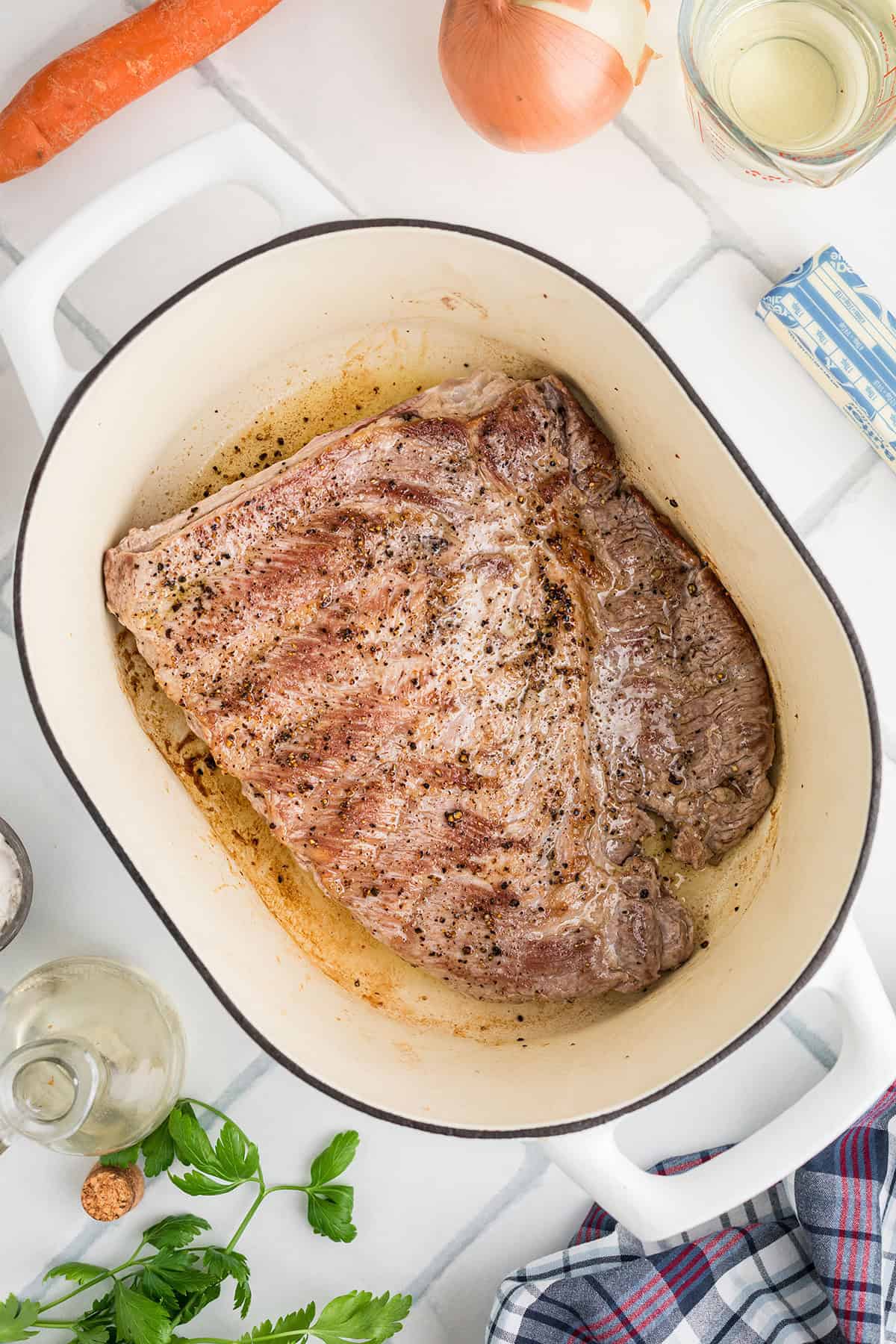
- Season the ribs generously with salt and pepper on both sides. Cut into pieces (3 to 4 ribs each) that will easily fit into your pot for browning.
- Place a large Dutch oven or other large, heavy pot over medium heat and add the oil.
- Cook the ribs in batches until browned on all sides, about 5-6 minutes per batch. Do not crowd the pan while browning. Transfer the browned ribs to a plate.
Cook the Vegetables
- Add the leek, carrots, and celery to the fat remaining in the pot. Cook, stirring frequently, until the vegetables soften slightly – about 5 minutes.
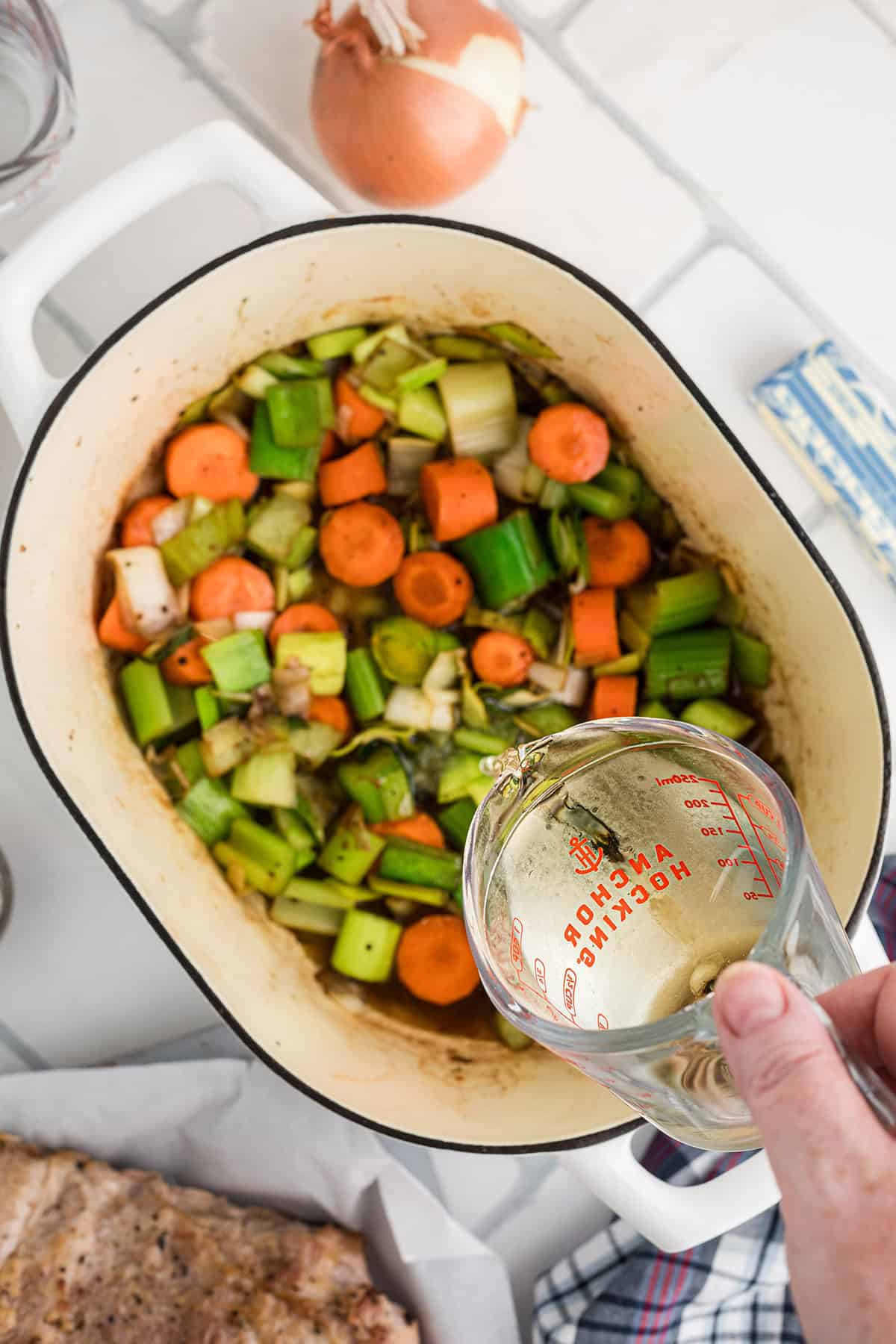
- Add the wine, bring it to a simmer and cook until reduced by about half.
Braise the Ribs
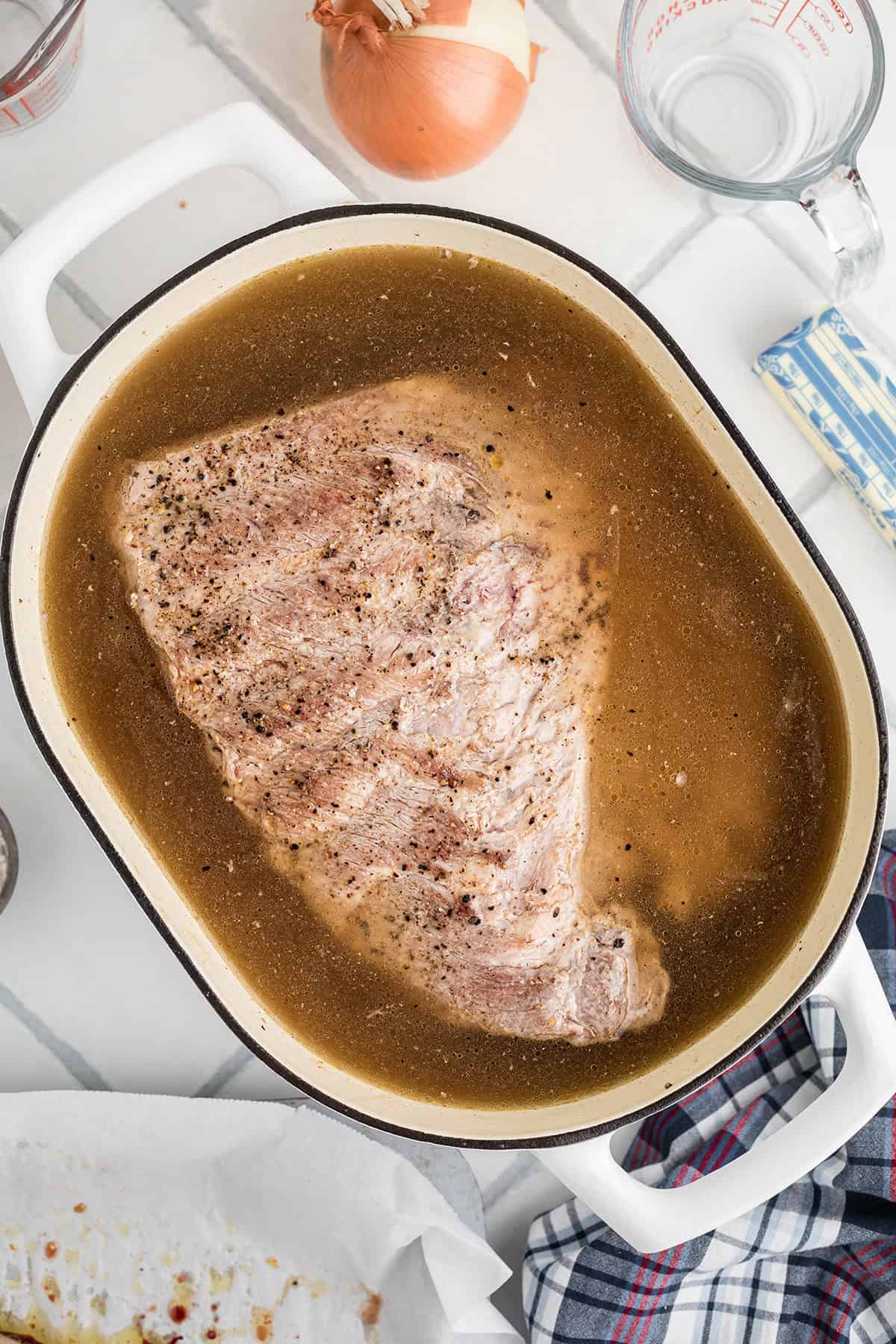
- Return the ribs to the pot and cover with water. Bring to a boil. Remove from the heat, cover tightly and place in the preheated oven. Cook until the meat is falling off the bones. It will take about 3 1/2 hours.
Separate the Meat from the Bones
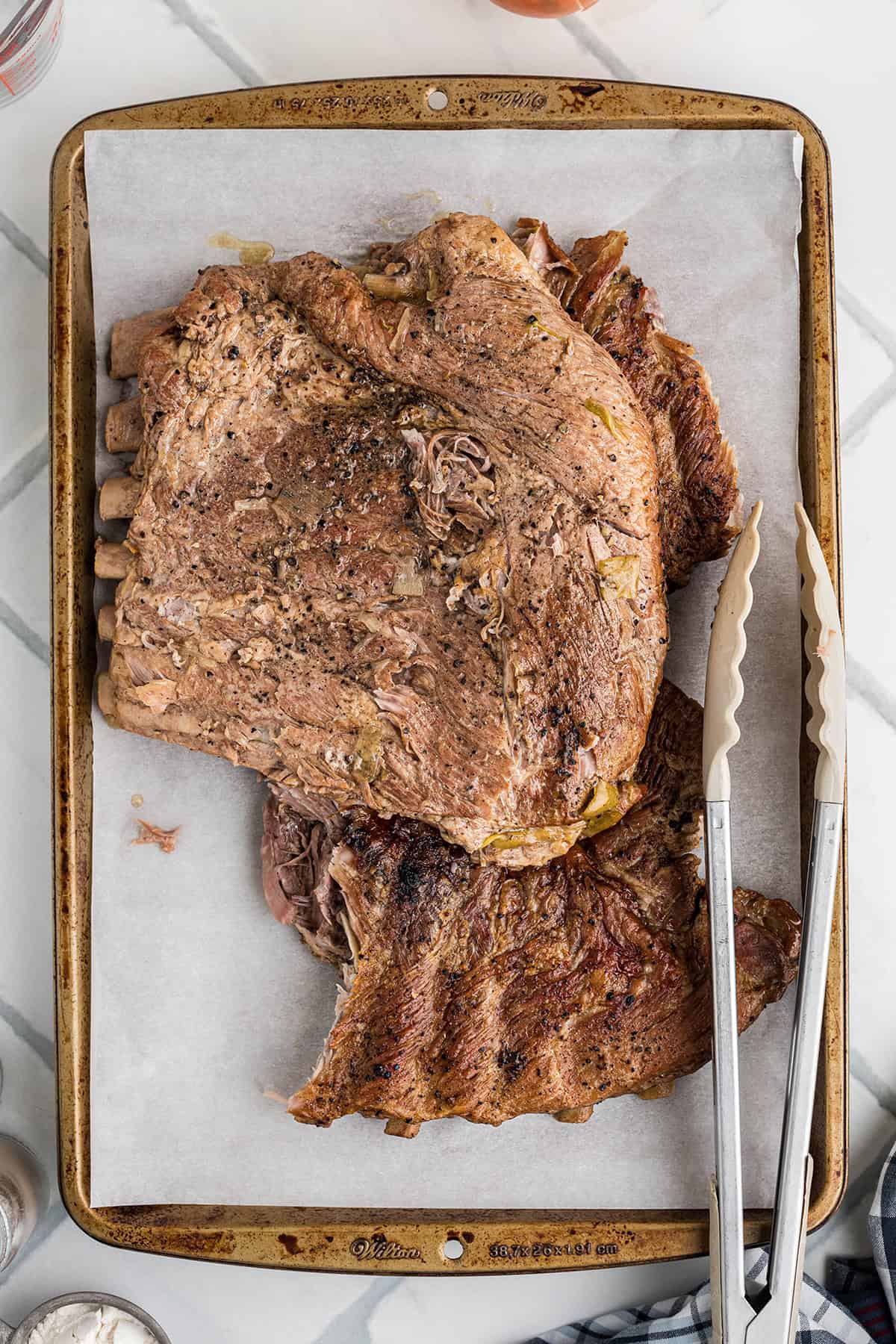
- Transfer the ribs to a rimmed baking sheet.
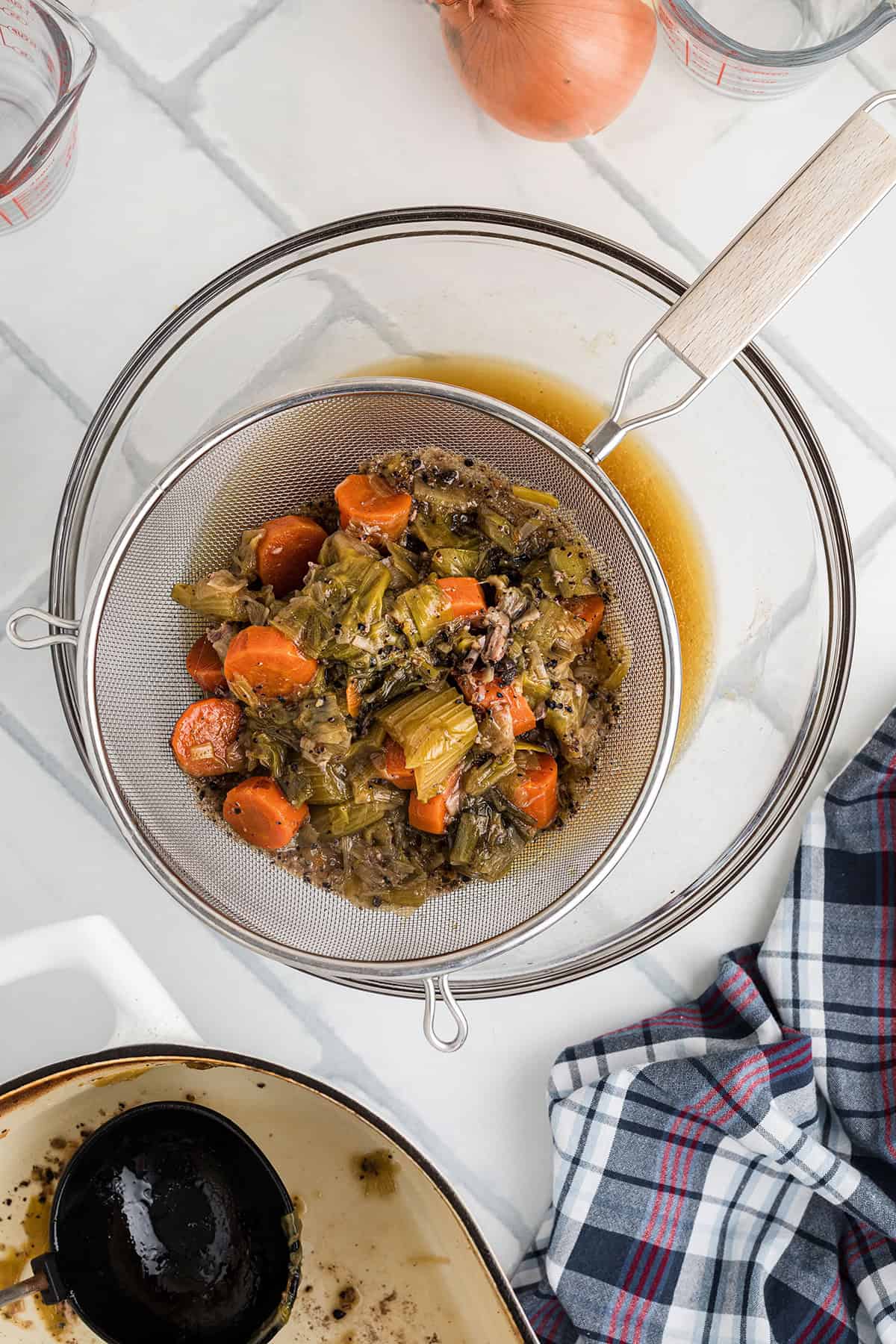
- Strain out and discard the vegetables. Transfer the cooking liquid to a heatproof bowl. Skim as much fat as possible from the liquid.
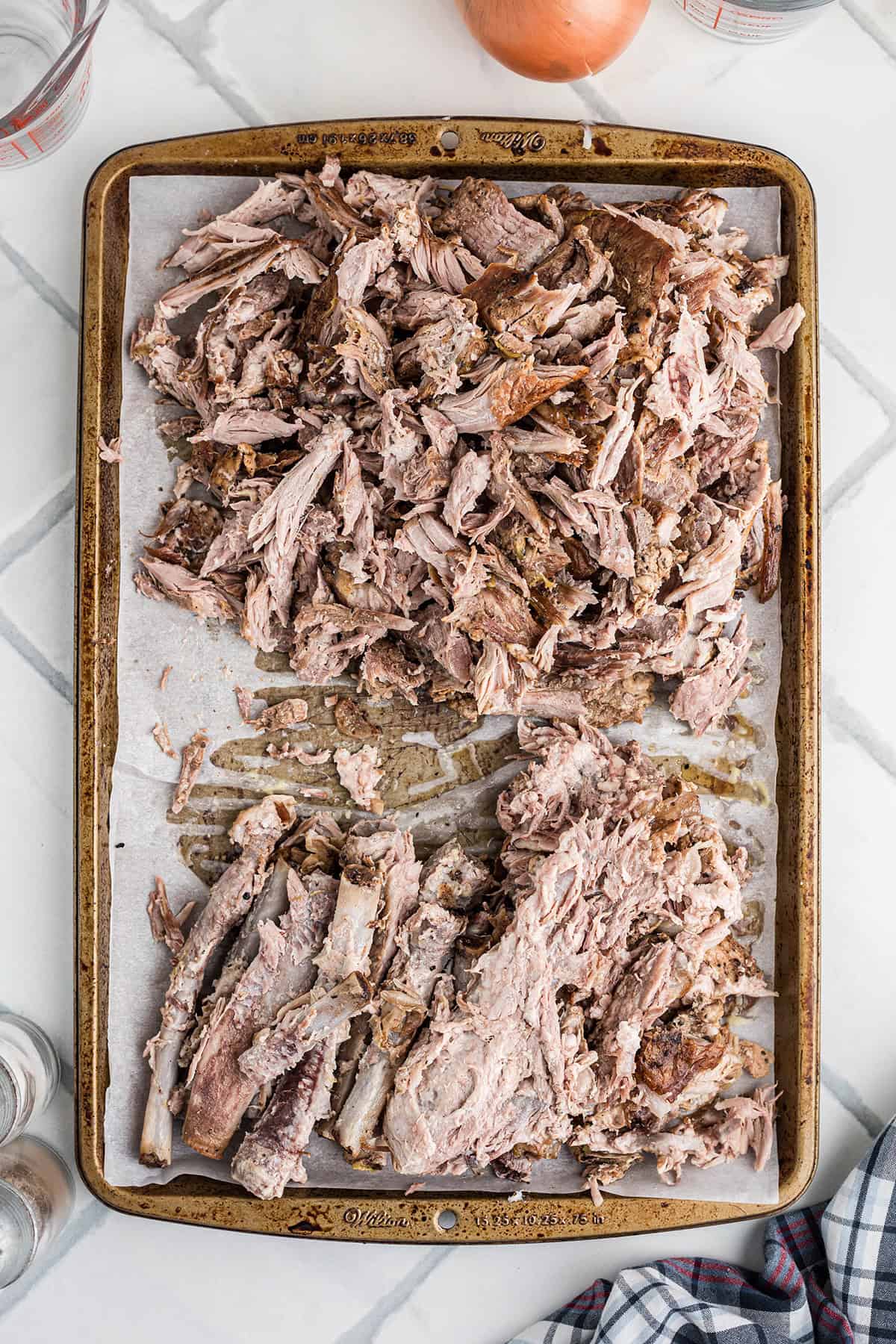
- When the ribs are cool enough to handle, shred the meat (discard fat and bones).
- Alternatively, You can stop here and refrigerate the strained cooking liquid and meat for several hours or overnight. The fat will rise to the top of the liquid, making it easy to remove. You’ll also remove much more fat if you do it this way.
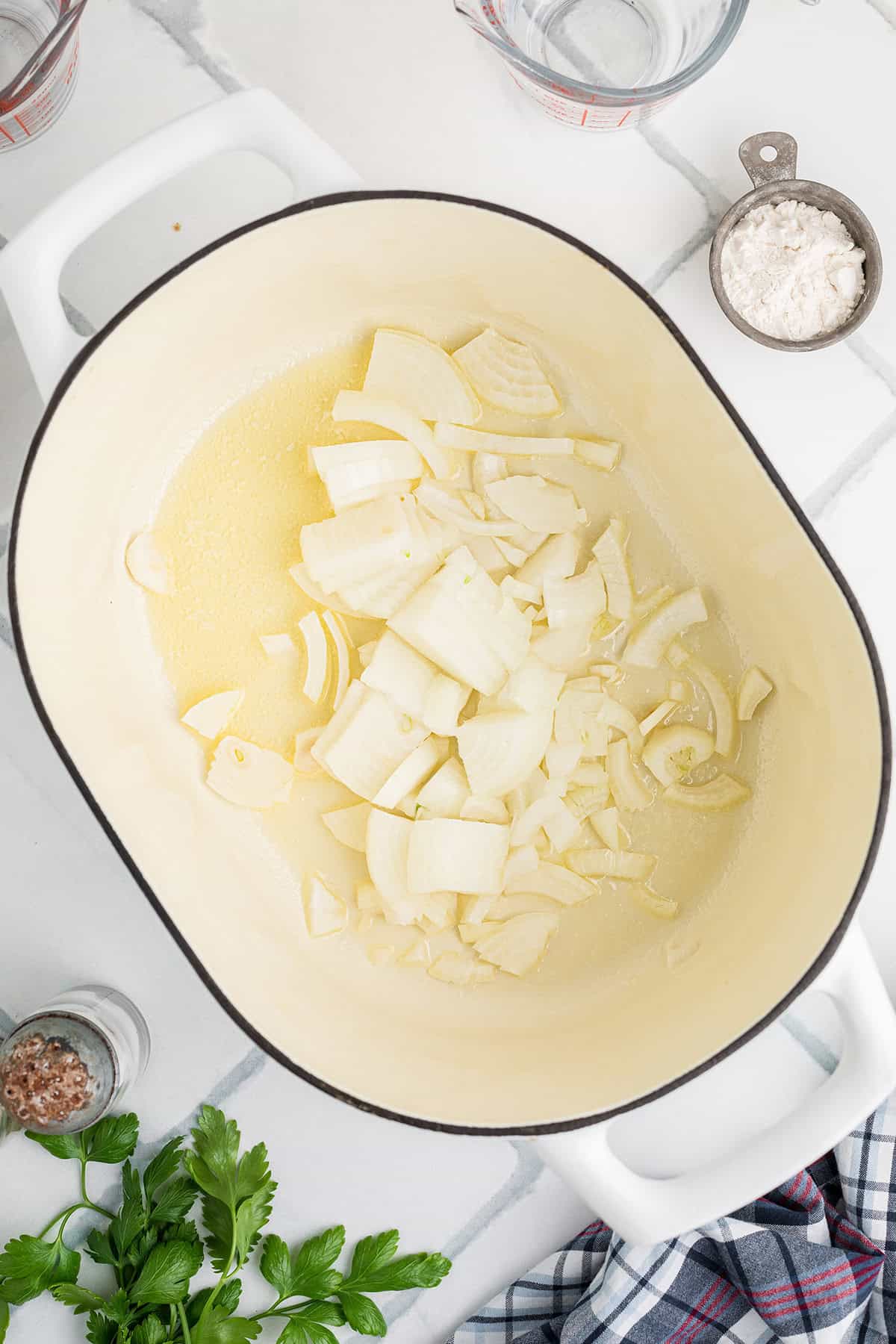
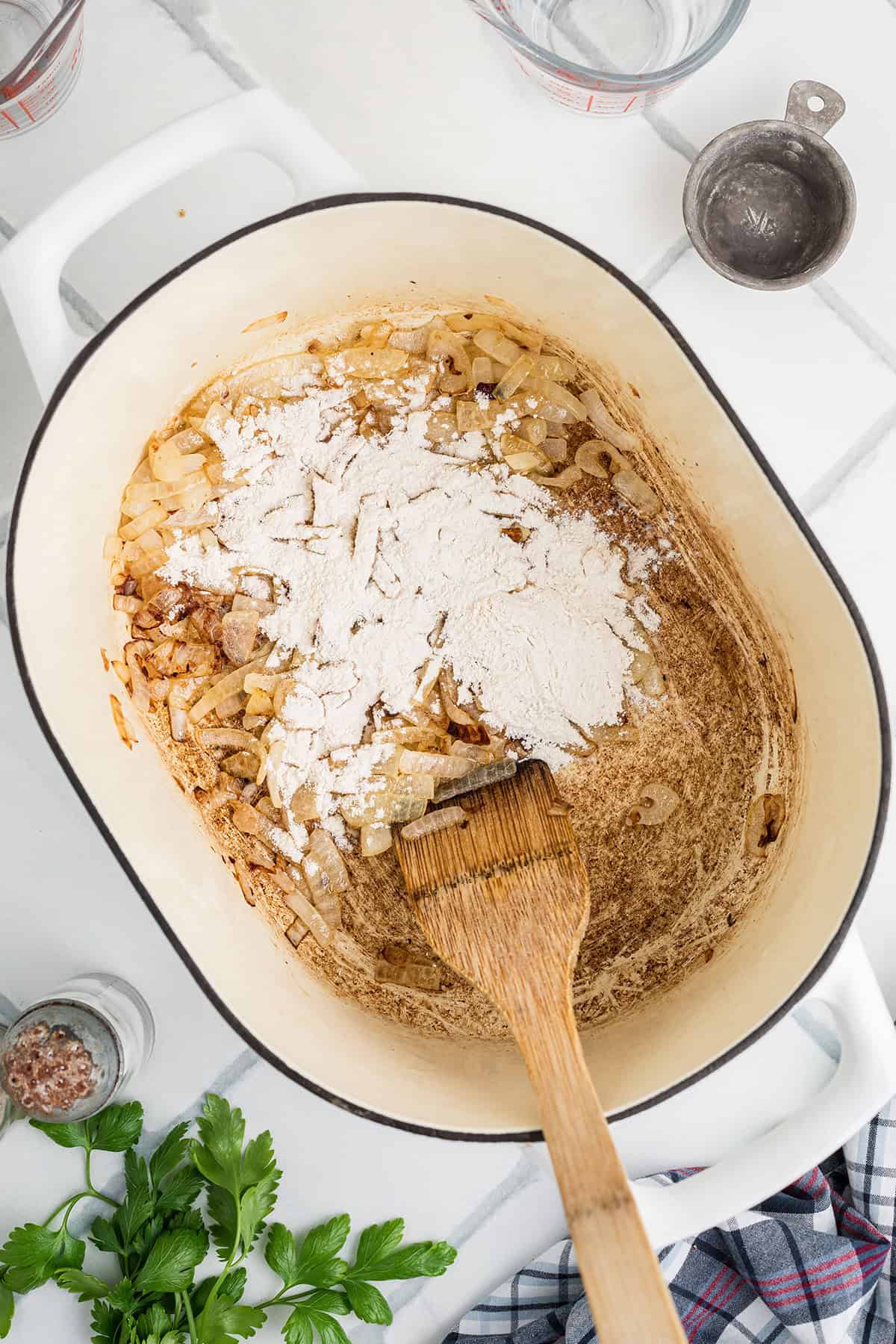
- Back in the same cooking pot (or in a medium saucepan if you waited overnight), melt the butter over medium heat. Add the onion and cook until soft, about 8 minutes.
- Stir in the flour. Gradually whisk in the cooking liquid. Bring to the boil, then reduce the heat to a lively simmer and cook until thickened.
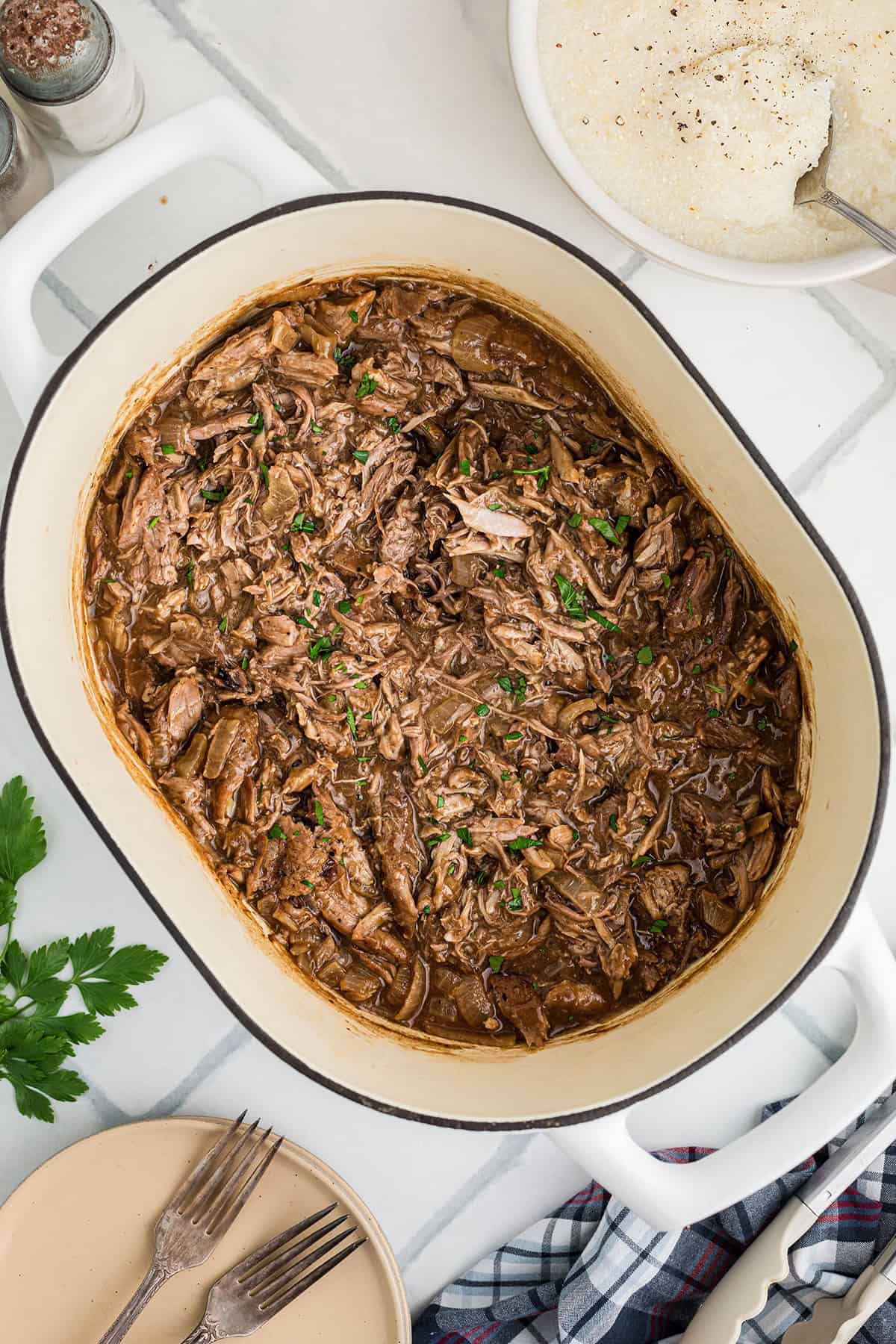
- Add the pork to the sauce and cook until heated through.
Cook Grits and Serve
- Cook the grits just before you’re ready to serve. Bring the water and salt to a boil. With a whisk, slowly stir in the grits. Bring back to the boil then lower the heat to a simmer. Cover and cook for 5 minutes (or as specified in the package instructions). Add butter and stir until melted.
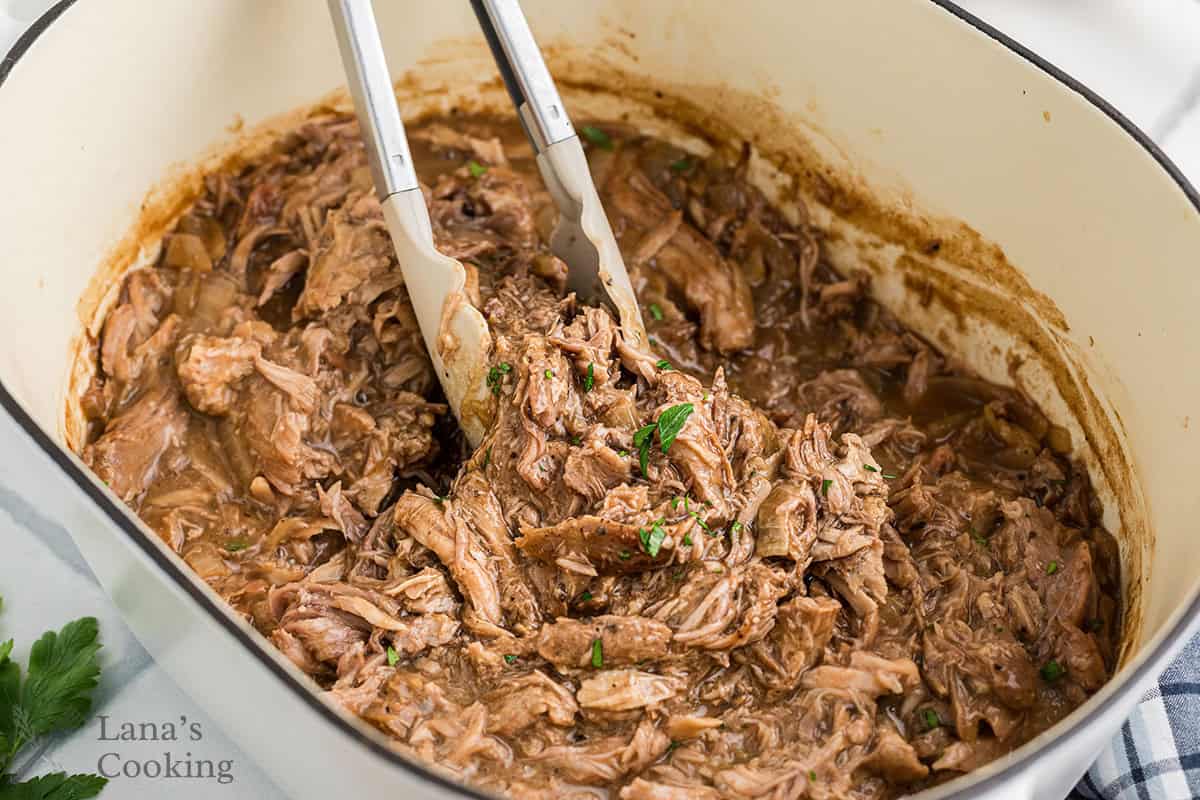
- Serve the ragu over a generous portion of buttered grits. Garnish with chopped fresh parsley if desired.
Recipe Variations
- For a bit of heat, add a pinch of red pepper flakes or a dash of cayenne pepper.
- Instead of grits, serve over mashed potatoes or buttered egg noodles.
Serving Suggestions
- Side Dishes:
- Menu Ideas:
- Pork Rib Ragu, Southern Green Beans, Hot Water Cornbread
- Pork Rib Ragu, Stewed Okra and Tomatoes, Easy Peach Crisp
- Pork Rib Ragu, Simple Green Salad with Classic Vinaigrette, Angel Biscuits
Storage Information
Store in an airtight container in the refrigerator for up to 3 days or freeze for up to 3 months. Thaw overnight in the fridge. To reheat, warm gently on the stove over medium heat, adding a splash of broth if needed.

Questions About Slow Braised Pork Rib Ragu
Country-style ribs, baby back ribs, and rib tips are great alternatives.
Yes, you can. Brown the ribs and veggies, then transfer everything to a slow cooker. Cook on low for 8 hours.
No, you can substitute chicken broth if you prefer.

Have a question or thought to share?
If you have a question about the recipe or if you’ve made it and want to share how it turned out, I would truly enjoy hearing from you. Just scroll down to leave a comment or add your star rating.
Thank you for stopping by. It means a lot to have you here.
Recipe

Slow Braised Pork Rib Ragu
Ingredients
For the ragu:
- 1 large leek
- 2 large carrots
- 2 ribs celery
- 1 tablespoon olive oil
- 4 pounds pork spareribs about 2 racks
- Salt
- Pepper
- 1 cup dry white wine
- 2 tablespoons butter
- 1 medium onion halved and thinly sliced
- 2 tablespoons all-purpose flour
For the grits:
- 4 cups water
- 1 teaspoon salt
- 1 cup quick cooking white grits
- 4 tablespoons butter
Garnish:
- Chopped fresh parsley optional
Instructions
- Preheat the oven to 350 degrees.
- Clean and cut the leek and peel the carrots. Coarsely chop the carrots and celery.
- Season the ribs generously with salt and pepper on both sides. Cut the ribs into pieces (3-4 ribs each) that will easily fit into your pot.
- Place a large Dutch oven or other large heavy pot over medium heat and add the oil.
- Cook the ribs in batches until browned on all sides, about 5-6 minutes per batch. Do not crowd the pan while browning. Transfer the browned ribs to a plate.
- Add the leek, carrots, and celery to the fat remaining in the pot. Cook, stirring frequently, until the vegetables soften slightly – about 5 minutes.
- Add the wine, bring it to a simmer and cook until reduced by about half.
- Return the ribs to the pot and cover with water. Bring to a boil. Cover tightly and place in the preheated oven. Cook until the meat is falling off the bones. It will take about 3 1/2 hours.
- Transfer the ribs to a rimmed baking sheet.
- Discard the vegetables and strain the cooking liquid into a heatproof bowl. Skim as much fat as possible from the liquid.
- When the ribs are cool enough to handle, shred meat (discard fat and bones).
- Alternately: stop here and refrigerate the strained cooking liquid and meat for several hours or overnight. The fat will rise to the top of the liquid and can be easily removed.
- In the same pot (or a medium saucepan if you waited overnight), melt the butter over medium heat. Add the onion and cook until soft, about 8 minutes.
- Stir in flour. Gradually whisk in the cooking liquid. Bring to the boil, then reduce the heat and simmer until thickened.
- Add the pork to the sauce and cook until heated through.
- When ready to serve, make the grits: Bring the water and salt to a boil. With a whisk, slowly stir in the grits. Bring back to the boil. Lower the heat to a simmer. Cover and cook for 5 minutes or as specified on the package. Add butter and stir until butter is melted.
- Serve the ragu over a generous portion of buttered grits. Garnish with chopped fresh parsley if desired.
Notes
- As an alternative to grits, serve over mashed potatoes or buttered egg noodles.
- Store in an airtight container in the refrigerator for up to 3 days or freeze for up to 3 months. Thaw overnight in the fridge. To reheat, warm gently on the stove over medium heat, adding a splash of broth if needed.
Nutrition Information
Nutrition information is calculated by software based on the ingredients in each recipe. It is an estimate only and is provided for informational purposes. You should consult your healthcare provider or a registered dietitian if precise nutrition calculations are needed for health reasons.
— This post was originally published on October 1, 2013. It has been updated with new photos and additional information.
This looks so lovely. I will be making it in a few days and will get back to you on how it was. I am very excited about your recipe.