



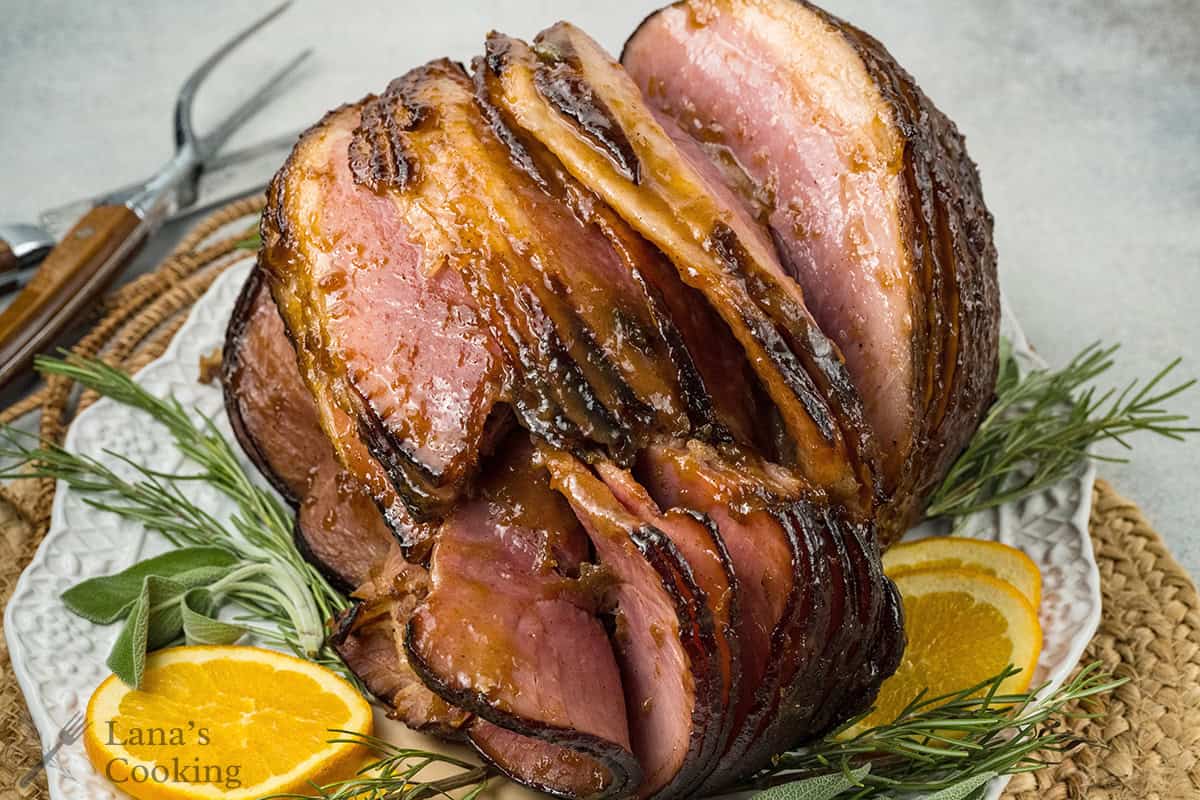
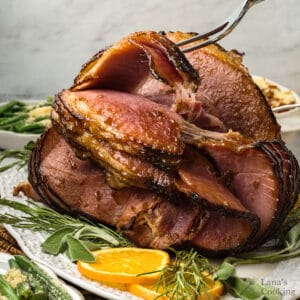
A good baked ham recipe should be part of every cook’s skill set, and this Apricot Glazed Ham is a great place to start. A smoked spiral-cut ham is warmed slowly under foil, then finished with a beautiful glaze of apricot preserves, Dijon mustard, and fresh sage.
Baked ham is a staple on Southern dinner tables. I often bake one on weekends and certainly for Easter, Christmas, and Thanksgiving. Not only does it feed a crowd, it always provides generous leftovers that carry well into the rest of the week.
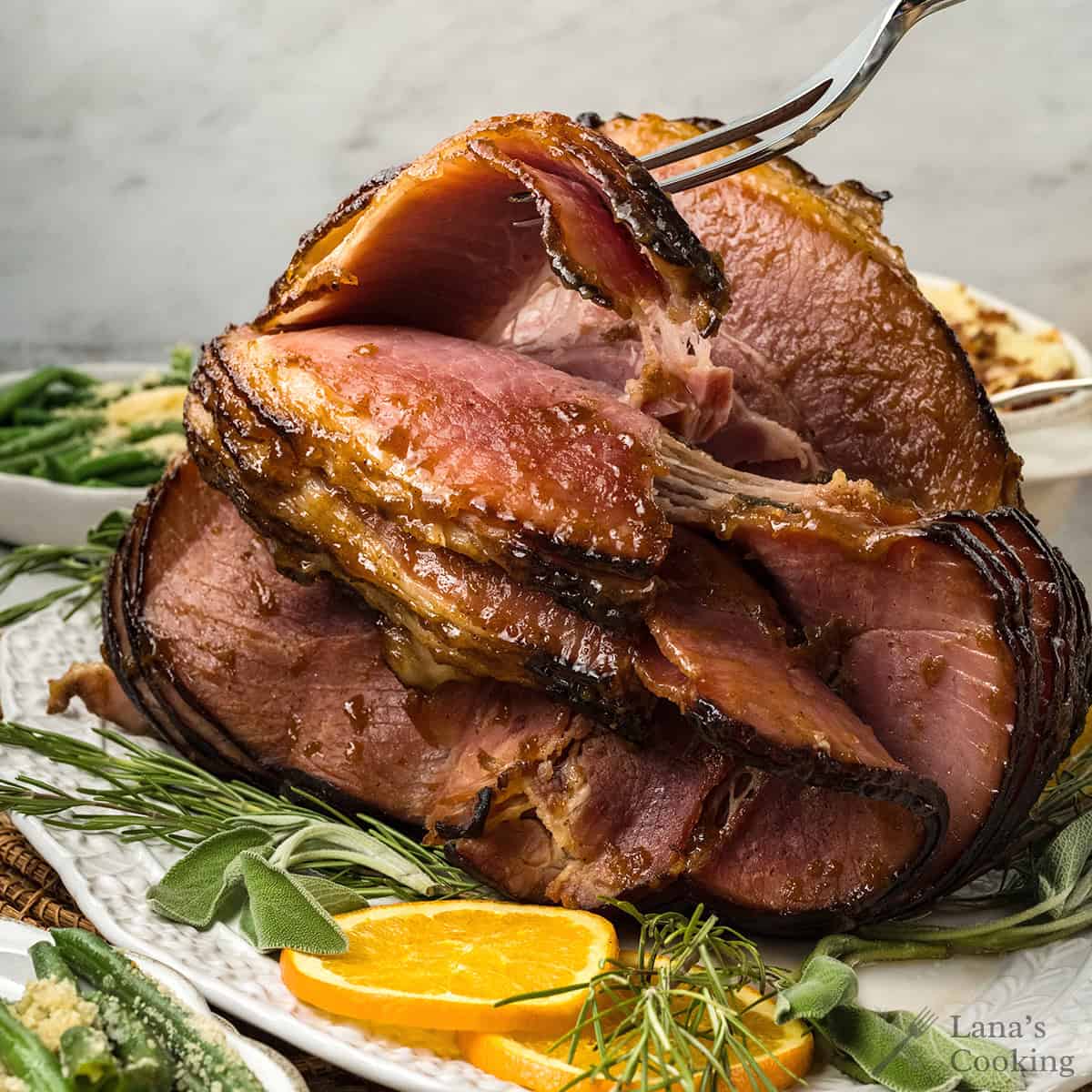
In the South, we’d call this a “city ham,” the wet-cured, smoked, fully cooked kind you’ll find in most any grocery store. It’s much different from the country-style salt-cured ham that we fry to make Southern Red Eye Gravy. A city ham only needs careful reheating and, if you like, a good glaze.
We can thank Harry J. Hoenselaar for the popular spiral-cut ham. He was a ham salesman who first figured out how to slice a ham around the bone, and used that to found the HoneyBaked Ham Company in 1957. Those pre-cut slices make it really easy for the glaze to melt down between the layers, so every slice gets a little coating.
Recipe Snapshot: Apricot Glazed Ham
Prep Time: 15 minutes
Cook Time: 2 hours, 30 minutes
Resting Time: 15 minutes
Total Time: 3 hours
Servings: 16
Cuisine: American
Cooking Method: Oven/Stovetop
Primary Ingredients: Bone-in spiral-cut smoked ham, apricot preserves, brown sugar, Dijon mustard, spices, apple cider vinegar
Skill Level: Easy
DO MORE WITH CHATGPT
What Makes This Recipe Special
Apricot is one of the most popular glazes for baked ham. This sweet, fruity glaze is a natural contrast for a salty, smoky ham.
My version goes a step beyond the usual recipe consisting of preserves and brown sugar. I like to add a smidge of Dijon mustard and a splash of apple cider vinegar to balance the sweetness. Then I add in some fresh sage and bay leaves for a nice herbal touch. A dash of cinnamon and cloves adds just enough warmth.
I know it looks like a lot of cooking time, but it’s almost entirely hands-off. The ham warms slowly in the oven while you prepare the side dishes, then you add the glaze for the last half hour. You’ll have plenty of leftovers for sandwiches and casseroles, plus a ham bone for a pot of Brunswick stew!
Ingredient Notes
This post may contain affiliate links. Lana’s Cooking is reader-supported and earns a tiny commission at no extra cost to you when you shop from our links.
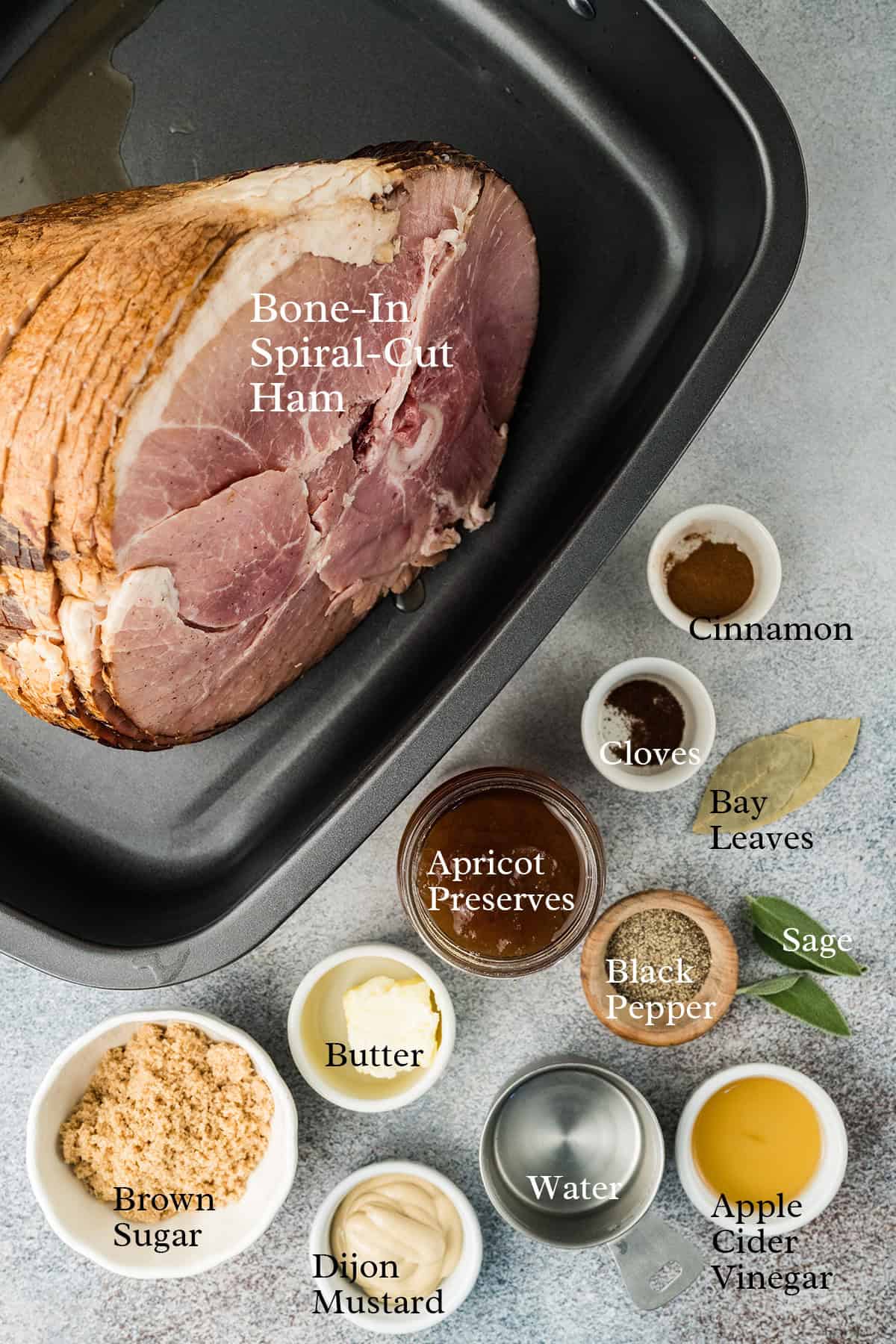
- Spiral-cut ham — There are many brands of ham available, and several good ones include Smithfield, Cook’s, and Sugardale. HoneyBaked hams are wonderful too, but they come already glazed and are meant to be served without reheating, so save those for another day. Look for a bone-in, fully cooked spiral-cut ham, either the shank or butt (see an explanation of the differences below). Lots of spiral hams come with a sugary glaze packet, but I honestly prefer to make my own glaze.
- Apricot preserves — Bonne Maman apricot preserves would be my first choice, but less expensive brands like Smucker’s work perfectly fine.
- Light brown sugar — The light brown sugar adds another layer of sweetness and helps the glaze caramelize in the oven.
- Dijon mustard — Maille is my Dijon of choice. Its mellow tang keeps the glaze from tasting like plain jam.
- Apple cider vinegar — It’s just a tablespoon, but it brightens the whole glaze and balances out all the sugar.
- Fresh sage and bay leaves — These might seem like an unusual addition to a sweet glaze, but they give it an herbal quality that goes really nicely with smoked ham. You’ll want to remove the bay leaves from the simmered glaze before brushing it on the ham. They would burn in the oven.
- Cinnamon, ground cloves and ground black pepper — Only a small amount of each, just enough to give the glaze a little warmth.
The complete ingredient list with detailed measurements is included in the printable recipe card at the bottom of this post.
Recipe Variations
- Peach preserves — Peaches and apricots are close cousins in flavor, so peach preserves make an easy one-for-one swap.
- Orange marmalade — Marmalade gives the glaze a brighter, citrusy flavor with a slightly bitter edge from the orange peel.
- Whole grain mustard — Use it in place of the Dijon if you like the speckled look and little bit of texture the mustard seeds give the glaze.
- A splash of bourbon — Stir a splash in along with the vinegar for a warm, caramel note that’s right at home on a Southern table.
Buying a Ham: Butt vs. Shank
A whole ham is the entire back leg of the pig, and it’s really unusual to find one these days. Most producers split the whole ham into two parts: the butt and the shank.
The butt comes from the upper part of the leg and has a rounded shape. It’s meatier and somewhat leaner than the shank. The trade-off is its oddly shaped bones, which make carving more work.
The shank is the lower leg, which tapers to a point. It is fattier, but it has one straight bone that makes carving much easier. It’s just a matter of preference, and neither one is really better than the other. I do, however, almost always choose the butt end myself. I just like my ham to be meatier.
When shopping for a ham, the label wording matters. A ham marked “butt half” or “shank half” includes the meaty center slices. One marked “butt portion” or “shank portion” has had some of those center slices removed, usually to sell for ham steaks.
Plan on about 1⁄2 pound of bone-in ham per person. That accounts for the weight of the bone, which is why a 7- to 8-pound ham serves 12 to 16 people. If you want leftovers for sandwiches and casseroles, buy an extra pound or two. For a boneless ham, about 1⁄3 pound per person is plenty.
How to Make Apricot Glazed Ham
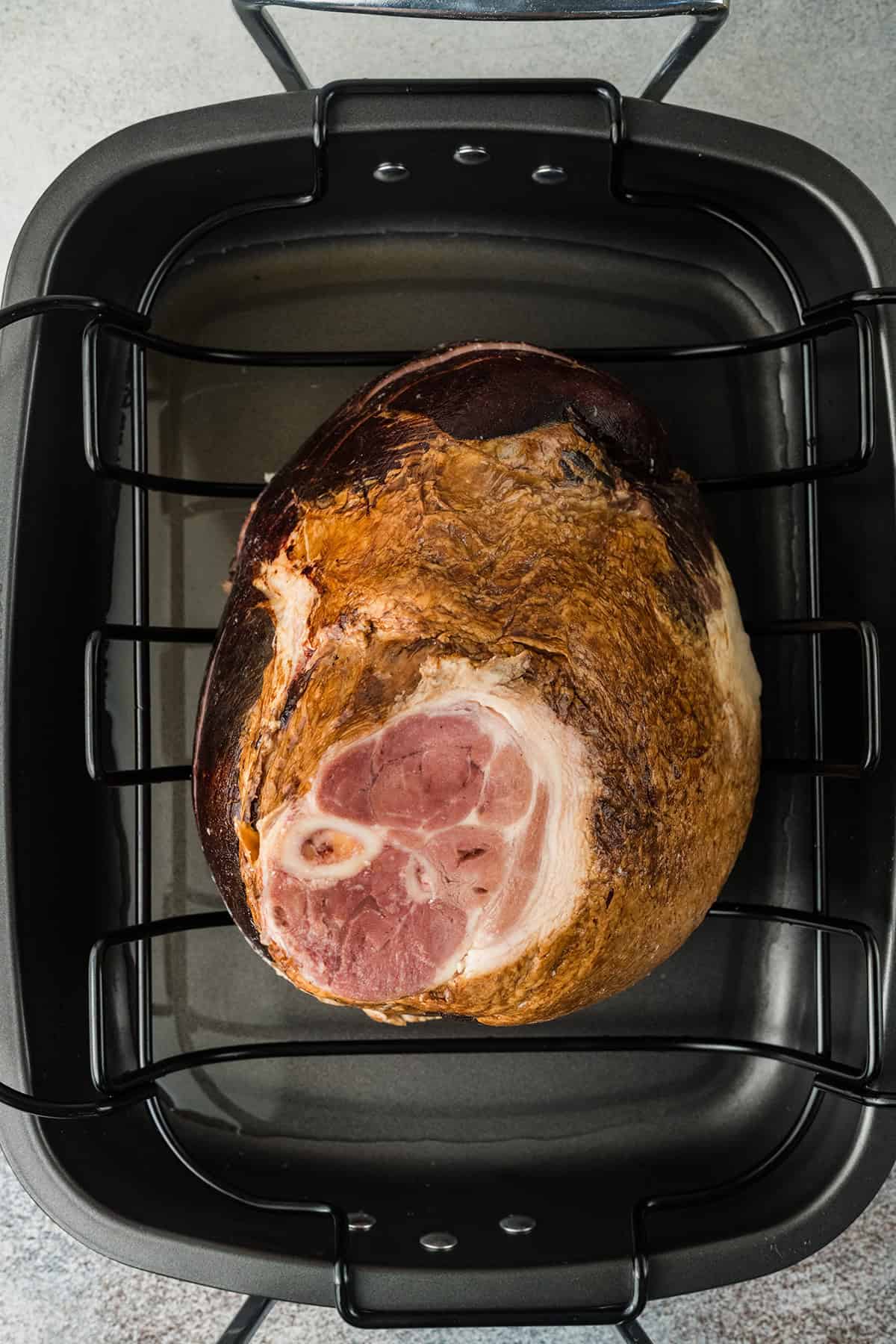
STEP 1. Preheat the oven to 325°F. Set the ham cut-side down on a roasting rack (if using one) in a large roasting pan, and pour water into the bottom of the pan around the ham (not over it). Cover the pan with aluminum foil, crimping and sealing it tightly around the edges. (The seal holds in the steam, which keeps the ham moist while it warms.) Bake for about 1 1⁄2 to 2 hours, until the ham is heated through and an instant-read thermometer reads about 120°F in the center. (Note: this is not the finished temperature; the ham will cook further after adding the glaze.)
Pro Tip
A roasting rack is nice to have, but not absolutely necessary. I often warm a ham directly in a roasting pan or shallow baking dish, and as long as it’s tightly covered with foil, it stays moist.
Start checking a little early if your ham is on the smaller side. Insert a meat thermometer into the thickest part of the ham, making sure the tip doesn’t touch the bone. The ham is already fully cooked, so all you’re really doing is warming it through without drying it out.
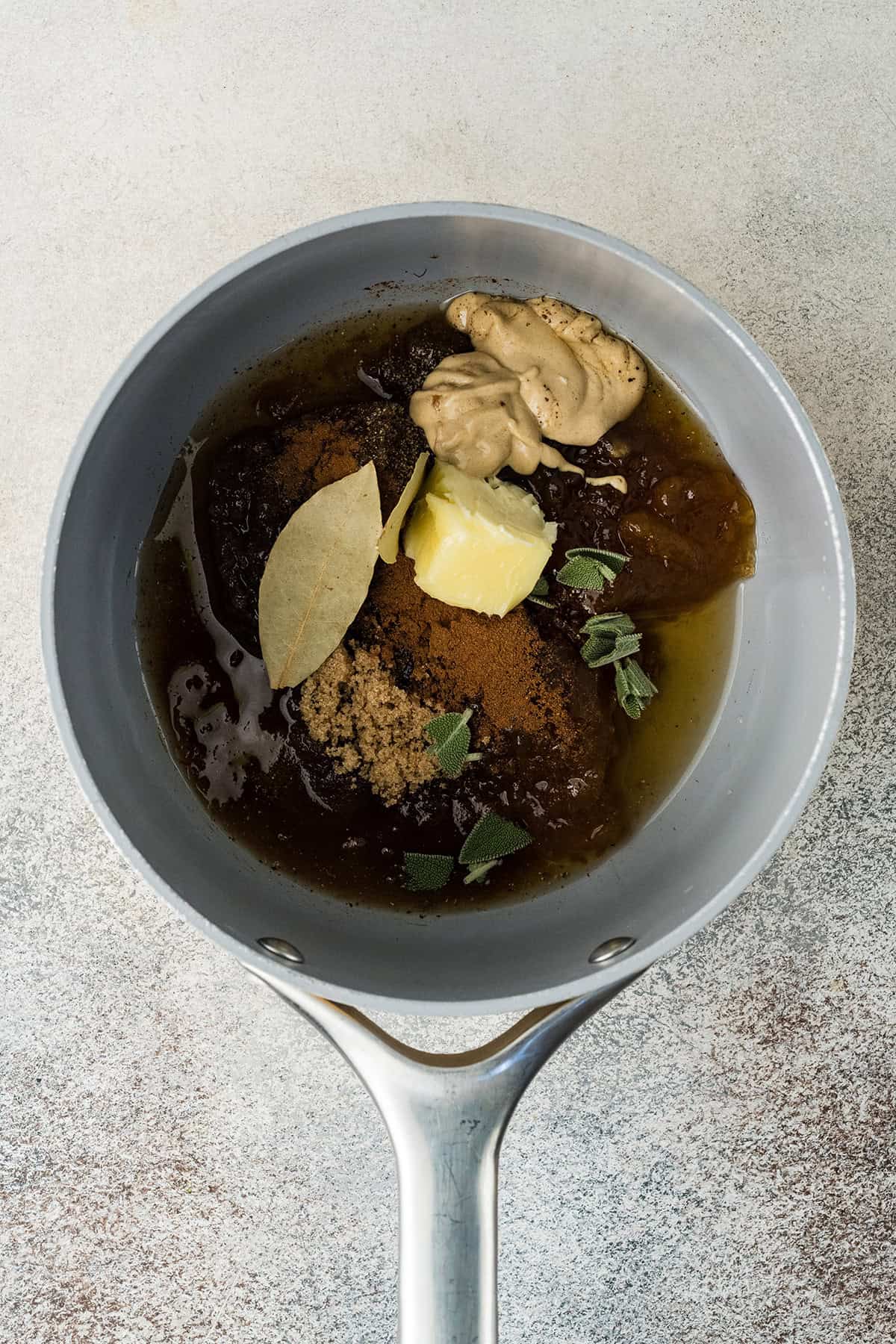
STEP 2. While the ham is in the oven, put the apricot preserves, brown sugar, sage, bay leaves, Dijon mustard, butter, apple cider vinegar, cinnamon, cloves, and black pepper in a small saucepan.
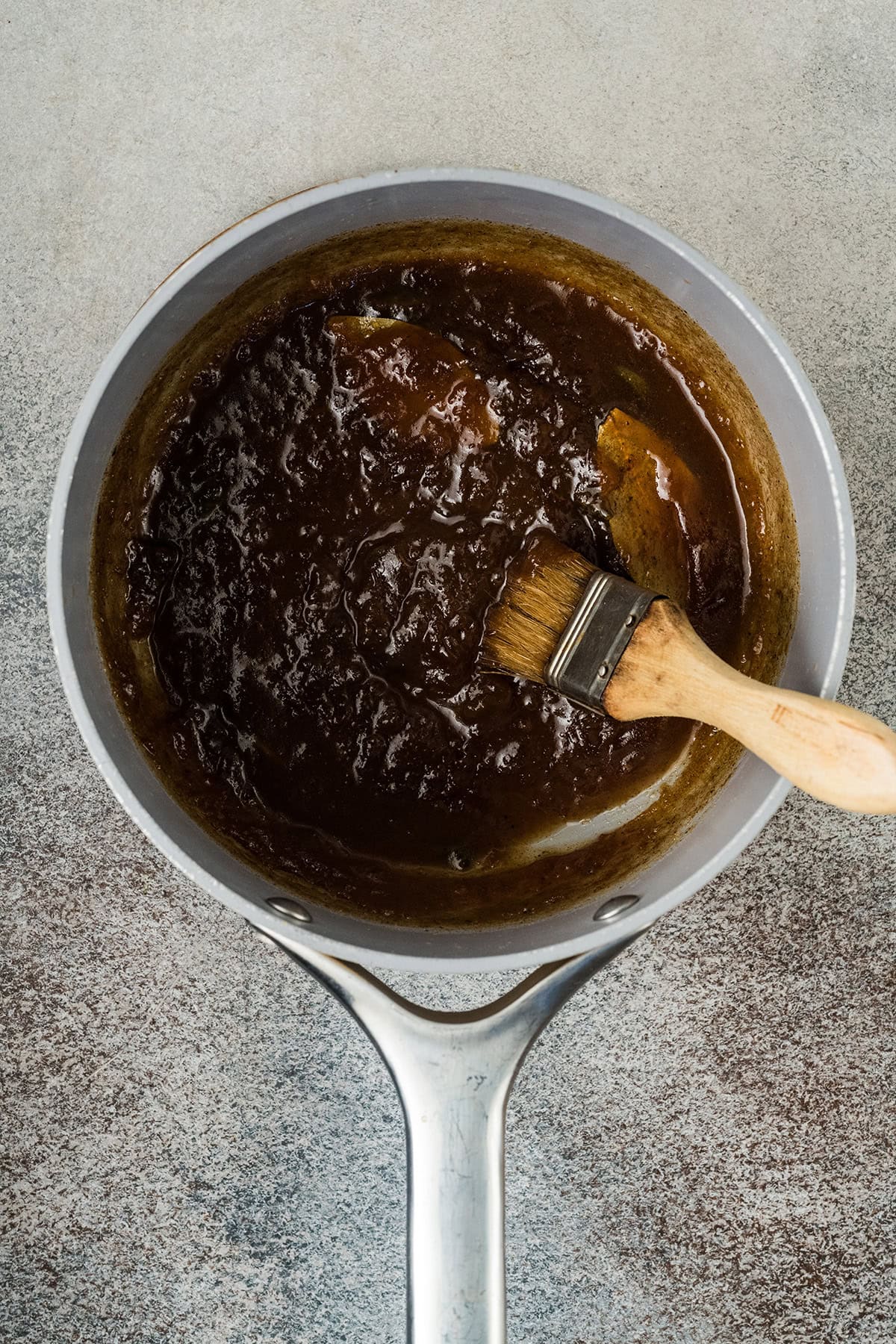
STEP 2 (cont’d.) Set it over medium-low heat and stir until the butter melts and the preserves smooth out. Bring the glaze to a gentle simmer and let it cook for about 5 minutes, until it’s slightly thickened. Be sure to stir frequently, as the preserves and brown sugar can scorch. Take the glaze off the heat, let it cool for a few minutes, then take out the bay leaves.
Pro Tip
Allowing the glaze to cool helps it cling to the ham instead of running straight off into the pan.
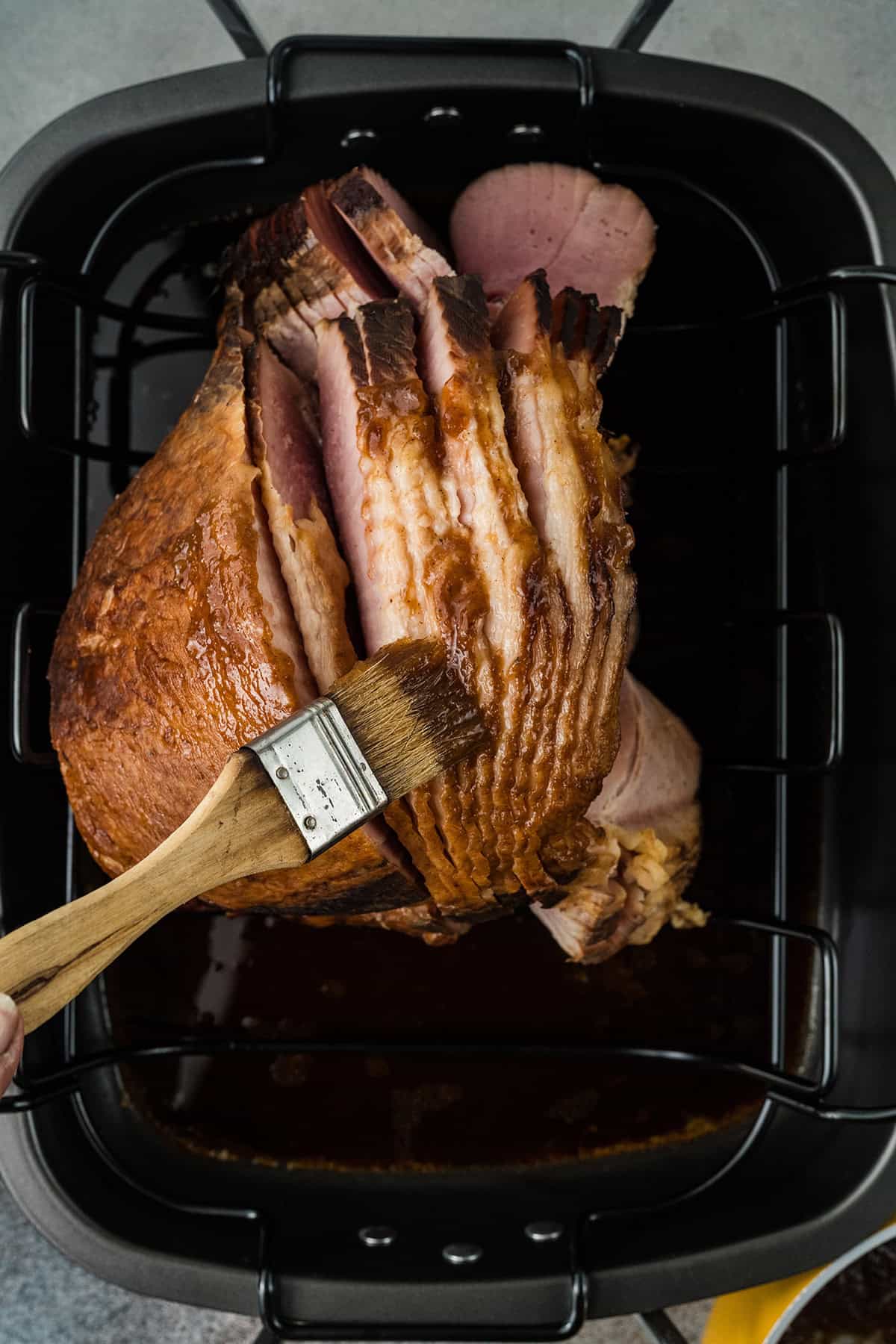
STEP 3. Once the ham reaches about 120°F (about 1 1⁄2 to 2 hours), take it out of the oven and remove the foil. Be cautious: hot steam may be released when you take off the foil. Turn the ham onto its side and gently fan the slices apart a little so the glaze can run between them. Brush a generous layer of glaze all over the ham, working some down between the spiral slices so every slice gets a little flavor. Return the uncovered ham to the oven and bake for about 15 minutes.
STEP 4. Remove the pan from the oven again and brush on a second layer of glaze, making sure to coat the edges and any exposed slices. Bake for another 10 to 15 minutes, until the glaze is glossy and caramelized and the internal temperature of the ham reaches 140°F. For a deeper caramelized finish, turn the oven up to 400°F for the last few minutes. Stay close and keep an eye on it, because the glaze can darken quickly at that heat.
STEP 5. Take the ham out of the oven and let it rest for at least 15 minutes. Just before serving, brush the ham with any remaining glaze.
Recipe Tips
- Glaze only at the end. The glaze has quite a bit of sugar, and sugar tends to burn. That’s why it doesn’t go on until the last half hour.
- Adjust the time for a bigger or smaller ham. Most ham warming directions call for about 14 to 16 minutes per pound at 325°F. A larger ham will need more time and a smaller one less. A meat thermometer is the most reliable way to check for doneness.
- Using a boneless ham. A boneless spiral ham works with this method too. Follow the package directions for the heating time and check it with a thermometer. Keep it well covered, since boneless hams can dry out a bit more during reheating.
How to Serve
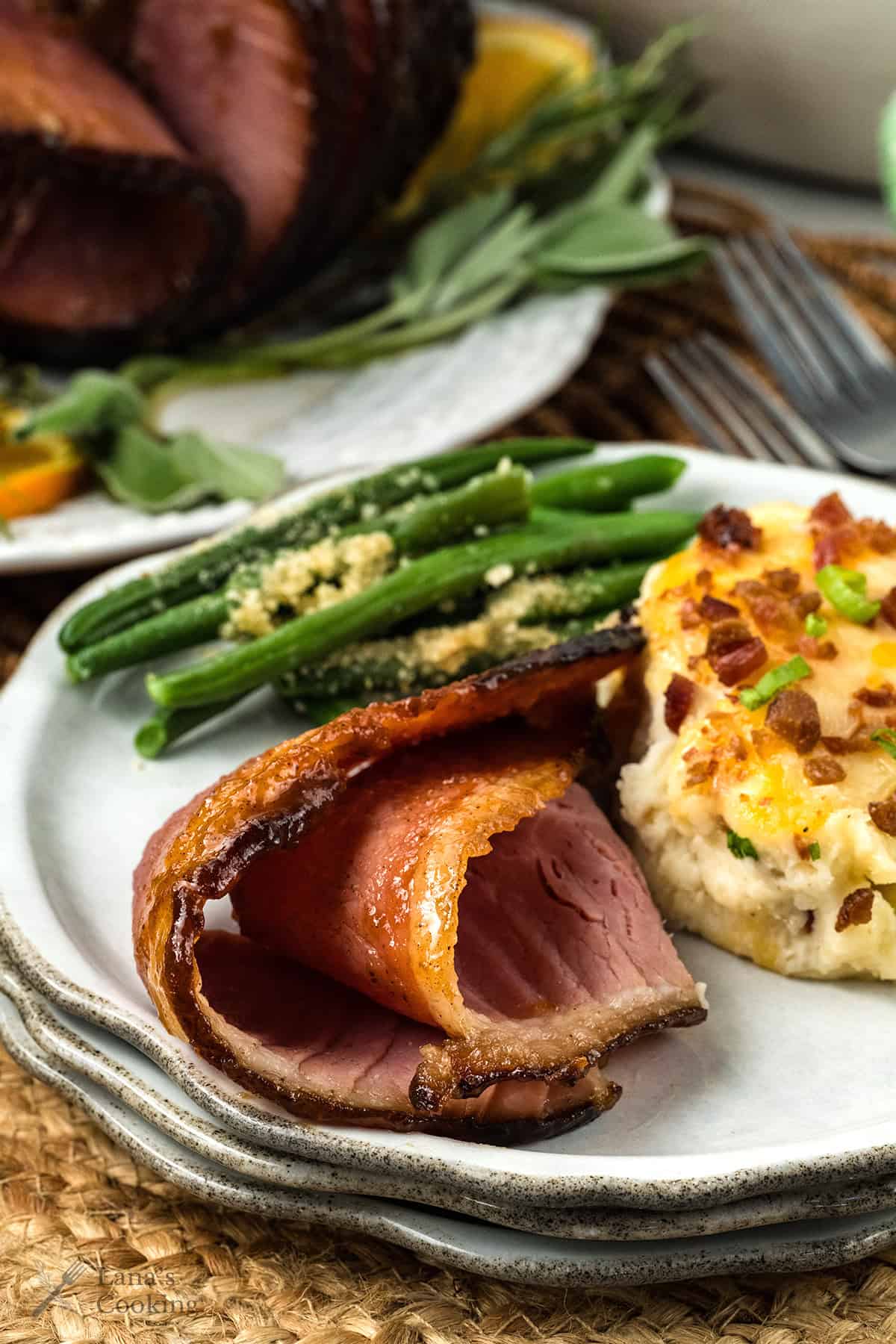
Baked ham goes with just about any Southern side dish. A sweet and tangy Southern pineapple casserole is a classic match, and a dish of creamy potatoes au gratin balances out all that smoky saltiness.
For something classically Southern, try my Southern sweet potato casserole. A basket of fluffy angel biscuits is perfect for making little ham biscuits, and a plate of traditional Southern deviled eggs is always welcome.
When I’m serving ham for a holiday, I like to arrange fresh herbs, orange slices, or cranberries around it on the platter. It’s quick to do and makes a nice presentation.
Make Ahead
You can make the apricot glaze up to 3 days ahead. Remove the bay leaves, let the glaze cool, and refrigerate it in a covered container. Warm it gently in a small saucepan before brushing it on the ham.
How to Store
Store leftover ham in an airtight container in the refrigerator for up to 4 days. Store any leftover glaze separately in a covered container in the refrigerator for up to 3 days.
To reheat, put the slices in a baking dish with a spoonful of water, pan juices, or glaze, cover with foil, and warm gently until they reach 165°F. The extra moisture keeps the ham from drying out.
For longer storage, wrap the ham tightly or pack it in a freezer-safe container and freeze it for up to 2 months.
Use the Leftovers
Leftover ham is good in so many dishes. Dice it for a make-ahead ham and cheese strata or a classic ham and cheese quiche. You can also stir it into a cheesy ham and potato casserole, an old-fashioned ham and noodle casserole, or a pot of Southern black beans and rice.
And don’t toss that ham bone. Save it for a pot of hearty ham bone soup, or use it to add smoky flavor to green beans.



Have a question or thought to share?
If you have a question about the recipe or if you’ve made it and want to share how it turned out, I would truly enjoy hearing from you. Just scroll down to leave a comment or add your star rating.
Thank you for stopping by. It means a lot to have you here.
Apricot Glazed Ham
Ingredients
- 8 pounds bone-in spiral-cut smoked ham
- ½ cup water
- 1 ½ cups apricot preserves
- ¼ cup light brown sugar
- 3 fresh sage leaves lightly chopped
- 2 bay leaves
- 2 tablespoons Dijon mustard
- 2 tablespoons butter
- 1 tablespoon apple cider vinegar
- ½ teaspoon ground cinnamon
- ¼ teaspoon ground cloves
- ¼ teaspoon ground black pepper
Instructions
- Preheat the oven to 325°F. Place the ham cut-side down in a large roasting pan, on a rack if using. Pour the water into the pan. Cover the pan with foil and seal it tightly around the edges. Bake for 1 ½ to 2 hours, until the center of the ham reaches 120°F.8 pounds bone-in spiral-cut smoked ham, ½ cup water
- While the ham bakes, put all the glaze ingredients in a small saucepan over medium-low heat. Stir until the butter melts and the preserves are smooth. Simmer gently for 5 minutes, stirring often, until slightly thickened. Remove from the heat, let cool a few minutes, and take out the bay leaves.1 ½ cups apricot preserves, ¼ cup light brown sugar, 3 fresh sage leaves, 2 bay leaves, 2 tablespoons Dijon mustard, 2 tablespoons butter, 1 tablespoon apple cider vinegar, ½ teaspoon ground cinnamon, ¼ teaspoon ground cloves, ¼ teaspoon ground black pepper
- Take the ham out of the oven and remove the foil. Watch for hot steam. Turn the ham onto its side and gently spread the slices apart. Brush with glaze, working some between the slices. Bake uncovered for 15 minutes.
- Brush the ham with more glaze. Bake 10 to 15 minutes longer, until the glaze is glossy and the ham reaches 140°F. For a darker finish, turn the oven to 400°F for the last few minutes and watch closely.
- Let the ham rest at least 15 minutes. Brush with the remaining glaze and serve.
Notes
- Use a bone-in, fully cooked spiral-cut ham, either the butt end or the shank end, your choice. See the notes in the body about the differences between the two.
- A 7- to 8-pound bone-in ham serves 12 to 16 people. Plan on about 1/2 pound per person, plus an extra pound or two if you want leftovers.
- A roasting rack is optional. The ham will stay moist as long as the pan is tightly sealed with foil.
- Plan on a cook time of about 14 to 16 minutes per pound at 325°F before adding the glaze, which then cooks for an additional 30 minutes.
- Check the temperature in the thickest part of the ham, keeping the thermometer tip away from the bone. It should be 140°F when finished.
- Because the glaze is high in sugar and can burn, it only goes on for the last half hour of cooking.
- Stir the glaze often over medium-low heat so the preserves and brown sugar don’t scorch.
- The glaze will cling to the ham much better if you allow it to cool some before applying it to the ham. Remove the bay leaves before brushing.
- Be careful when you lift the foil, since a lot of hot steam can escape.
- For a boneless ham, follow the package heating time and check with a thermometer.
- The glaze can be made up to 3 days in advance and stored in the refrigerator.
- Refrigerate leftover ham in an airtight container for up to 4 days and leftover glaze for up to 3 days. Freeze leftovers for up to 2 months.
- Reheat slices in a covered baking dish with a little water or pan juice until they reach 165°F.
Nutrition Information
Nutrition information is calculated by software based on the ingredients in each recipe. It is an estimate only and is provided for informational purposes. You should consult your healthcare provider or a registered dietitian if precise nutrition calculations are needed for health reasons.